
This audio is voiced by AI and may occasionally mispronounce words.
Share your feedback and help us improve this feature. Read more about how we use AI at SBS here.
At first glance, Venice and Sydney's western suburbs appear to have little in common.
One is an archipelago suspended in water: a maze of canals and stone, rising tide-bound and porous to the sea. The other is a landlocked and sprawling urban metropolis, threaded by arterial roads and dotted with fibro houses.
Yet in the mind of artist Khaled Sabsabi, the two places — however distinct — read almost as twin cities.
"Western Sydney and Venice are both places shaped by migration and cultural exchange," he says.
Histories of resilience, coexistence and movement.
News that makes sense
Your trusted source for staying up-to-date with the world around you. Get free daily news updates and analysis, straight to your inbox.
For the Lebanese-born artist, that movement began at age 12, when he fled Tripoli with his family at the height of the Civil War. His coming to Australia, like many in the Lebanese diaspora, was shaped by the upheaval of conflict and the weight of having to start again.
"My personal journey is one that's been affected by displacement and one that's been impacted by trauma," he tells SBS News.
"But to add to that, it's one that's been informed by ideas of belonging, ideas of longing, and ideas of coming to grips with so many factors, including living on someone else's land."
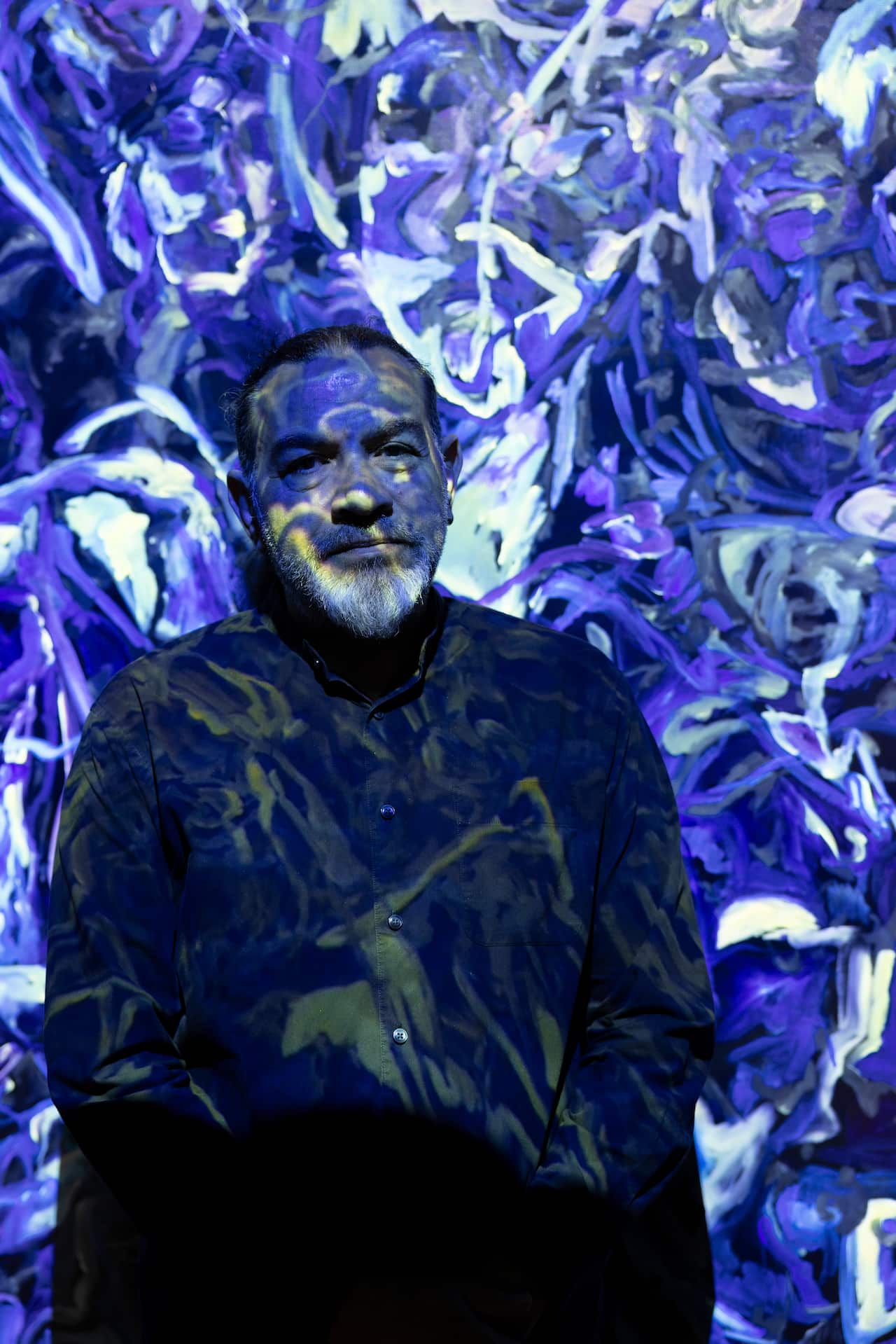
Decades later, that tension — between loss and arrival, between memory and place — has found its way to Venice, where Sabsabi stands alongside curator Michael Dagostino as Australia's representatives at the 61st La Biennale di Venezia, which opens to the public today.
Among the world's most prestigious cultural institutions, the Venice Biennale has hosted major international exhibitions of contemporary art and architecture biannually since 1895, and is often likened to the 'Olympics' of the art world. This year, more than 80 countries will host national pavilions (dedicated gallery spaces).
Australia's national pavilion has become an increasingly prominent fixture of the Biennale since the country's first participation in 1954 and permanency in 1988 — most notably through Archie Moore's historic Golden Lion win in 2024. This year's offering marks another defining ascent on one of contemporary art's most closely watched stages.
"To be Australian, to be a migrant or the sons of migrants, first generation," he says, referring to himself and, "second generation", gesturing to Dagostino.
"To be an Arab Muslim man — an Australian Arab Muslim man — It's a rare moment. It's a unique moment."
A rare convergence: two works, one philosophical body
The scale of the achievement is difficult to overstate.
In an Australian first, Khaled Sabsabi will present in both the national pavilion and the Biennale's curated international exhibition — an exceptionally rare distinction achieved by only a handful of artists across its 131-year history.
Within the leafy Giardini della Biennale, where the Australia Pavilion is nestled among 28 other pavilions, Sabsabi presents conference of one's self, an installation that draws equally on painting, video and audio to construct a slow-moving, immersive environment that renders the outward dimension of the self as something collective, shifting and in dialogue with others.
At its centre are eight canvases — each three metres high and two metres wide — arranged in an octagon. Suspended projectors cast moving images across their surfaces, creating a constant feedback loop where fragments of the paintings are reflected back onto the canvases.
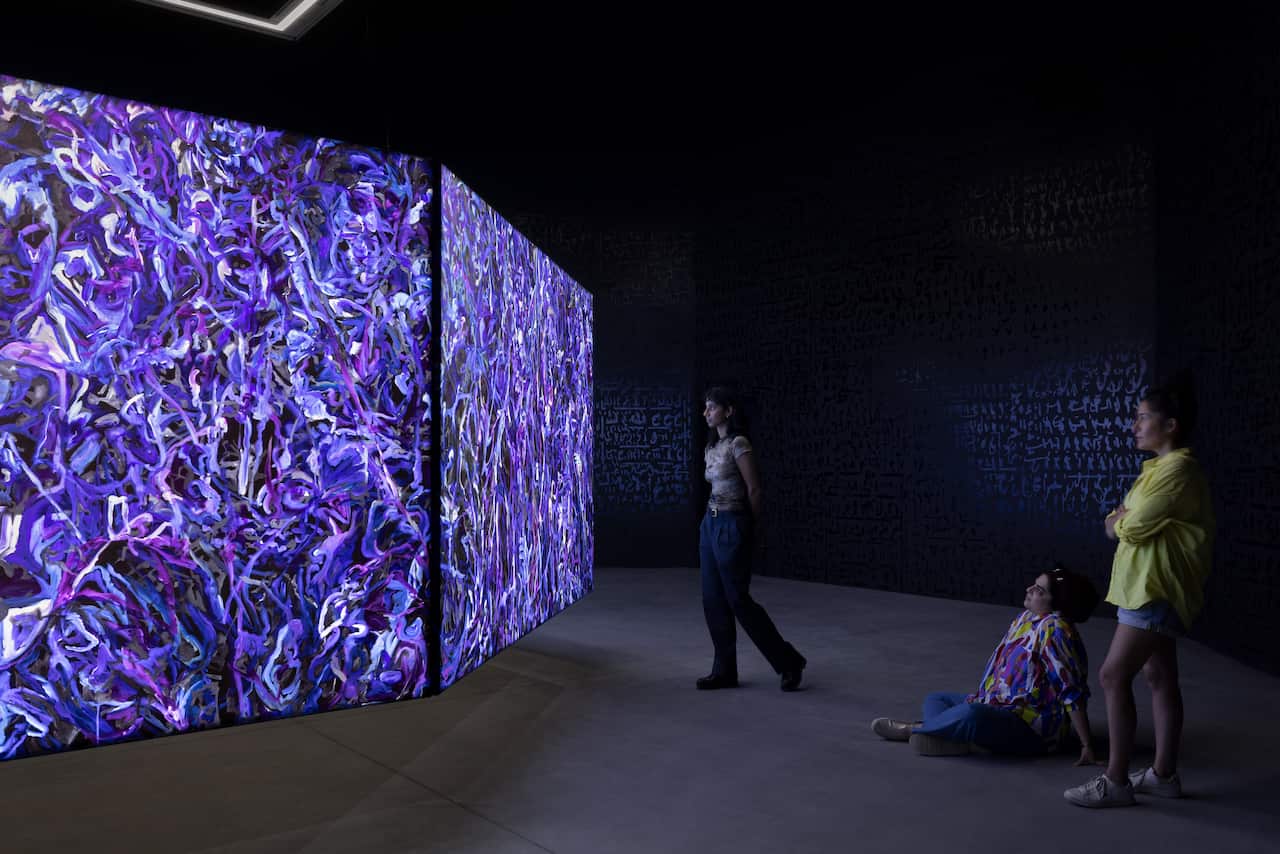
The work runs on a 54-minute continuum, accompanied by a soundscape built from analogue recordings of everyday life, requiring viewers to quietly contemplate the shifts in light and rhythm as they unfold.
The concept draws from the 12th-century Persian poem by Sufi poet Farid ud-Din Attar The Conference of the Birds, in which a flock of birds crosses seven valleys in search of a leader, only to realise, at the journey's end, that the collective itself holds the wisdom it was seeking all along.
"It's quite an inspirational state that you, within yourself, as a collective, control your destiny. Not a single leader, but together you form one unified voice," Sabsabi says.
In his interpretation, however, there is a symbolic eighth stage — "a moment of completeness, a moment of wholeness" — inserted into the structure of the work through an eighth canvas.
The installation does not instruct the viewer on how to read it.
Instead, it creates a set of conditions for reflection — an encounter deliberately left undefined.
"It's posing the question for the audience at the cusp of the exhibition," he says.
This is a moment for an individual to engage with those nuances and those ideas of the self, asking the self.
Across at the Biennale's other major site, the Arsenale, khalil operates as both companion and counterpoint.
The Arabic word for 'friend', khalil interrogates the inner dimension of the self through a three-part structure: Khanaydiyak (the threshold), El khalil (the friend), and Khalwa (solitude). Each chapter moves from a sense of universal reverberation toward introspection, inviting audiences to locate themselves within the multi-sensory work and meditate on both personal and collective experience.
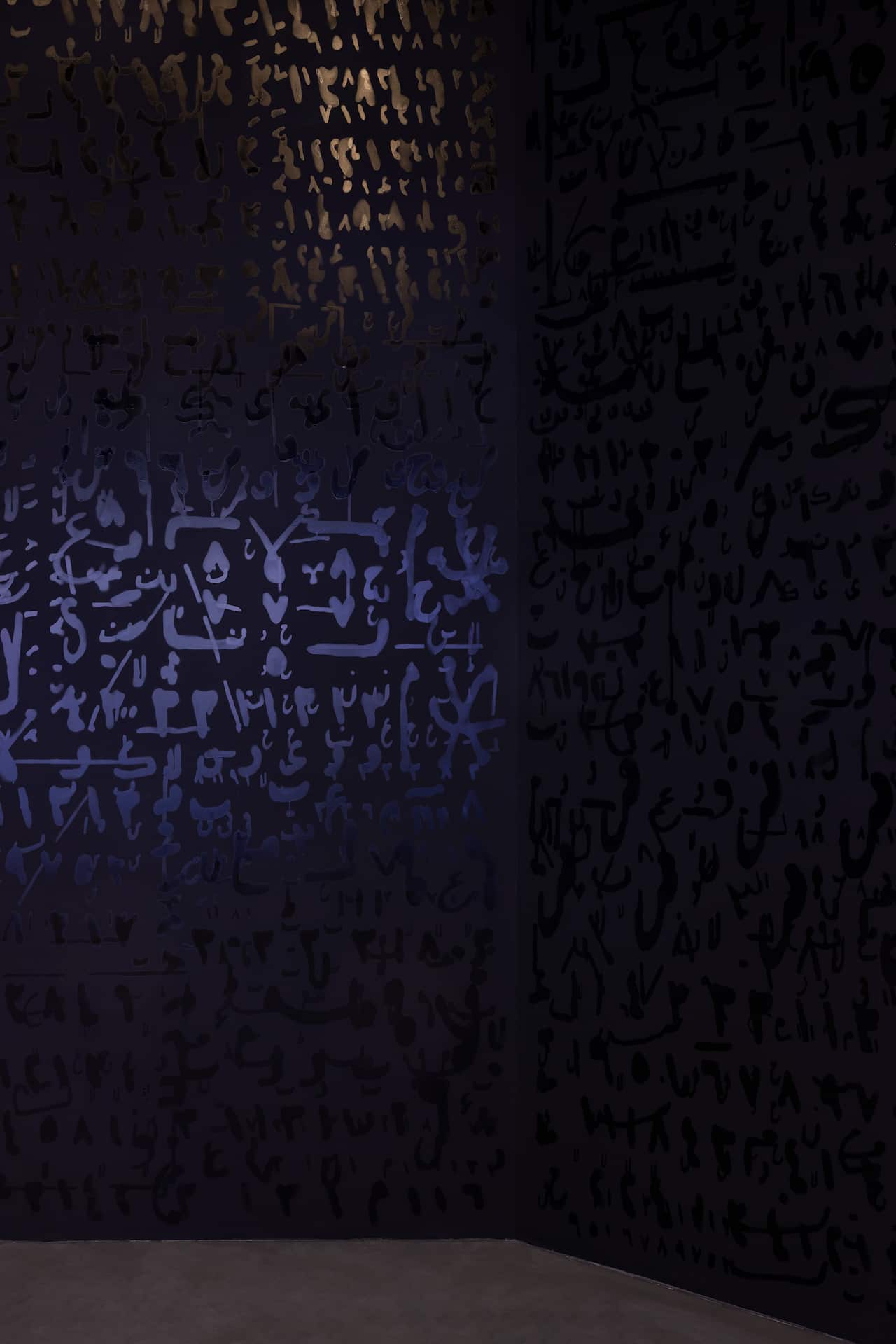
The work is anchored by a 40-metre painted canvas, configured into a circular, freestanding form — almost lantern-like — onto which the moving image is projected.
The structure is immersive and porous, combining sonic, visual and olfactory elements into a single work designed to be experienced rather than observed.
"The scent of black oud greets the audience, which can be experienced before you enter the work," Sabsabi says.
"[Then], there's the moment where the audience is invited to join and not just physically look at the work, but join in the movement of the masses," he explains, describing a moment where bodies shift rhythmically with the projections.
For curator Michael Dagostino, the work's final form is the result of sustained negotiation — not only between artist and material, but between site and audience.
"When you're working with an artist, it's always about testing ideas," he tells SBS News.
"We had to move the work from the Australian Pavilion to the Arsenale, so there were lots of conversations about space, how it would work, how audiences would interpret the work. And that's where my role has stepped in."
That process — iterative, responsive — mirrors the conceptual framework underpinning both installations.
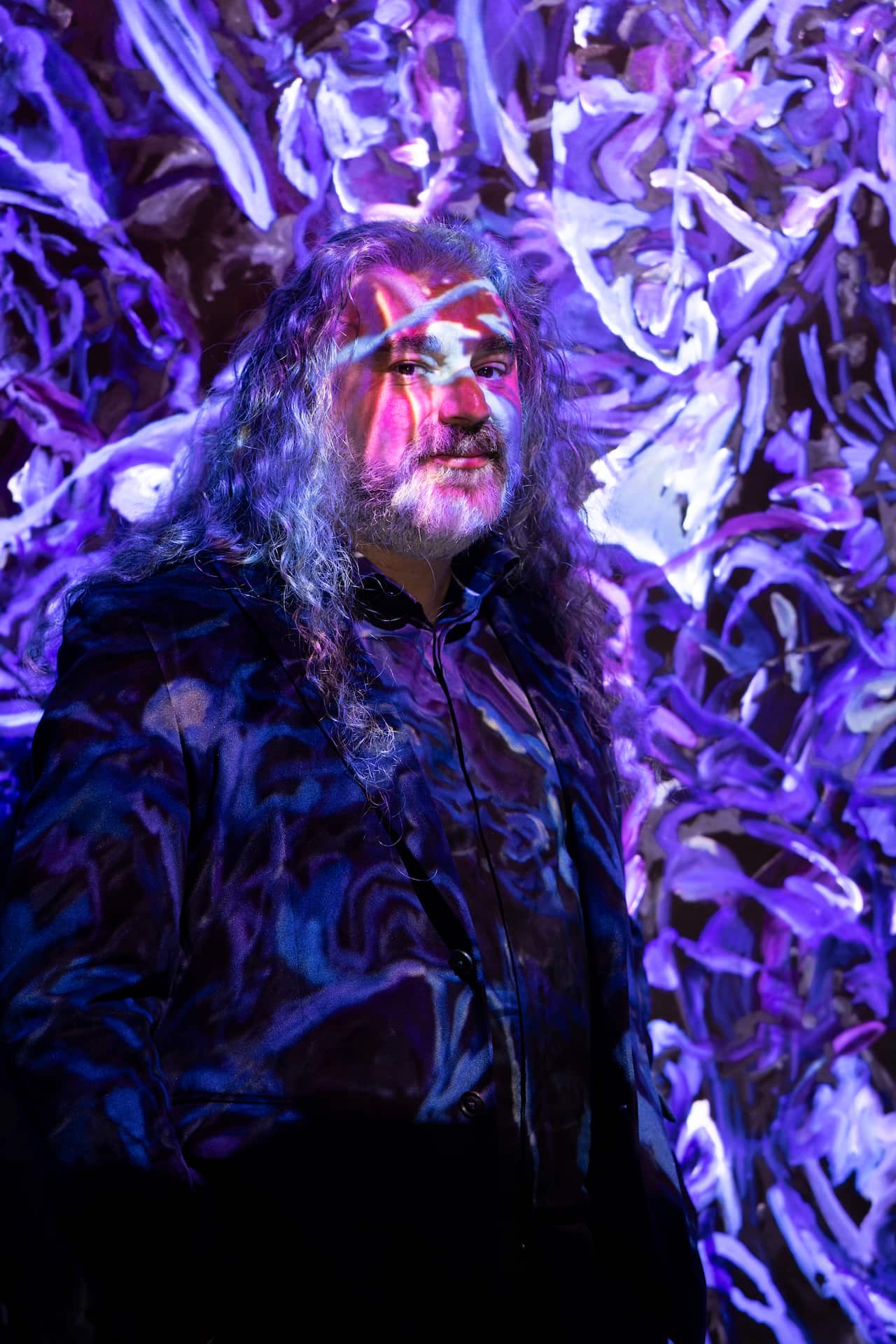
"Both works look at ideas of humanity. They look at ideas of existence, but also coexistence and whatever that may mean in this time and in this space, acknowledging [the] past, but also looking for a way forward," Sabsabi says.
Though separated by geography at the historical grounds of the Venice Biennale, they are conceived as two parts of a single whole.
"They speak to one another and emerge from the same philosophical inquiry," he says.
"They are one body with two limbs."
Art, controversy and the question of voice
Sabsabi's works, soon to be hemmed in by visitors, carry more than their conceptual weight.
In February 2025, Sabsabi and Dagostino were announced as Australia's representatives for the Biennale — a selection that, in ordinary circumstances, would have marked the beginning of a long lead-in to the exhibition. Instead, it lasted less than a week.
Following media scrutiny and questions raised in federal parliament about two earlier works — YOU (2007), which features imagery of the late Hezbollah leader Hassan Nasrallah, and Thank You Very Much (2006), which incorporates footage of the 9/11 attacks — the appointment was abruptly revoked by Creative Australia, citing concerns about a "prolonged and divisive debate".
Within days, the fallout reverberated. Senior staff resigned, artists and institutions pushed back, and the works themselves were publicly defended as having been mischaracterised.
Similar tensions have played out across the Australian arts sector in recent years, from the cancellation of Adelaide Writers' Week events and the boycott of Bendigo Writers Festival to accusations of pro-Palestinian bias directed at Biennale of Sydney curator Hoor Al-Qasimi. Taken together, they signal a climate in which artistic freedom is being actively arbitrated — and, at times, withdrawn — under public and political pressure.
Five months later, an independent review found "missteps" in the decision-making process. Sabsabi and Dagostino were reinstated.
Asked to reflect on the episode now, Sabsabi does not revisit the detail.
"It's important to acknowledge that we live in really extreme and difficult times," he says.
As an artist, my work is my voice and my platform … and this is the moment where that is put publicly for everybody to engage with.
For Dagostino, the moment speaks to a broader imperative within the arts.
"We need to have voices that we agree and disagree with," he says.
"Because if we don't, we're just creating silos and we're not learning or having empathy for others."
The reinstatement and the eventual expansion of the concept into two works have reframed what began as a rupture into something far more consequential.
"We are here, and we need to acknowledge this moment and live in the moment," Sabsabi says.
"And this is what our intent has always been."
Displacement, belonging and the making of an artist
Beneath Sabsabi's recurring explorations of movement, belonging and shared humanity lies a life intimately shaped by each.
He arrived in Australia from Tripoli in 1976 as a pre-teen, beginning a new life in western Sydney where he would largely remain — working, raising a family, and developing a practice closely tied to the communities around him.
"It's a place where we find connection. It's a place that we feel represented, and we feel that idea of commonality and community," he says.
But his path into artistic practice wasn't linear. In the early years, it ran through hip-hop — performing, running workshops and mentoring as a youth worker, using music, rhythm and language as tools to engage young people across Arabic, Aboriginal and Pacific Islander communities.
From there, his work moved into detention centres, schools, refugee camps and prisons, unfolding in spaces where art operated as dialogue, shaped by the lived experiences of the people in the room, and inseparable from the conditions in which it was made.
By the late 1990s, he returned to formal study, completing a master's at Sydney's College of Fine Arts. Not long after, in 2002, he went back to Lebanon for the first time since leaving, supported by an arts council grant.
It was not the return he might have expected. If anything, the trip sharpened a disparity — the recognition that life had moved on in unfamiliar ways, and that his identity now sat somewhere between Lebanese and Australian.
What he found instead was Tasawwuf — or Sufism — a mystic body of religious practice within Islam that investigates the interplay between inner (batin) and outer (zahir) worlds.
"I'm able to look at the multiplicity of the self, to be able to deal with things like the ego, to deal with the nafs [soul] and so on, and to better understand myself and to better understand our humanity," he says.
The framework doesn't resolve the tension so much as give it shape. It offers a way of understanding the self as layered, shifting — something that could hold contradiction rather than collapse under it.
That thinking carries through his Biennale works, but never in a didactic way. The installations don't explain; they circle. They return. They ask the viewer to sit within something that doesn't quite settle.
Even now, after more than 35 years of practice and dozens of major exhibitions across the world, Sabsabi resists the idea of mastery.
"Like all human beings, I'm still learning," he says.
"I'm a seeker … I'm a wanderer."
That position — deliberately unfinished — is embedded in the installations themselves.
"There's a beautiful moment in the work where once you've circled the work, you come to the point where you think you've learned everything," he says.
And you come to this realisation that you have to unlearn to learn.
In Venice, audiences will move between the Pavilion and the Arsenale, between two works that ask them — quietly, insistently — to consider their place within a larger whole.
The invitation is simple, but not easy.
To enter.
To stay.
To see what emerges when you bring yourself with you.
For the latest from SBS News, download our app and subscribe to our newsletter.







