

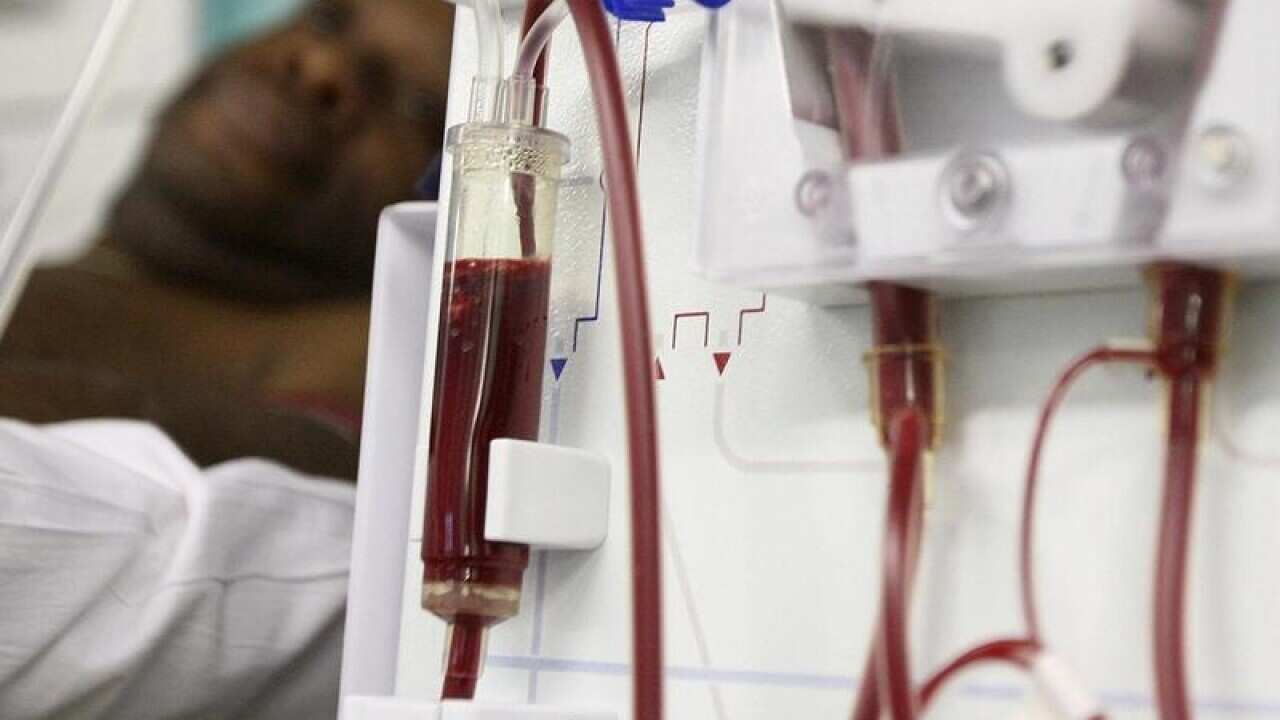
Kidney failure is increasing in Australians aged under 50 with type 2 diabetes, a study has found.
The study of more than 1.3 million Australians says it is leading to reduced quality of life and greater demand on kidney dialysis and transplantation services.
The research, led by Melbourne's Baker Heart and Diabetes Institute, calls for urgent attention to reduce the progression of kidney disease and highlights the importance of aggressively managing risk factors in people with younger-onset type 2 diabetes.
The study examined trends in end-stage kidney disease in Australians with diabetes from 2002 to 2013.
Researchers said it showed a progressive rise in end-stage kidney disease in people with type 2 diabetes aged under 50, while remaining stable for those with type 1 diabetes and for type 2 diabetes aged 50-80.
This finding, published in the American Journal of Kidney Diseases, was supported by other similar studies.
It also found the incidence of end-stage kidney disease was higher in men than women, those living in the most disadvantaged areas, in indigenous people and those living in remote areas.
The institute's Professor Jonathan Shaw said the finding suggests future demand for kidney dialysis and transplantation would place an enormous burden on Australia's healthcare system.
"We've known for a long time that the total number of people requiring kidney dialysis or transplantation was going up, but we thought that was mainly due to increasing numbers of people with diabetes," Professor Shaw said.
"The main concern is the increasing rate in the under 50s.
"This is a really troubling finding, but hopefully by improving medical care, by aggressively managing blood pressure and other cardiovascular risk factors in addition to blood sugar control, we can start to turn this around."
End-stage kidney disease occurs when chronic kidney disease -- the gradual loss of kidney function -- reaches an advanced state and the kidneys can no longer filter waste and excess fluid from the blood, which should be excreted in urine.
When kidneys lose these capabilities, dangerous levels of fluid, electrolytes and wastes can build up, requiring dialysis or a kidney transplant to stay alive.