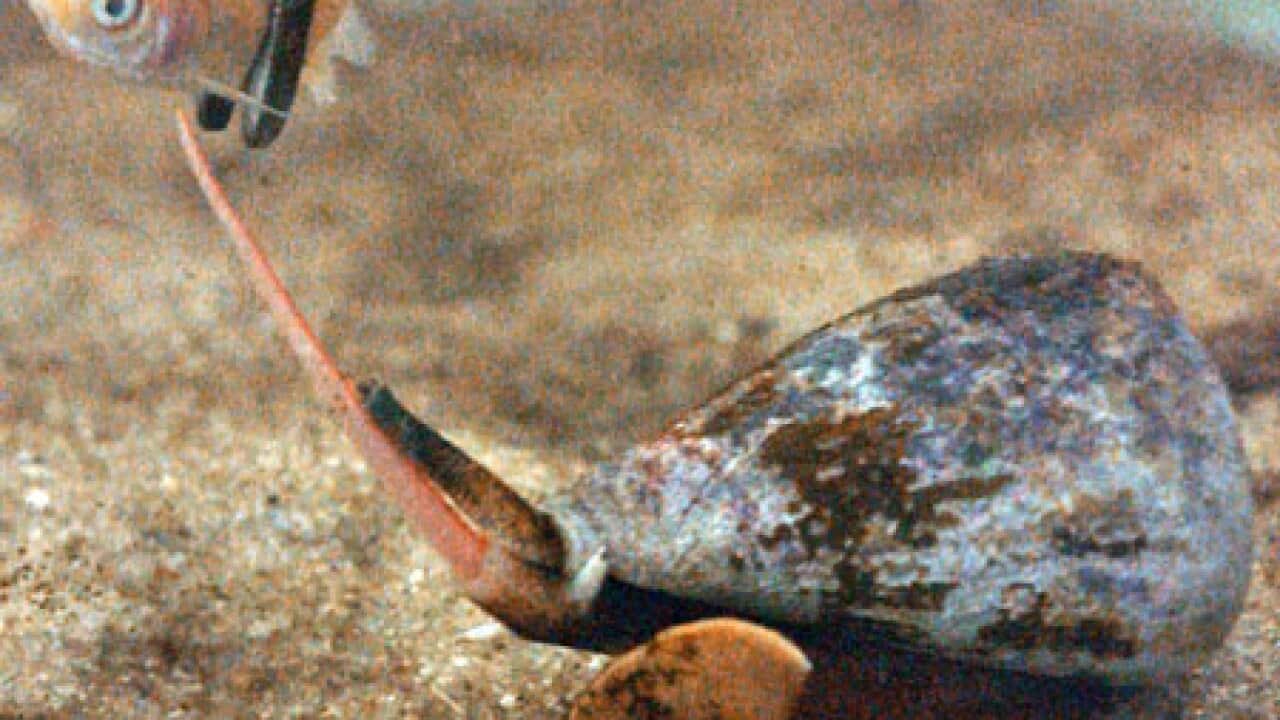
Poisonous sea snails found off Australia's coastline could be carrying the world's next generation of pain killing drugs.
The snails have a cocktail of powerful agents in their venom, which they use to immobilise their prey, explains Professor David Adams who is director of the Health Innovations Research Institute at Melbourne's RMIT.
Research is under way to isolate those agents - peptides - which, he said, could be used safely to treat pain in humans as a less problematic alternative to morphine.
News that makes sense
Your trusted source for staying up-to-date with the world around you. Get free daily news updates and analysis, straight to your inbox.
"In some of the old medical reports where people have been stung by these cone snails, they don't feel pain, most of them die because of respiratory paralysis," Prof Adams told AAP.
"In a way nature has done a lot of the work, these peptides are designed to target receptors in pain pathways.
"Our job is just to find them and put them to use."
Prof Adams has been conducting research on the venom for more than a decade, though he says the work to understand its 200 different peptides started in Australia in the 1960s.
US health authorities approved the first snail venom-derived painkiller in 2005, but its application was limited as it must be injected into the spine.
Prof Adams said advances in the synthetic reproduction of peptides, and new techniques to stabilise them, now offered the prospect of creating a venom-based pain killer that could be taken intravenously or in a tablet.
Clinical trials were under way, including in Australia, and Prof Adams said the broad availability of a venom-based painkiller could be as close as five years away.
Cancer patients, and other people with chronic pain, could be future users of the new type of analgesic that unlike morphine appeared unable to cause addiction.
"The problem with morphine is people can develop tolerance to it, it becomes ineffective, or they become addicted to it," he said.
"With these peptides, you don't have that problem."
Prof Adams gave a presentation at the joint conference of the Australian Neuroscience Society and Australian Physiological Society, held in Sydney this week.







