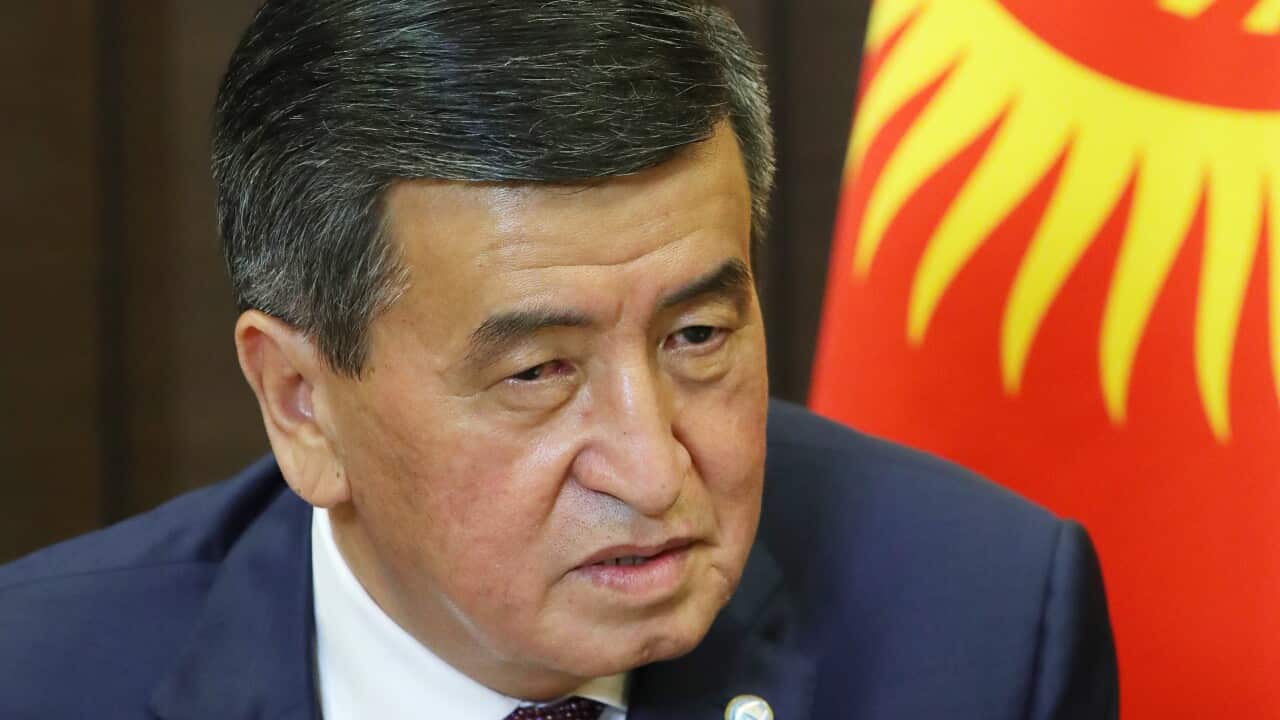
Kyrgyzstan's president has said he is ready to resign, in an abrupt about-turn after rival politicians claiming leadership positions prepared for a confrontation while Russia pushed security forces to restore order.
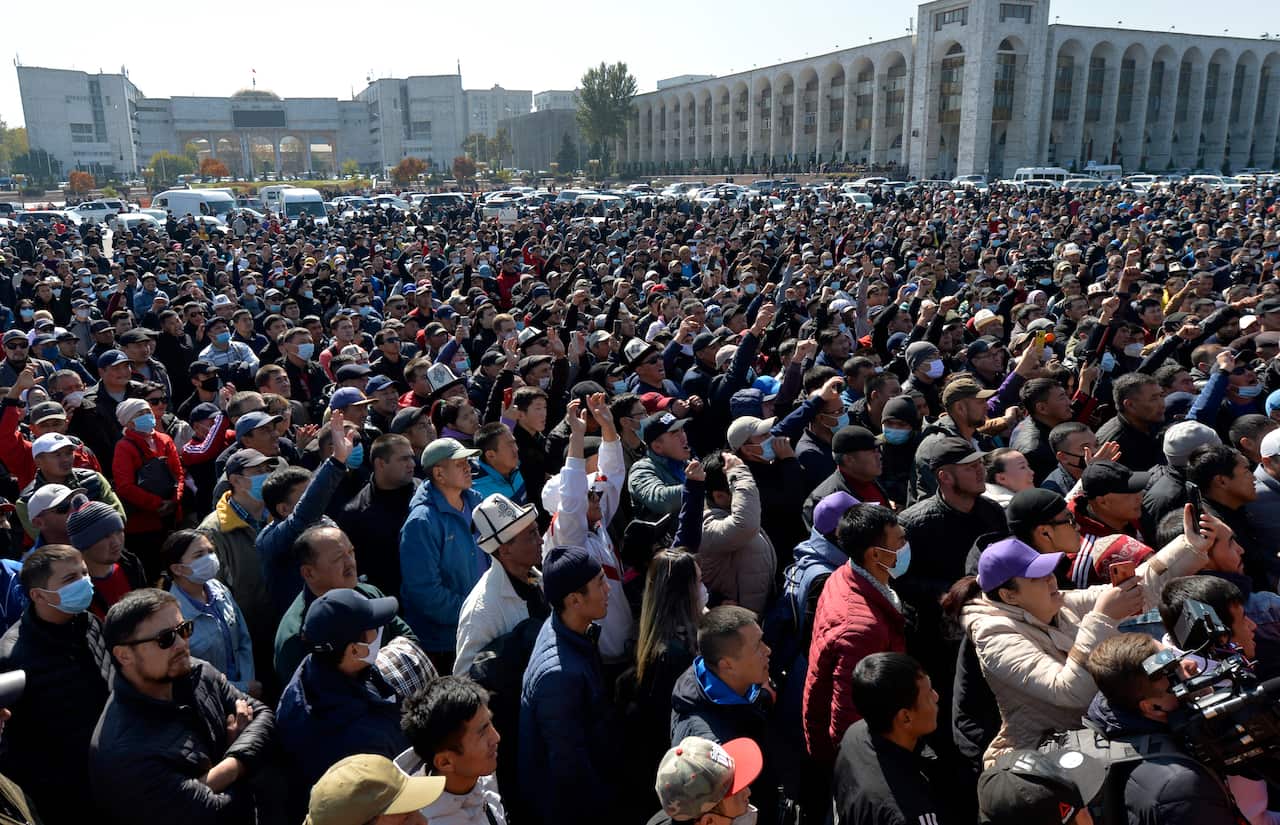
A disputed parliamentary vote has sparked a fresh crisis in the volatile Central Asian country, triggering protests and unrest that have left at least one dead and hundreds injured.
President Sooronbay Jeenbekov said in an address, published on the presidential website on Friday, he could resign once a date for fresh elections had been set and changes in government had been confirmed by parliament and his office.
"We need to get the situation back to the rule of law as soon as possible. After legitimate executive authorities have been approved and we are back on the path of lawfulness, I am ready to leave the post of President of the Kyrgyz Republic," he said.
The statement comes just hours after Mr Jeenbekov's press chief said the president's voluntary resignation "was not under question" as he held talks with different political factions.
News that makes sense
Your trusted source for staying up-to-date with the world around you. Get free daily news updates and analysis, straight to your inbox.
Mr Jeenbekov has made no public appearances since the unrest broke out Monday and self-appointed law enforcement chiefs have said that they do not know where he is.
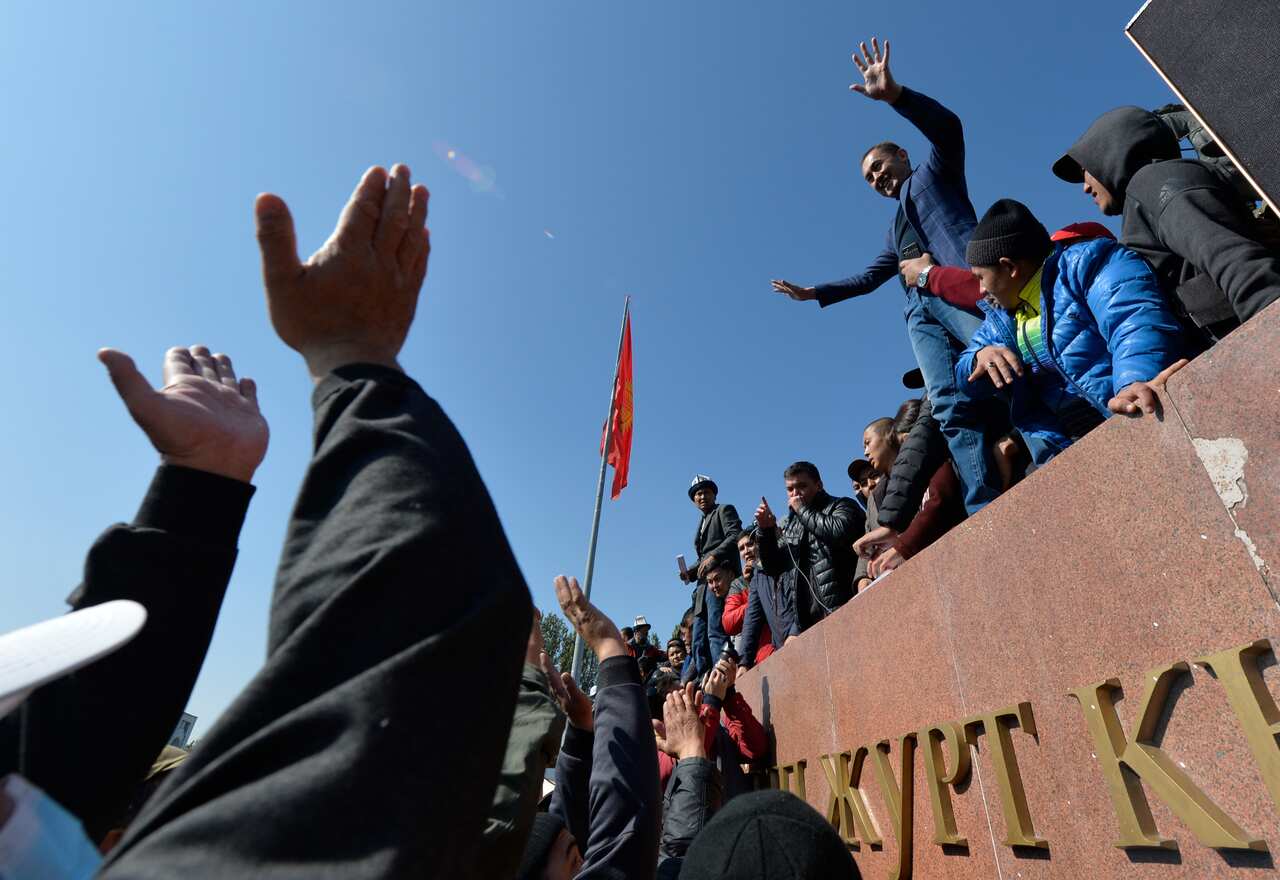
Opposition parties claim Sunday's election was rigged by massive vote-buying in favour of parties close to Mr Jeenbekov.
The results of the vote were annulled on Tuesday, but that has done little to ease tensions, as rival politicians and their supporters press claims to leadership posts and state institutions are in chaos.
Omurbek Suvanaliyev, who has claimed the title of national security chief in the aftermath of clashes between police and protesters, told Russian news agency Interfax that the government had ordered national borders closed.
"For security reasons, a decision was taken to close the borders," said Mr Suvanaliyev. The border service confirmed to AFP that the order had taken effect.
Mr Suvanaliyev is one of several politicians who claimed titles after a rally against the vote results turned violent and protesters seized the main seat of government.
But on Thursday he appeared to emerge as an important player, when Kremlin spokesman Dmitry Peskov confirmed he had held talks with the head of Russia's Federal Security Service (FSB).
The FSB was supporting the Kyrgyz security service in its efforts "to prevent the situation in the country from sliding into chaos," Mr Peskov told reporters. Russia said earlier this week that it had beefed up security at a military base near the capital Bishkek.
If Mr Jeenbekov were to resign, he would become the third leader from the former Soviet country to be felled by political unrest after uprisings unseated authoritarian presidents in 2005 and 2010.
He has ruled Kyrgyzstan since 2017.
'Legitimise ongoing appointments'
Mr Jeenbekov said that he wanted to "legitimise ongoing appointments" before his potential resignation.
He also called on law enforcement to ensure lawmakers, whose building is not under state control, are able to hold a session to approve the changes.
Prime Minister Kubatbek Boronov was reported to have resigned on Tuesday and populist politician Sadyr Japarov positioned himself as his replacement after he was released from jail by supporters following the violence on Monday.
Mr Japarov's candidacy was approved by a majority of lawmakers in an extraordinary session in a three-star hotel after the parliament building was seized by protesters, the parliamentary press service said.
But Mr Jeenbekov said it was necessary to first follow procedures on the resignation of the old government before a new one could be formed.
Mr Japarov was serving an 11.5-year sentence for hostage-taking prior to his release.
Prominent opposition politicians have already come out in opposition to him, raising fears of clashes between supporters, some of whom arrived in the capital after being bussed in from the provinces.
A furious Mr Japarov on Thursday accused the media of blackening his name by implying he had cut agreements with Mr Jeenbekov and his brother Asylbek Jeenbekov, a powerful lawmaker.
He also pledged to jail a former customs official often viewed as the country's main powerbroker, and accused self-appointed security chief Suvanaliyev of undermining him.
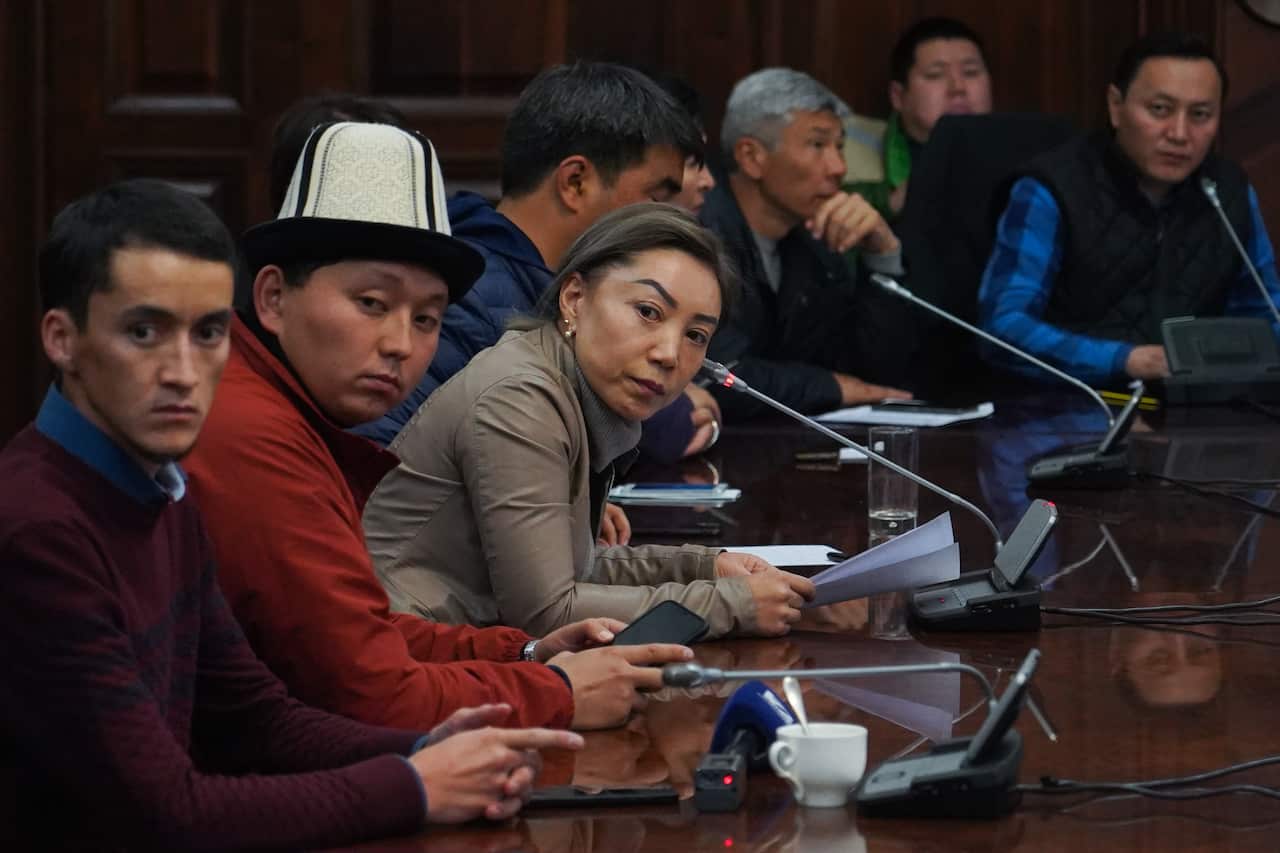
The night of tumult that saw Mr Japarov freed from jail also saw ex-president Almazbek Atambayev and several of his allies released as protesters seized government buildings and stormed into penitentiary facilities.
Supporters of Mr Atambayev - a former ally turned foe of Jeenbekov - said that they planned to hold a rally on Friday, and called on citizens to "prevent the helpers" of Jeenbekov and his family coming to power.
Another protest was planned against organised crime, viewed as deeply enmeshed with politics.







