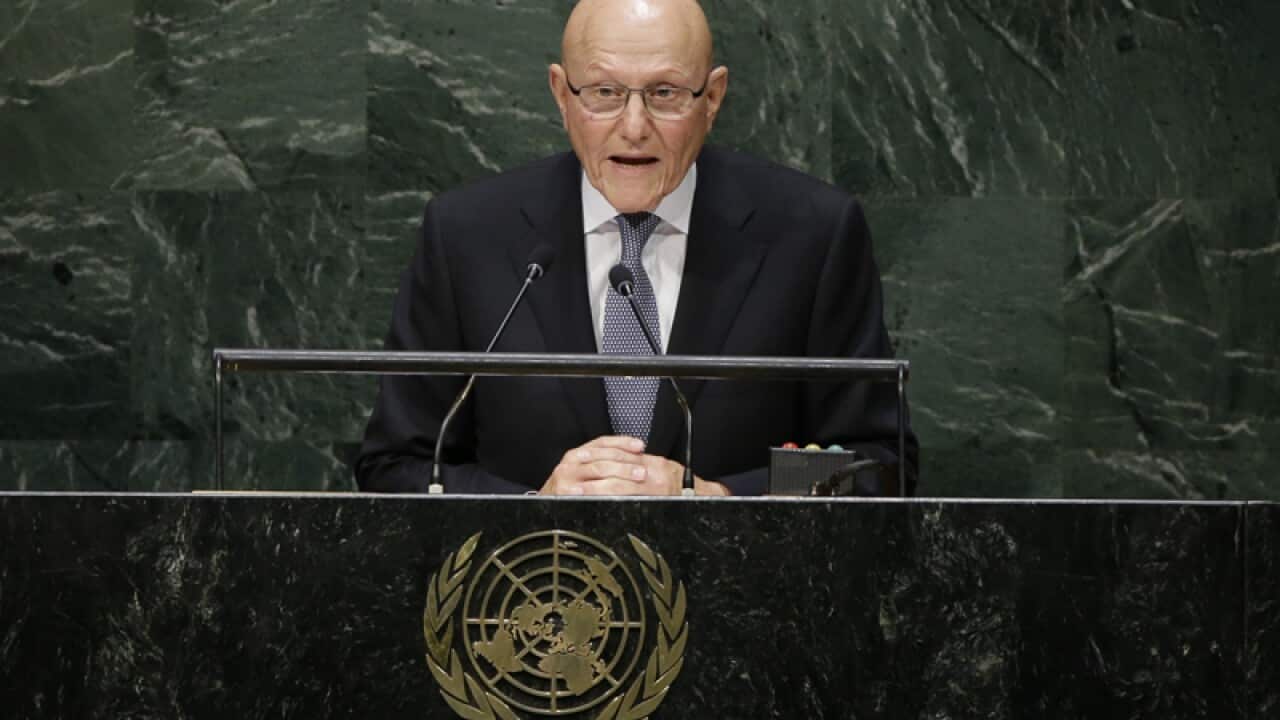
In an emotional appeal to world leaders, Lebanon's prime minister has said his country is facing a "fierce terrorist onslaught" and a disaster created by more than a million Syrian refugees flooding the country.
Speaking before the UN General Assembly, Tammam Salam said Lebanon is determined not to give in to "pressure and blackmail" by Islamic extremists who overran a town bordering Syria in August and are holding about 20 Lebanese soldiers and policemen hostage.
The Islamic State group has already beheaded two of them and Jabhat al-Nusra has shot a third, sparking days of violence against Syrian refugees in Lebanon.
Since then, Lebanese troops have clashed with jihadist fighters in the border area near the Lebanese town of Arsal.
The extremists have made various demands in exchange for the soldiers' release, including the release of Islamist prisoners in Lebanese jails.
News that makes sense
Your trusted source for staying up-to-date with the world around you. Get free daily news updates and analysis, straight to your inbox.
"We will never give in to such pressure, and will remain focused on the release of our soldiers, while preserving our country," Salam said.
Lebanon has long been split over the war in neighbouring Syria, with Sunnis broadly supporting the Sunni-led rebellion against President Bashar al-Assad and Shi'ites supporting his government, fearing the rise of extremists among the rebels' ranks.
The Shi'ite Hezbollah movement has infuriated many Sunnis by sending fighters to battle alongside Assad's troops.
Salam also said the number of Syrian refugees flooding Lebanon - a number equivalent to one-third of the Lebanese population - is now a national disaster.
"To be fully aware of the implications of this situation, one should imagine a hundred million people - yes, one hundred million people - flocking massively into the United States and spreading randomly in cities, towns, schools and parks," he said.
At a ministerial meeting of the International Support Group for Lebanon held on the sidelines of the General Assembly, UN Secretary General Ban Ki-moon said Lebanon hosts the highest ratio of refugees per capita in the world and has received far less assistance than needed.
"As long as the region is aflame and the war in Syria continues... the strains on Lebanon will remain immense, and the burden it is bearing must be shared," he said.







