
Lebanon has approved an emergency reform package in response to protests over dire economic conditions, but the moves did not go far enough to persuade demonstrators to leave the streets.
Hundreds of thousands of people have flooded the streets since Thursday, furious at a political class they accuse of pushing the economy to the point of collapse.
Roads were blocked for a fifth day across the country. Schools, banks and businesses were closed, and banks are
expected to remain shut on Tuesday.
Prime Minister Saad al-Hariri, in a televised speech, said the new measures might not meet the protesters' demands but were a start towards achieving some of them.
News that makes sense
Your trusted source for staying up-to-date with the world around you. Get free daily news updates and analysis, straight to your inbox.
The government must work to recover trust, he said.
"You are the compass and ... your movement frankly is what led us to this decision today," added Mr Hariri, who said big steps had been taken towards fighting corruption and waste.
Maya Mhana, a teacher listening to the speech in Beirut with other protesters, was not convinced.
"We are remaining in the streets, we don't believe a single word he said," she said.
Protesters sang into the night in Beirut and continued to demonstrate in other parts of the country.
"We don't believe that they can change in two days," said Fadi Abou Dargham, a 55-year-old jeweller.
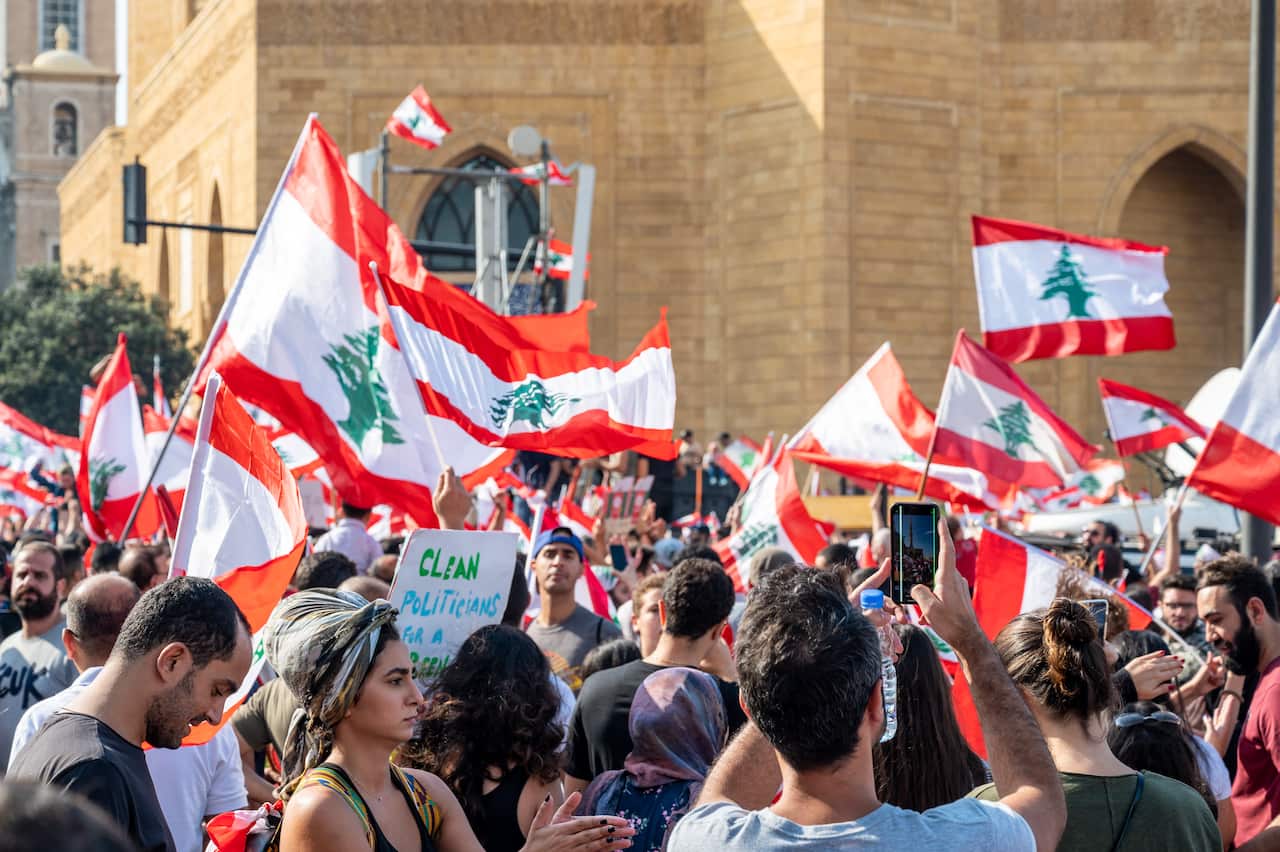
A proposed tax on mobile messaging applications last week sparked a spontaneous, cross-sectarian mobilisation that has brought Lebanon to a standstill and put the entire political class in the dock.
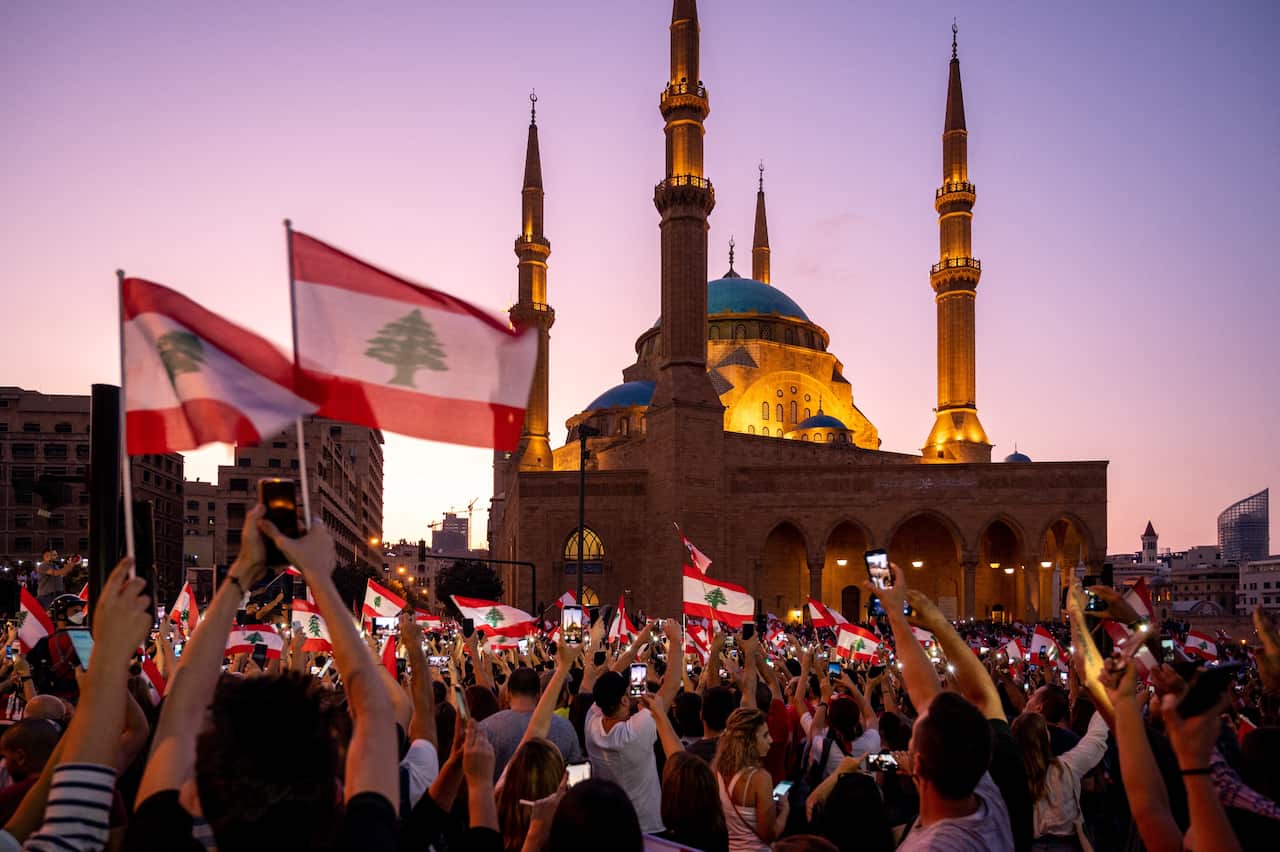
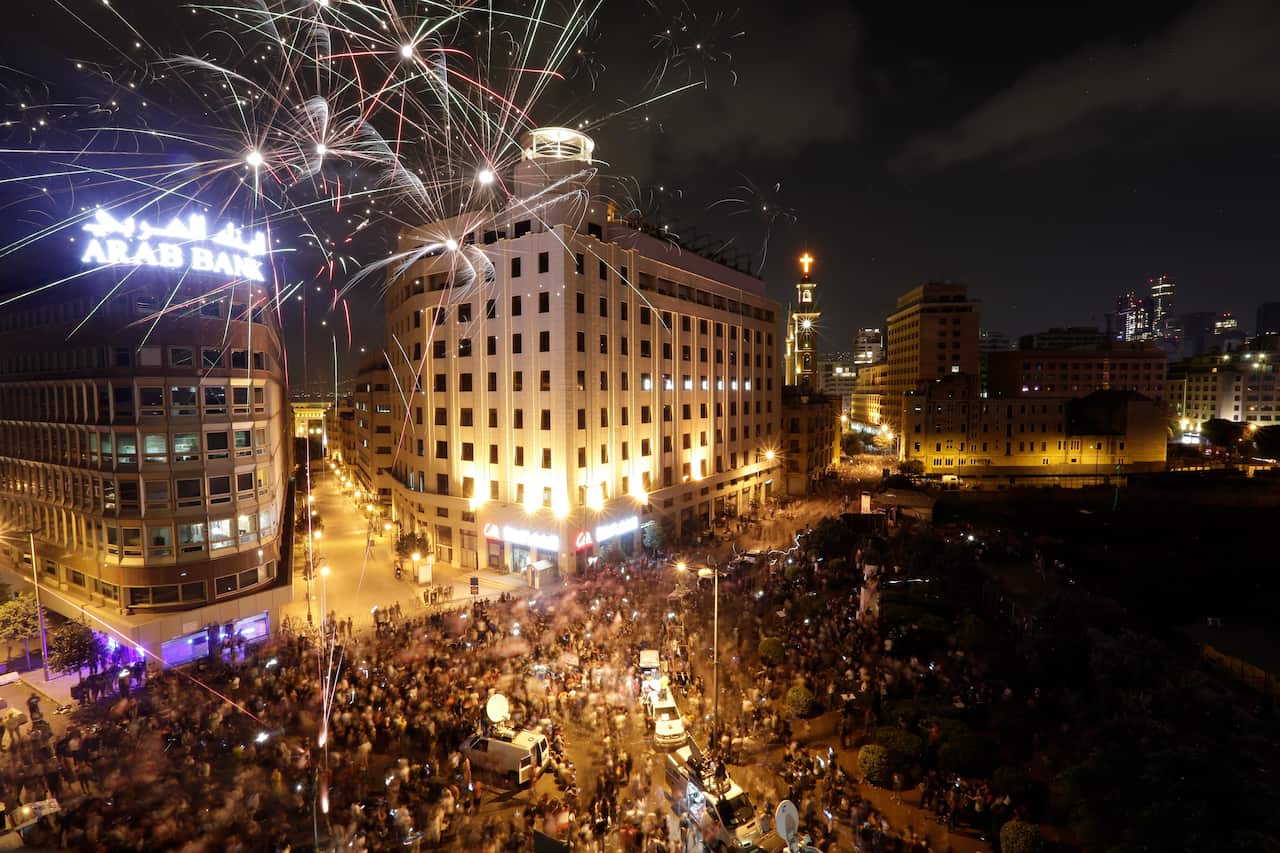
Euphoric crowds partied deep into the night, leaving all political and sectarian paraphernalia at home to gather under the national cedar flag, dancing to impromptu concerts and chanting often hilarious anti-establishment slogans.
Officials told Reuters on Sunday that Prime Minister Saad al-Hariri had agreed to a package of reforms with his government partners to tackle the crisis that has driven hundreds of thousands of protesters into the streets.
The government is due to meet at the presidential palace in the Beirut suburb of Baabda on Monday.
In central Beirut, scene of the largest protest, people prepared for another day of demonstrations.
"If we get reforms, for a start it's good, to calm down the storms, people are angry ... but on the long term, I don't know if it will make a change," said Rida Jammoul, football coach, who was helping to clean-up in Beirut.
Another protester, Ziad Abou Chakra, said he would continue to protest until the government was toppled. "We will stay here and we won't open the roads whatever happens," he said, manning a road block in the Zouk Mikhael area north of Beriut.
The reform plan includes a 50 per cent cut in salaries of current and former presidents, ministers and lawmakers, as well as reductions in benefits for state institutions and officials.
It also includes the central bank and private banks contributing $US3.3 billion ($A4.8 billion) to achieve a "near zero deficit" for the 2020 budget.
The government also aims to privatise the telecommunications sector and overhaul the costly and crumbling electricity sector, one of the biggest strains on Lebanon's depleted finances.
Hariri, who leads a coalition cabinet mired in sectarian and political rivalries, gave his feuding government a 72-hour deadline on Friday to agree to reforms to ward off the crisis, hinting he might otherwise resign. The deadline expires on Monday.
A chorus of voices, from union leaders to politicians, has joined calls for Hariri's government to resign.
The protests have spread across the country since Thursday. Banks were closed on Monday and the main labour union went on strike, threatening further paralysis.
'Day of destiny'
Protesters gathered in front of the government houses said the move smacked of a desperate attempt by the political class to save their jobs.
"It is a day of destiny for us. All our hard work and efforts in previous days and years were to get us to this moment," Roni al-Asaad, a 32-year-old activist in central Beirut, said.
"If they could have implemented these reforms before, why haven't they? And why should we believe them today?"
What was initially dubbed the "WhatsApp revolution" morphed into a mass non-partisan push for a total overhaul of a sectarian power system still run mostly by civil war-era warlords, three decades after the end of the country's conflict.
Demonstrators, old and young, spoke of their joy of experiencing a rare feeling of national unity as they converged towards protest sites at the weekend.
Given the size of the gatherings, the five-day-old mobilisation has been remarkably incident-free, with armies of volunteers forming to clean up the streets, provide water to protesters and organise first aid tents.
with wires...







