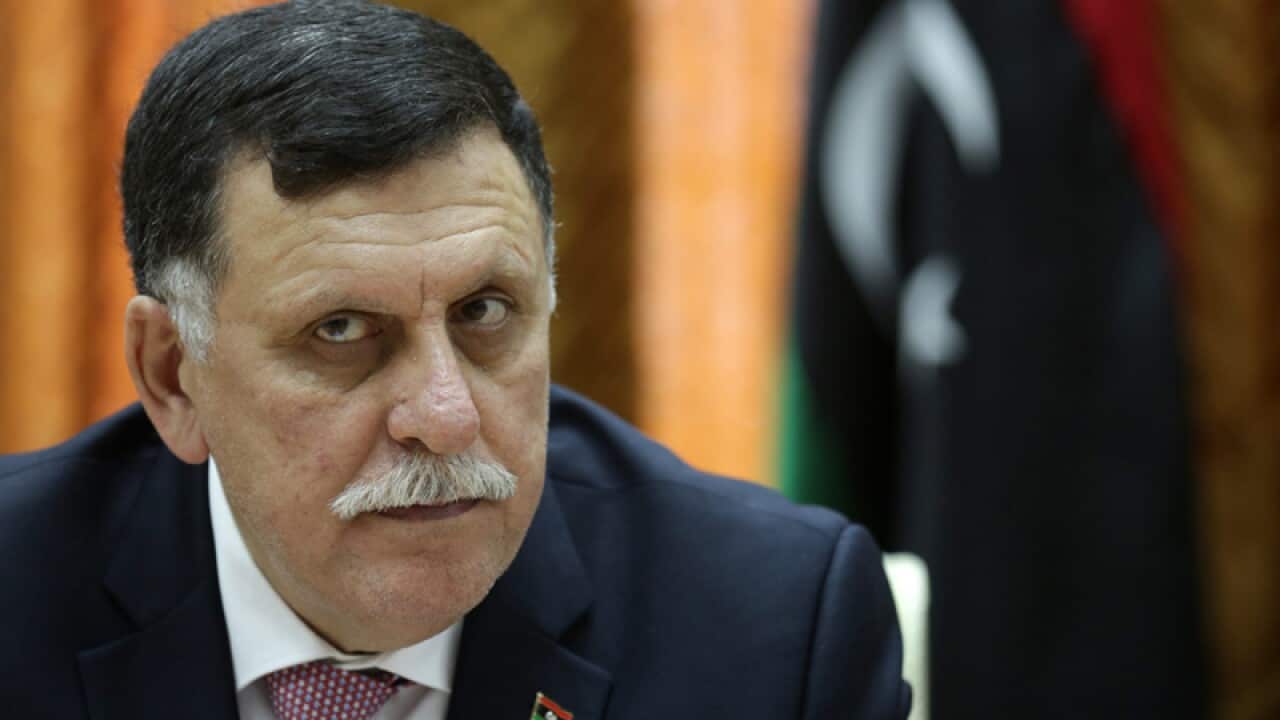
Libya's self-declared National Salvation government says it is stepping down, just under a week after the arrival in Tripoli of a UN-backed national unity government tasked with rebuilding the chaotic country.
The UN-brokered unity government has been operating from a naval base as it seeks to establish its authority over Libya after years of factional power struggles following the 2011 fall of autocrat Muammar Gaddafi.
Western powers are counting on UN-backed leaders to tackle the threat from Islamic State militants exploiting Libya's anarchy, stem migration across the Mediterranean, and rescue the country's finances by restoring oil production.
Unity government leaders arrived by ship from Tunisia last Wednesday, after the National Salvation government closed Tripoli's air space to prevent them from flying in.
The National Salvation government statement came after a number of ministers met to prepare a peaceful handover of power, a justice ministry official said. It carried the stamp of the government though it bore no names or signatures of ministers.
News that makes sense
Your trusted source for staying up-to-date with the world around you. Get free daily news updates and analysis, straight to your inbox.
"We inform you that we are stopping our work as an executive power, as the presidency, members of parliament and ministers of the government," it said.
The National Salvation government took power after a coalition of armed groups supporting it won a battle for control of Tripoli in 2014. A rival parliament and government, backed by a competing coalition of armed factions, moved to eastern Libya.
The new Government of National Accord (GNA) emerged from a UN-mediated deal signed in December by figures from both sides of Libya's political divide.
The GNA has faced opposition from hardliners in both the east and west, and has yet to win formal approval from the internationally recognised parliament now based in the east.
However, it is being protected by some of the key armed brigades in the capital and has been working with the Tripoli-based National Oil Corporation and central bank to chart an economic recovery.







