This audio is voiced by AI and may occasionally mispronounce words.
Share your feedback and help us improve this feature. Read more about how we use AI at SBS here.
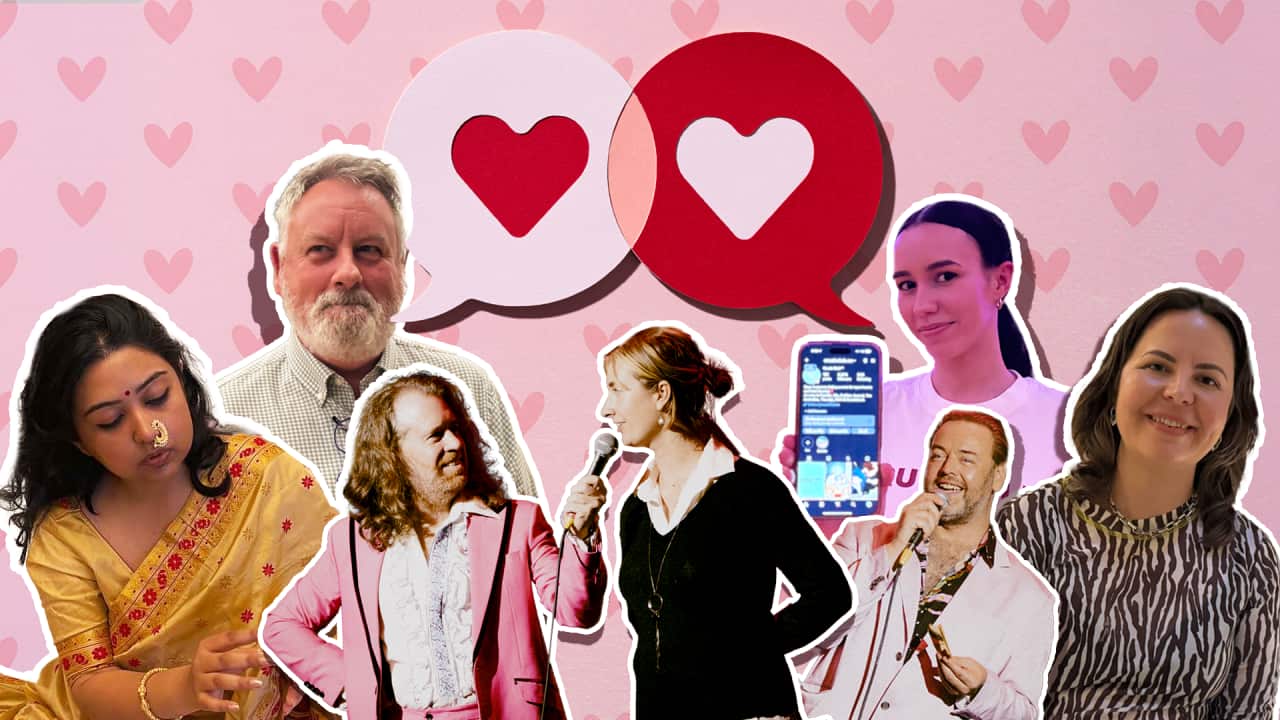
Lilian James didn't expect to find anyone tonight — let alone on a live dating show in front of about 200 people.
"The thought occurs to you, what if I find my soulmate tonight?" the 23-year-old tells SBS News, nervously laughing backstage before the show. "But I don't imagine that I will."
She's at Human Love Quest — a live, inclusive, modern-day version of the 1960s television dating show The Dating Game — staged in a Brunswick venue with sticky floors in the heart of Melbourne's inner north.
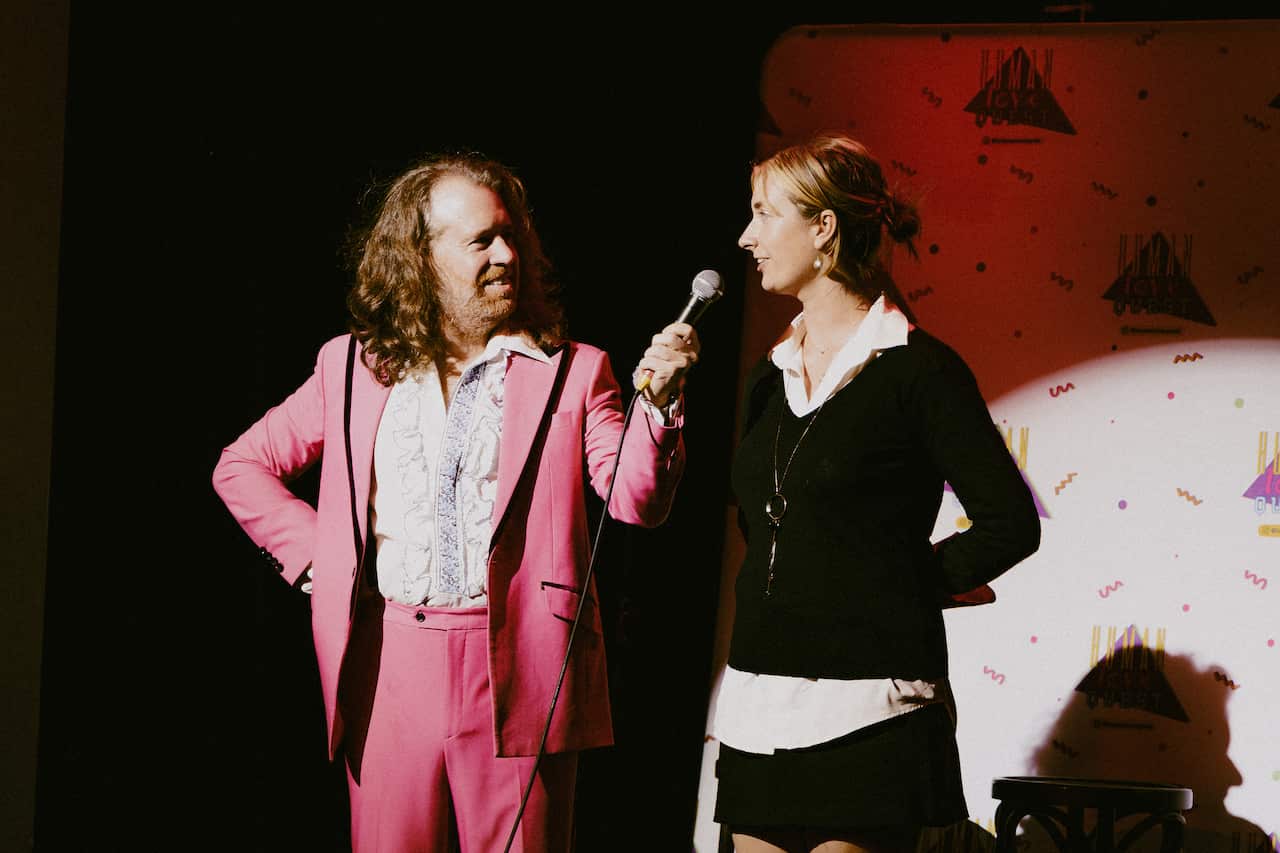
The gist is simple: three contestants vie for the affections of one eligible bachelor or bachelorette, with nothing but a flimsy board separating them from each other — personality over looks, by design.
News that makes sense
Your trusted source for staying up-to-date with the world around you. Get free daily news updates and analysis, straight to your inbox.
Each contestant is asked a question, and they get to ask one back. One question earning a lot of thought tonight is a kiss, marry, kill scenario — cockroaches (marry), mosquitoes (kiss), or flies (kill).
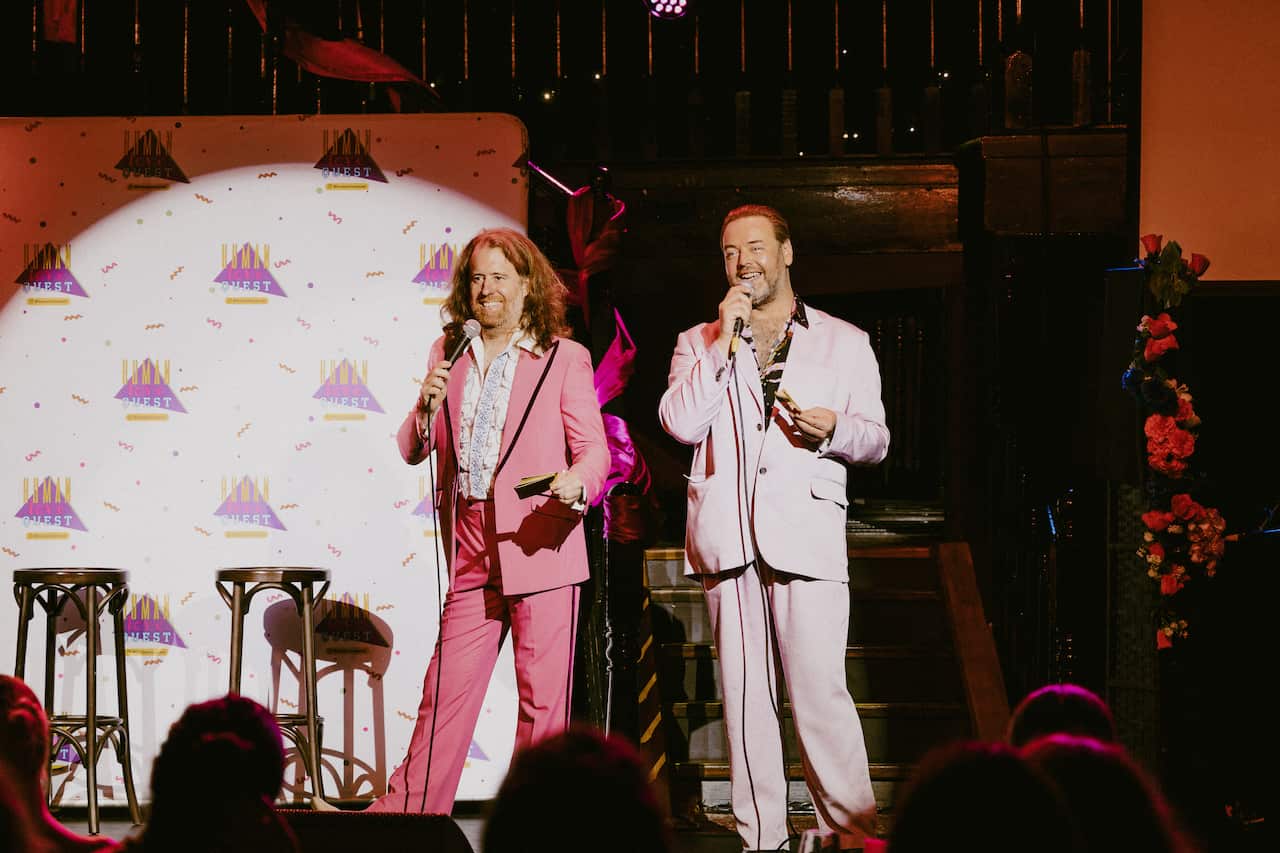
The silliness is part of the DNA, say hosts Conor Gallacher and Xander Allan, complete with matching salmon suits. They staged their first show just after the COVID-19 pandemic, and it quickly evolved from a bit of fun to something people genuinely seemed to need.
"We thought it was just going to be a bit of fun," Allen tells SBS News. "But when we did it, people started really opening up. It became a lot more heartfelt than we thought it would be."
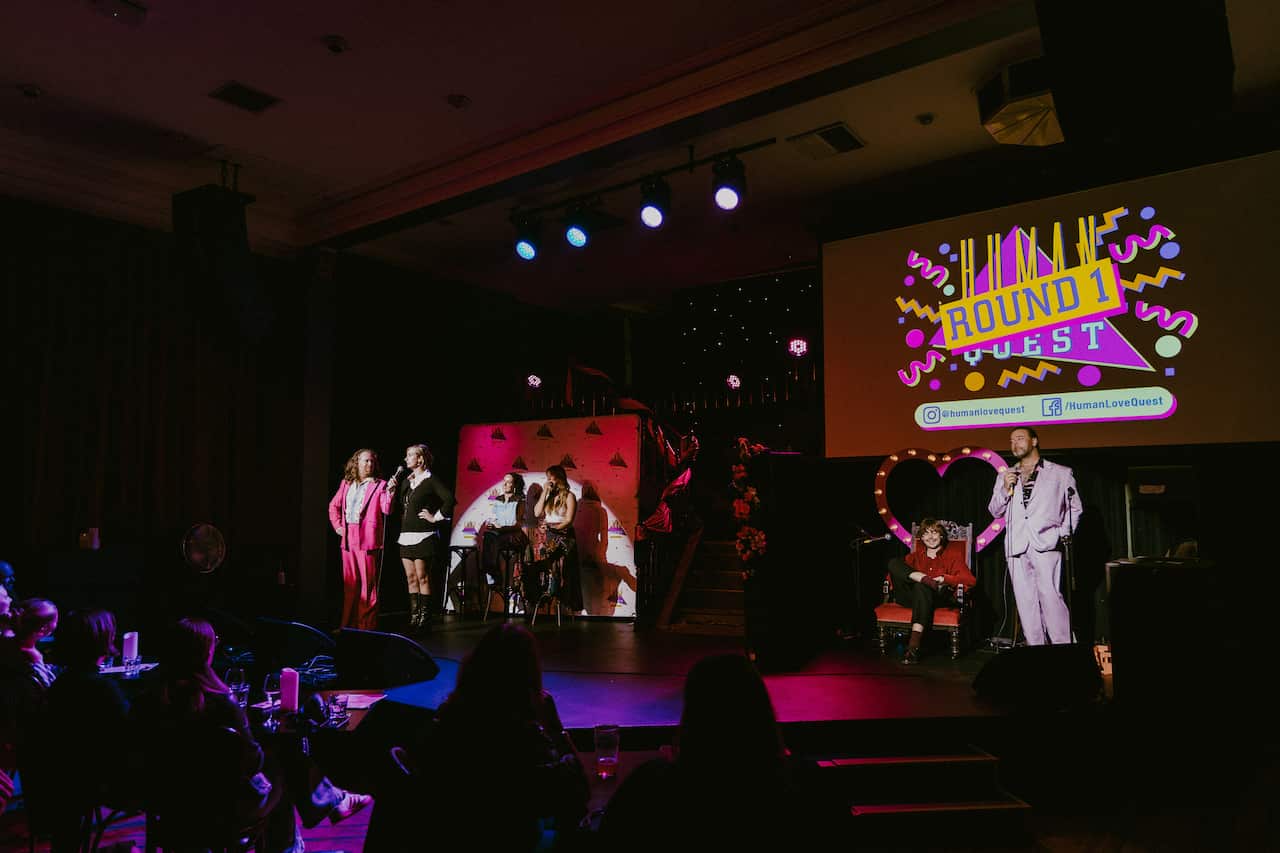
The matchmaking is deliberately low-tech — a Google form where prospective contestants write their name, a bit about themselves, and who they're looking for. Then it's largely a matter of throwing a group of people on stage and seeing what happens.
"Sometimes it works out pretty well," Gallacher says. "Other times it doesn't."
But even when sparks don't fly, the appeal is increasingly obvious.
While the show has been running for years, Allan says he's noticed a shift in recent months, visible in the audience filing in.
"People are coming up to us and saying that they're so sick of the apps."
James, for what it's worth, has been on and off dating apps since she was 18, deleting and redownloading them hundreds of times, but describes herself as "haphazard" about the whole thing — checking in once a week, liking a few people, then putting it down again. Routine.
"Dating apps have always been part of this scene and the environment," she says. "It's just part of life."
And yet. "No-one wants to be up at the altar and say, 'Oh, I knew you were the one when I liked you on Hinge,'" she says.
"Everyone wants to meet their partner in person."
Loneliness as a 'business model'
The mass exodus of people from dating apps isn't exactly new.
Match Group, which owns Tinder, Hinge and OkCupid, lost a net 704,000 paying subscribers over 2024, while Bumble's shares have fallen nearly 95 per cent since the pandemic.
A 2024 Forbes survey of 1,000 people in the United States found 78 per cent of daters say they've felt emotionally, physically, or mentally exhausted by dating apps at least some of the time.
The industry has a term for it: swipe fatigue — a shorthand for the growing sense of burnout among users navigating endless profiles.
Despite that frustration, dating apps remain one of the most common ways couples meet, particularly among younger people, even as alternative ways of meeting have begun to resurface
Mathieu Lajante, a researcher at Toronto Metropolitan University who studies the socioeconomic impact of dating platforms, says it all comes down to the 'enshittification' of dating apps — a term used to describe the deterioration of a product, when user experience is compromised in favour of profit.
Dating apps, Lajante argues, were never really built to help people find love — they were built to keep people looking.
"Dating apps are primarily designed to maximise user interaction, time spent in the app, and the accumulation of consumer data," he tells SBS News.
"Rather than helping users find love, they are built as infrastructures of rent."
He says the experience is deliberately gamified to keep users searching — because a user who finds love is a user who deletes the app.
For a dating app, your prolonged loneliness is not a bug. It is the business model.
The result, Lajante argues, is the "McDonaldisation of dating" — efficiency, predictability, and control, at the cost of everything that actually makes human connection work.
"They tried to eliminate all friction from dating.
"But human connection requires human friction as its only fuel."
Speed dating = cool
That search for connection — and the worsening experience of the apps — is how you end up at Victoria's State Library on a Thursday night, speed dating 30 strangers in a single evening.
Crush Club is a Melbourne-based events business running speed dating nights, dinner parties, and mixers in real life (IRL) — usually hosted at venues that feel a long way from traditional "speed dating" stereotypes.
Tonight's location is the State Library, where hundreds of singles, ranging in age from their 20s to their 60s, are swapping seats every few minutes, filling out match cards, and hoping for the best.
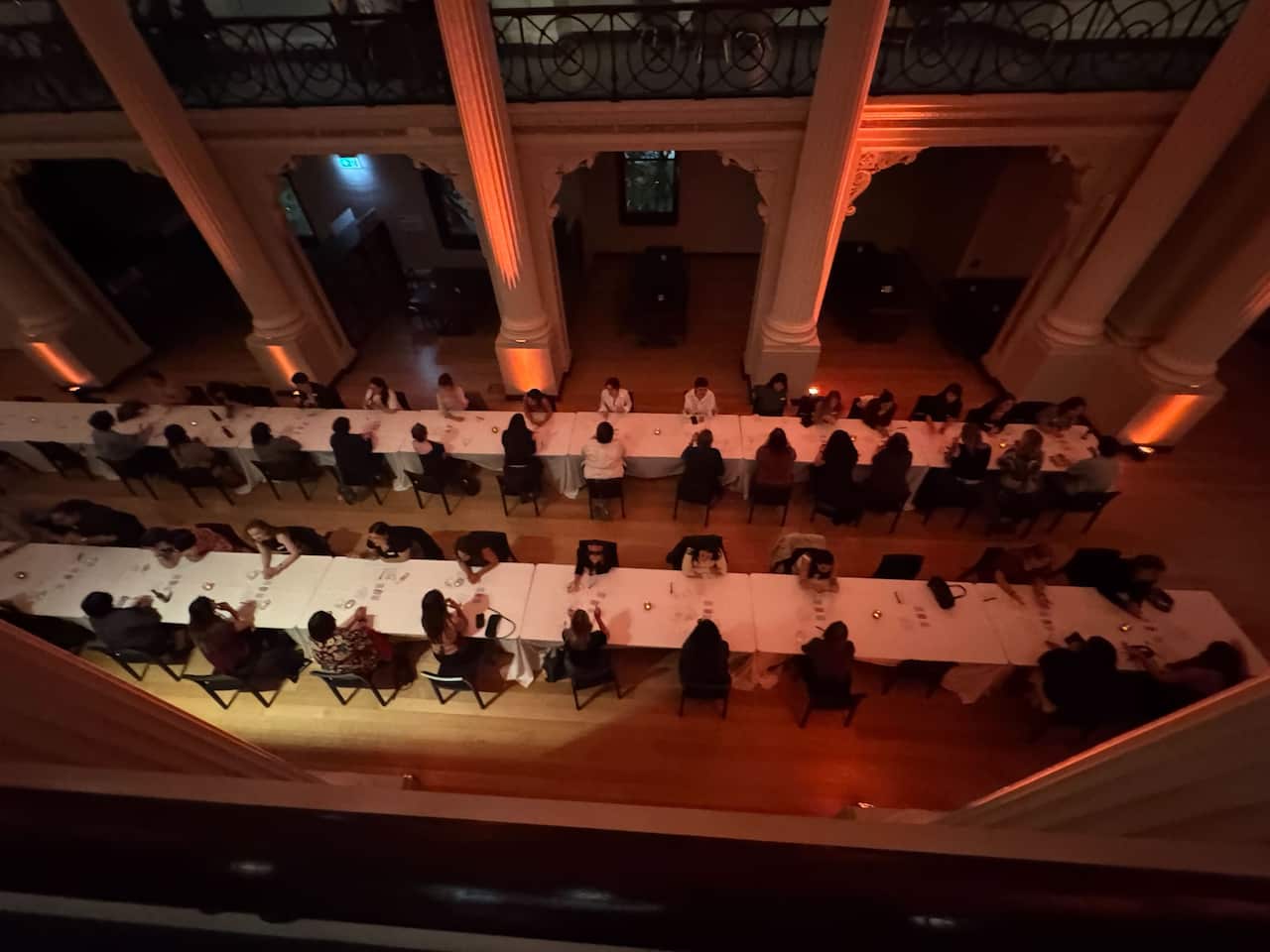
The straight event earlier in the week had 350 people show up, with a waitlist of more than 1,500. Tonight's queer event has drawn 260.
Katie Stewart, 38, was at both — as a bisexual, she says, she's hedging her bets. She's three months into a self-imposed six-month dating app hiatus that she decided to start on Valentine's Day, no less.
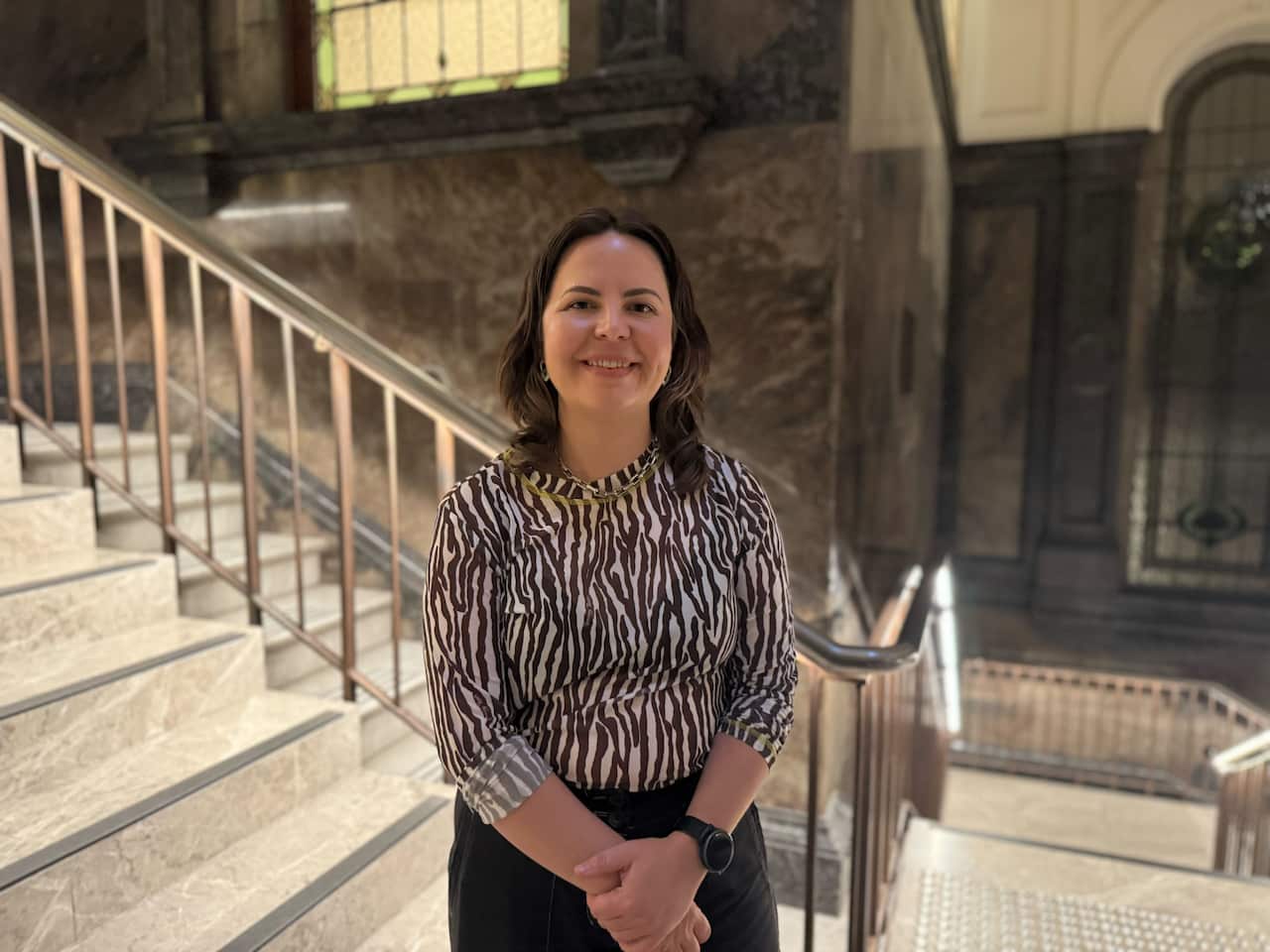
"It's refreshing not to go back to that dopamine hit from the swiping," Stewart tells SBS News.
"The same sort of hit you get from social media.
"The apps are going in a fairly poor direction — the way they're structured these days and how they monetise the user experience has just gotten so much worse."
"I'd encourage anyone who is thinking about IRL dating just to bin the apps for a while and see what happens in the real world."
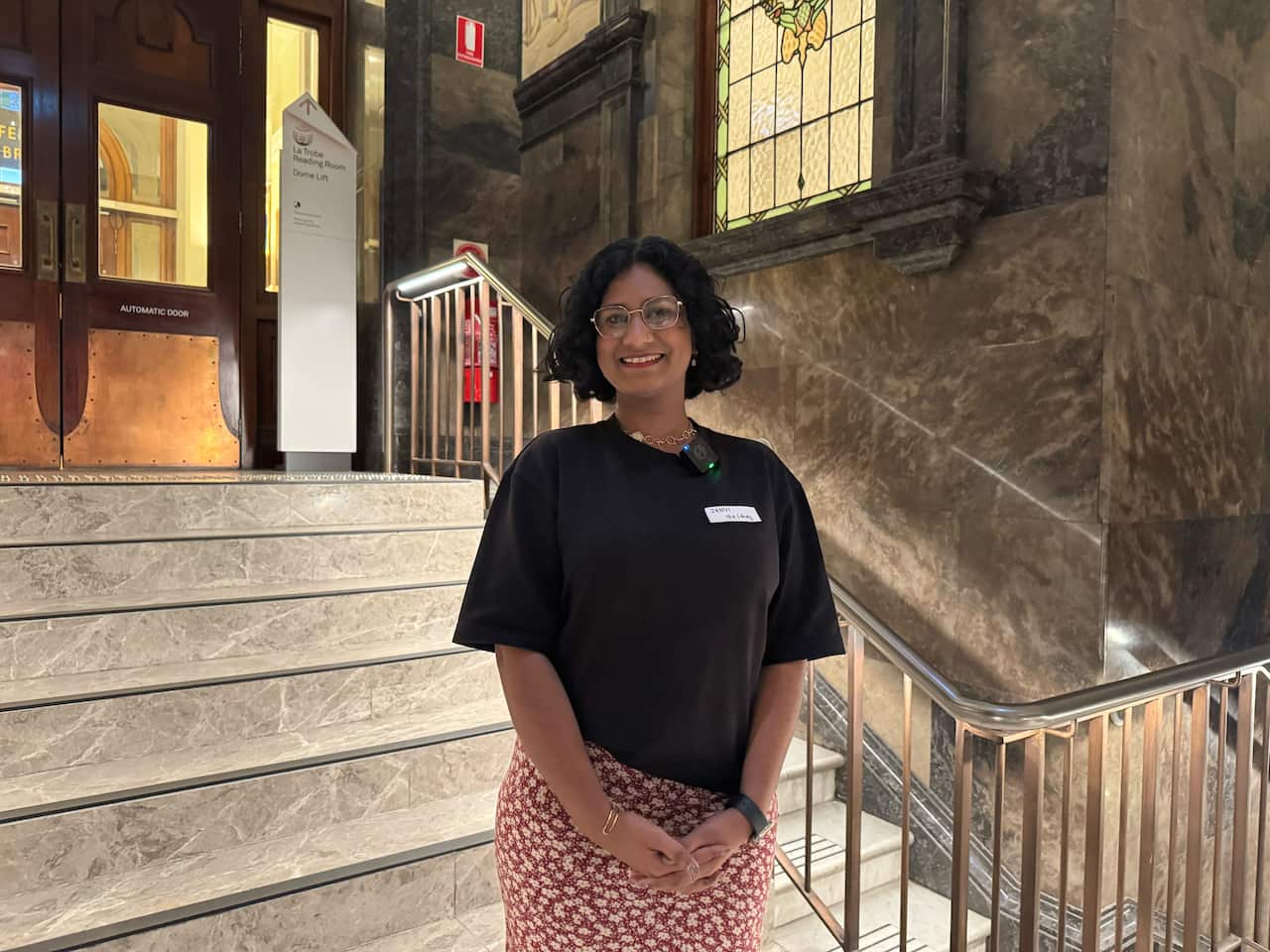
Janvi Kumar, 26, doesn't really use the apps either, though technically she's on them. She moved to Melbourne a year ago and is still building her community — which is part of why she's here tonight.
"I just love meeting people. If it's friends, if it's more, if it's nothing and I just have a really fun night and have at least one interesting conversation, I'm really happy," she tells SBS News.
"I'm a delight ... and more people need to know that, but I find that people can find that out a lot easier in person."
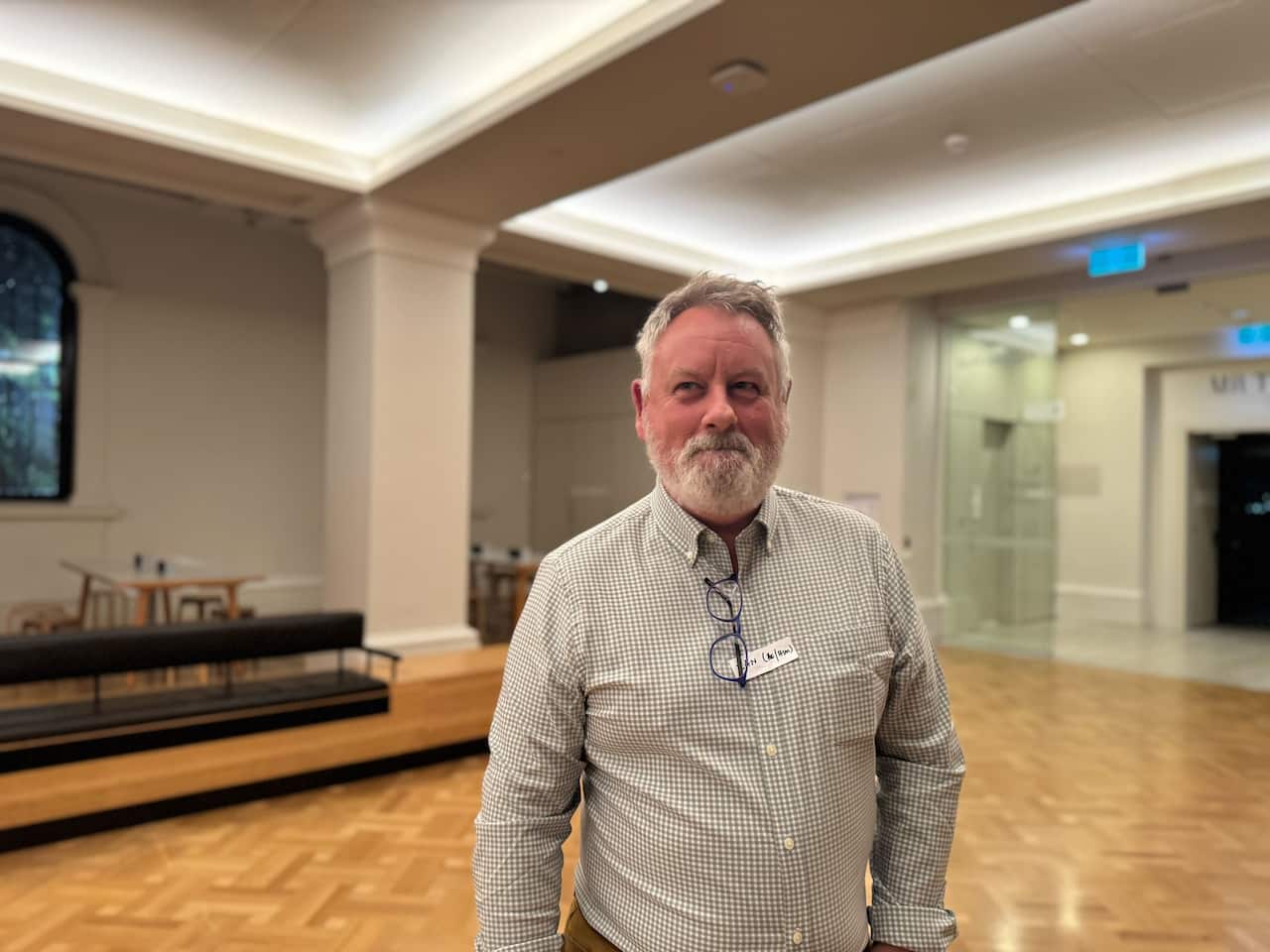
Over in the men's room, 59-year-old Ian Herd is nervous. He's never done anything like this before. He's been on a dating app, just the one, on and off for a decade, but he's done a different version of swiping long before apps existed.
"You answered an ad in a magazine and you'd get a letter back," he tells SBS News.
Things have changed. Some of these young kids wouldn't have a clue.
Crush Club founder Izzy Burns started putting on speed-dating events in late 2024 after she and her friends grew sick of the apps.
"This was a barrier in the beginning because people do have that idea that speed dating equals uncool," she tells SBS News.
Slowly, people are starting to understand that dating events are in at the moment — and maybe using the apps is on the way out.
Women, she says, were the first to get behind it. The men are now following.
"Guys are now starting to get sick of the dating apps too," she says.
Burns says attendees have reported taking breaks from the apps, diversifying their options, or deleting them altogether — a trend she's watching play out in real time.
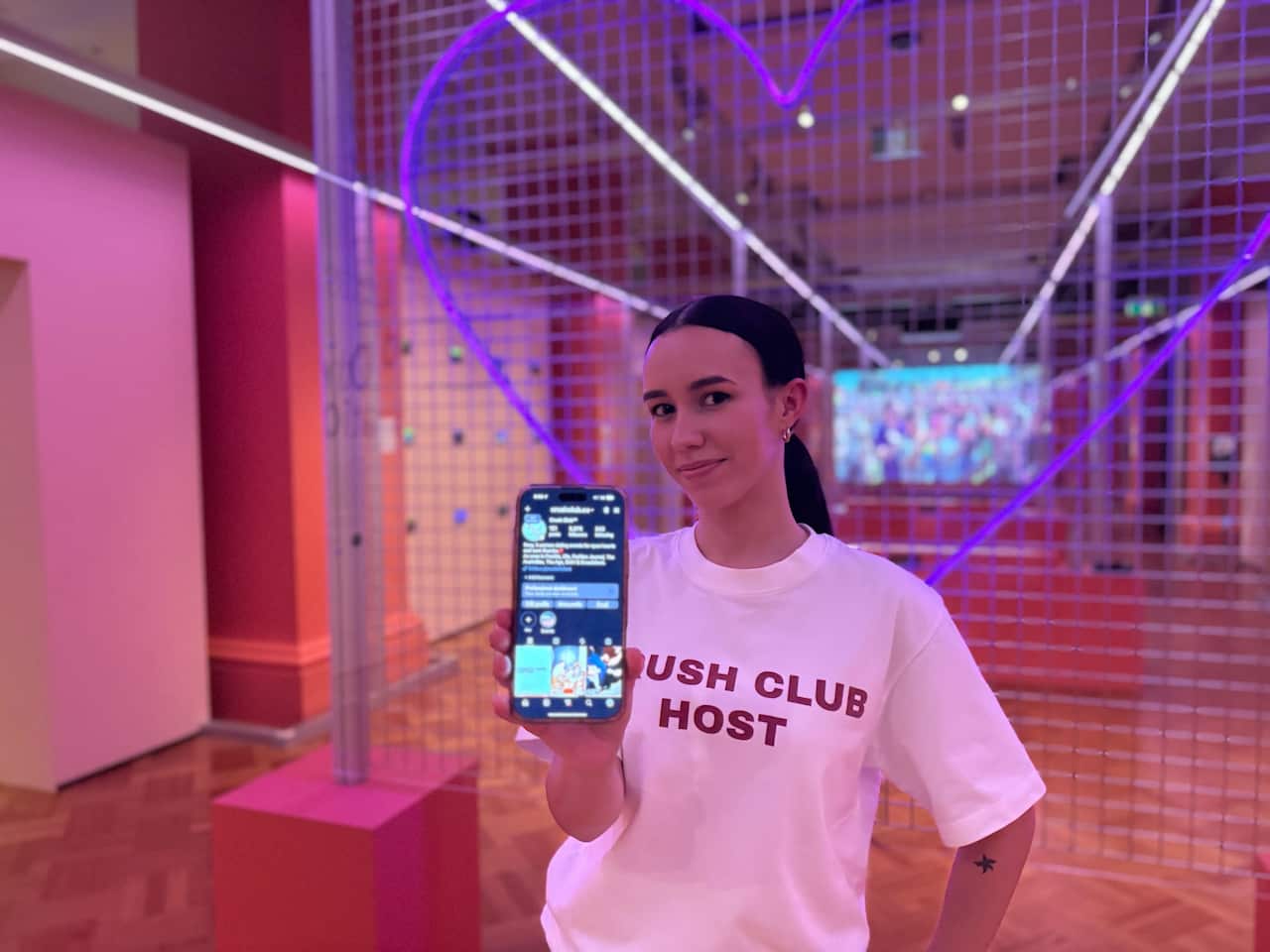
"You might still want to be on the apps and that's okay," she says. "But maybe just to change things up, you come to our events instead."
That shift to in-person dating events is playing out across Australia. 'Pitch a friend' nights have sprung up — where friends build PowerPoint presentations to pitch their mates to a room full of singles.
Even dating app Thursday has pivoted to IRL, hosting singles pickleball, pub sessions, and spin classes.
The underlying pitch is similar: ditch your phone and get back into the real world.
The apps, meanwhile, have a different idea.
Will AI save the apps?
While users flock to IRL match-ups, almost every major dating platform is racing towards AI — automating matches, generating conversation starters, and doubling down on the efficiency that many critics say got them into this mess in the first place.
Bumble recently announced plans to move away from swiping altogether, replacing it with an AI assistant called Bee — a robotic wingman that speaks to other users' AI assistants to determine compatibility before the humans involved have exchanged a word.
Meanwhile, Match Group's chief financial officer told Reuters the company's goal was to become "an AI-native company".
Raffaele Ciriello, a senior lecturer in digital innovation at the University of Sydney's Business School, thinks the apps are asking the wrong question.
The real question is not whether we should make dating more efficient, but whether that is the end goal.
"These companies make money from user retention and engagement — not from meaningful relationships," he tells SBS News.
"Meaningful relationships often happen when you get to know parts of someone's personality that cannot easily be represented on a dating app."
He acknowledges AI could help in some cases — lowering barriers for people with social anxiety, language differences or neurodivergence, and potentially improving safety. But he's sceptical it addresses what's actually driving people away.
"People are realising that these platforms are not necessarily here to serve their best interests — they're here to make money from data and interactions," he says.
"This is not going to be a silver bullet to fix all of the dating app industry's problems."
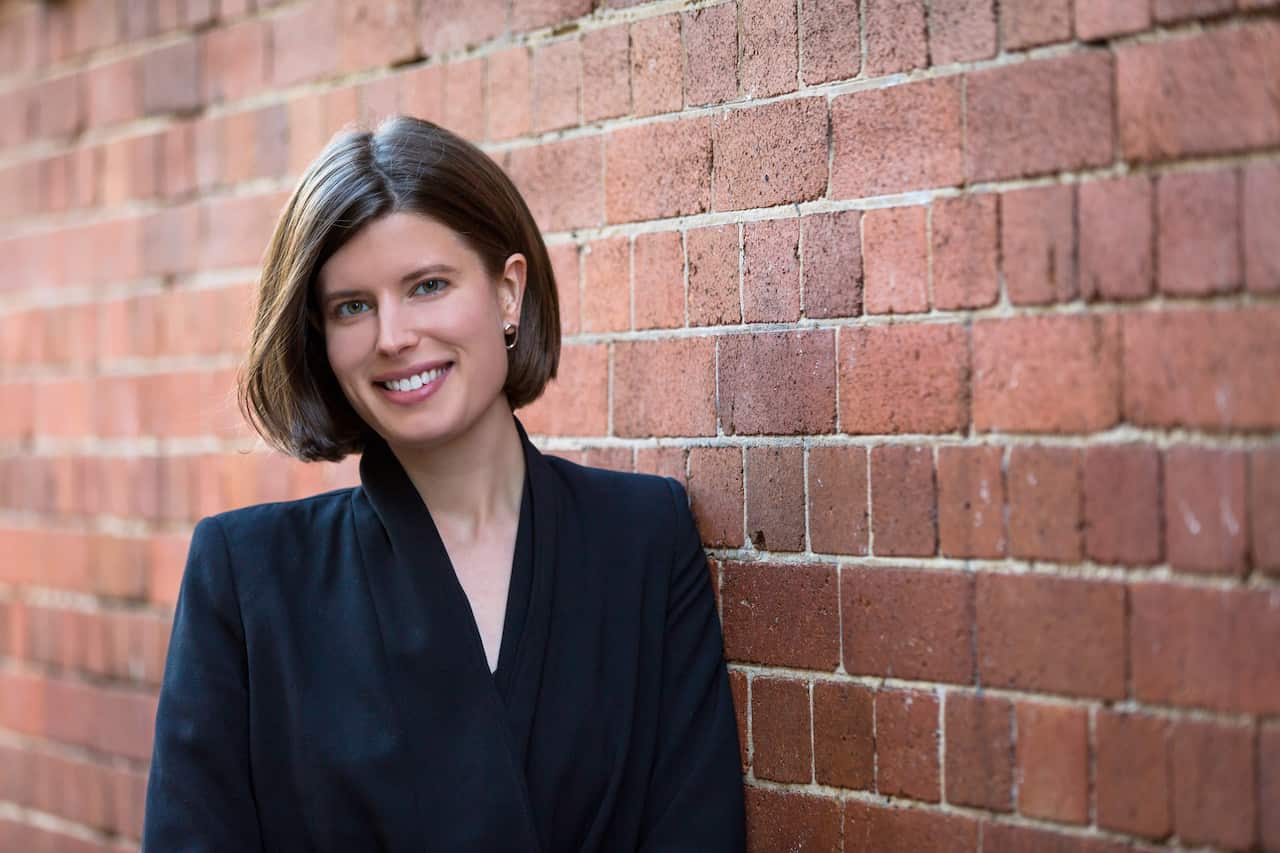
Holly Bartter's business, Matchsmith, offers what might be the most human possible response to the app experience: she swipes for her clients, screens their matches, manages early conversations, and hands things back over when a real date is on the horizon. She's been doing it for eight years.
"Most people come to me feeling what I call swipe fatigue — they're over it," she tells SBS News.
"The energy is lower. There's a bit less optimism about online dating being this great pool you can dip into."
She isn't too worried that a pivot to AI might decimate her business — she even sees potential in it for people who want quality over quantity without seeking out a service like hers.
"Many clients will still prefer that human touch — we can all recognise the classic AI-isms, especially in early conversation.
"My client base has always been very niche, and very human-focused — lots of one-on-one chats and emails.
"I don't think AI can match that just yet. No pun intended."
The oldest matchmaker in the book
Long before anyone swiped right, communities had their own systems. A rabbi acting as a go-between for two families. In Japan, nakōdo — or 'middle person' — presenting a potential match. An elder or astrologer in Hindu tradition reading the stars for compatibility.
The method changed across cultures and centuries, but the impulse remained the same.
Soujanya Datta grew up in India, where that instinct was embedded in daily life.
"In an Indian context, it's not always formal, but there's this belief that people who know you well might actually know who you'd be good with," she tells SBS News.
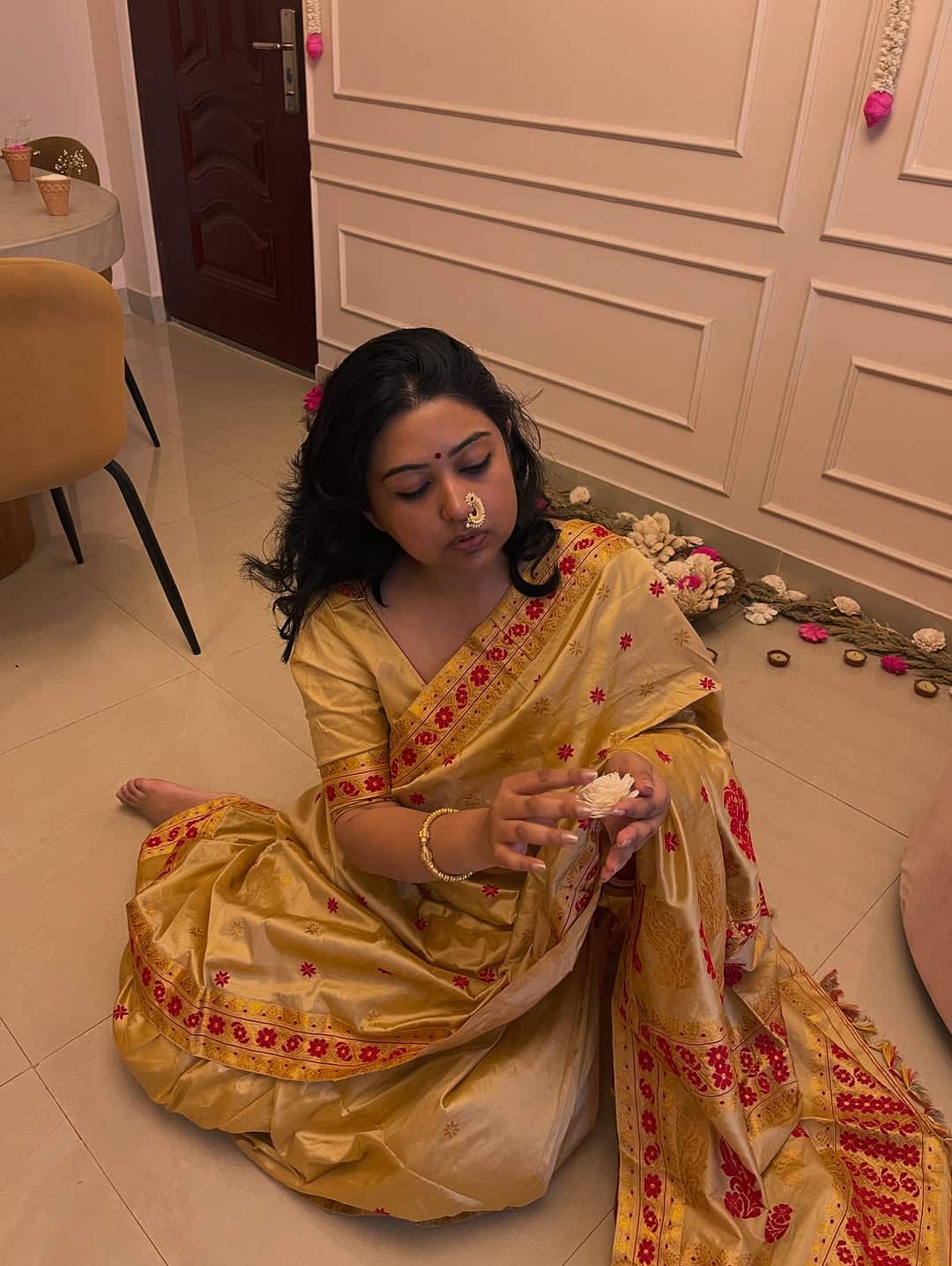
She didn't set out to become that matchmaker in her own friendship group, but just had a habit of noticing who might click. Now, three successful setups later — one couple who recently married — she's half-joking about formalising it.
"This was actually my third successful setup — so I can't call it a one-off anymore," Datta says. "At this point, I feel like I might have to start charging for my services."
What she's tapping into, she says, is something the dating apps struggle to replicate.
When it comes through a friend, it feels more real.
"A friend's recommendation feels more intentional and a bit more human. Apps are great for access — but they're quite transactional."
Psychologist Carly Dober says there's a reason these meetings often feel different.
"Online chemistry may not translate to real-world chemistry," she tells SBS News.
"Texting or chatting online too long can lead people to romanticise someone — our answers can be perfectly curated when we have time to craft them, in a way that in-person interactions can't replicate."
Lajante sees the broader pattern. The alternatives gaining traction — matchmakers, curated events, friend setups — are gaining ground because they offer what the apps were never designed to provide.
"They prioritise tacit knowledge, human judgement and contextual trust," he says. "The exact elements that cannot be automated."
For Ciriello, this shift reflects a wider cultural moment beyond dating alone.
"There's a broader digital fatigue," he says. "People are just fatigued by everything they've been seeing online."
People are actively resisting and rejecting technology — trying to adopt more traditional, non-digital ways of meeting each other.
He doesn't think it's just a trend: "I do think we're seeing early signs of a genuine reversal."
Back in Brunswick, James is still working out where to go next. Somewhere quieter, she decides. Ideally, with a bit less pressure. A little less of an audience.
"It's always nice when things go unexpectedly.
"Getting up in front of all these people — it makes you feel a bit self-conscious. But it's also exciting. Something new.
"Who knows what's going to happen? Who knows where this is going to go? Isn't that what it's all about?"
For the latest from SBS News, download our app and subscribe to our newsletter.







