
Watch Dateline's episode North Korean Matchmakers now on SBS On Demand.
In an office building in the South Korean capital Seoul, Yujin Han is interviewing prospective love interests. She asks about their height, weight, age, whether they own a home, and their dating history.
She’s not asking on her own behalf. This is her job, as a matchmaker who pairs North Korean women with South Korean men. Yujin is a defector from North Korea and knows exactly how difficult life can be — not just in North Korea, but also once people escape.
News that makes sense
Your trusted source for staying up-to-date with the world around you. Get free daily news updates and analysis, straight to your inbox.
Defectors who make it to South Korea can face discrimination, wage gaps, and poor mental health outcomes.
"What Northern women value most is stability. Looks aren't as important, what they want is a stable life," Yujin tells one prospective client.
In her experience, Southern men have traditionally been afraid Northern women will be "brainwashed" and "headstrong".
"More Southerners now see Northerners in a positive light, so there's been more demand."
Yujin set up her marriage agency in 2016 and also married a southerner. Many women who defect from North Korea do the same.
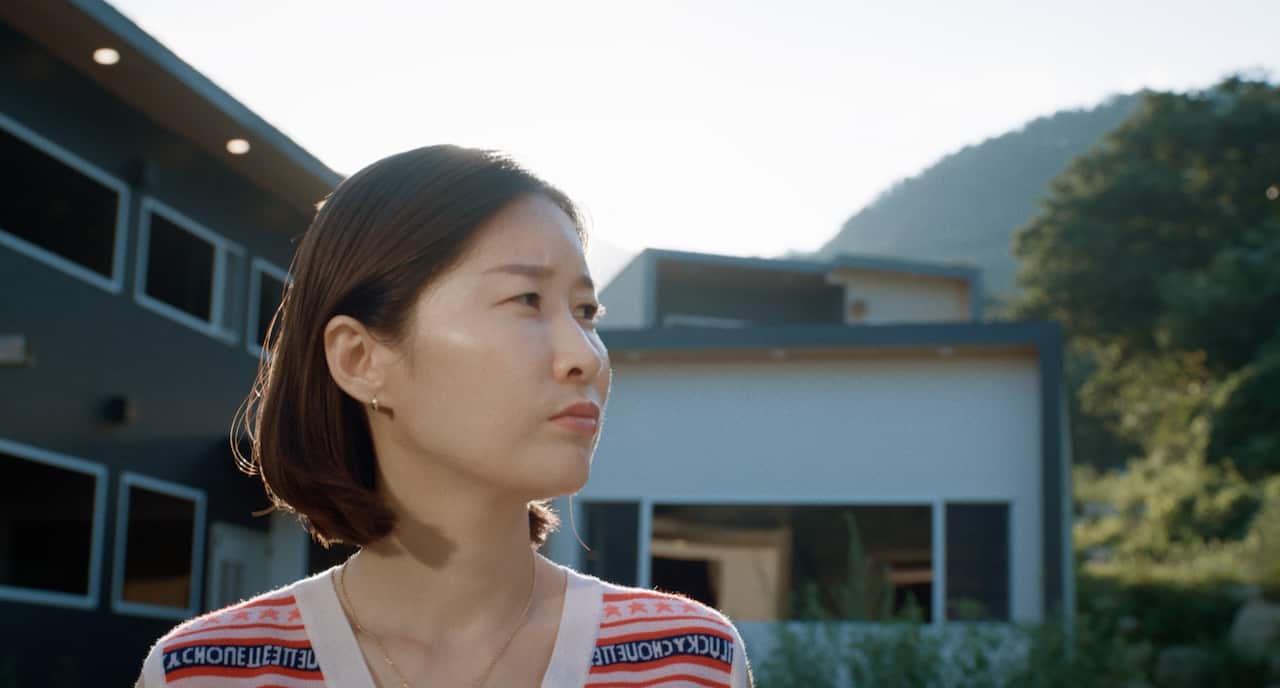
Yujin and her husband, Yurok Jin, met when she was working at a different marriage agency. He became interested in marrying a northerner after a visit to Cambodia. He visited a North Korean restaurant, where he became entranced by the waitresses, who he described being "like angels".
But North-South marriages can be complex, and matchmaking agencies have been criticised for reinforcing gendered stereotypes about North Korean women, including that they are submissive.
"North and South Koreans look the same on the outside. We're the same people, but different in character," Yurok said.
"They're quite outspoken. I still can't get used to that part."
Why women are fleeing North Korea
In the 80 years since North and South Korea were divided, around 34,000 North Koreans have fled to South Korea. The bulk of them are women.
"It’s easier for women, men can't escape so easily ... It's more severe when a man gets caught crossing the border," Yujin said.
"A woman can beg and plead her way out."
North Koreans are not allowed to leave the country without the permission of the government. If caught trying to leave illegally, they face consequences including torture and life imprisonment.
When people are allowed to leave the country, such as professional athletes competing internationally, they are surveilled closely. They also reportedly face 'ideological evaluation' when they return.
Yujin also believes men are "pretty comfortable in the North" when it comes to things like managing a household.
"Women do everything. Men don’t even know how to set the table."
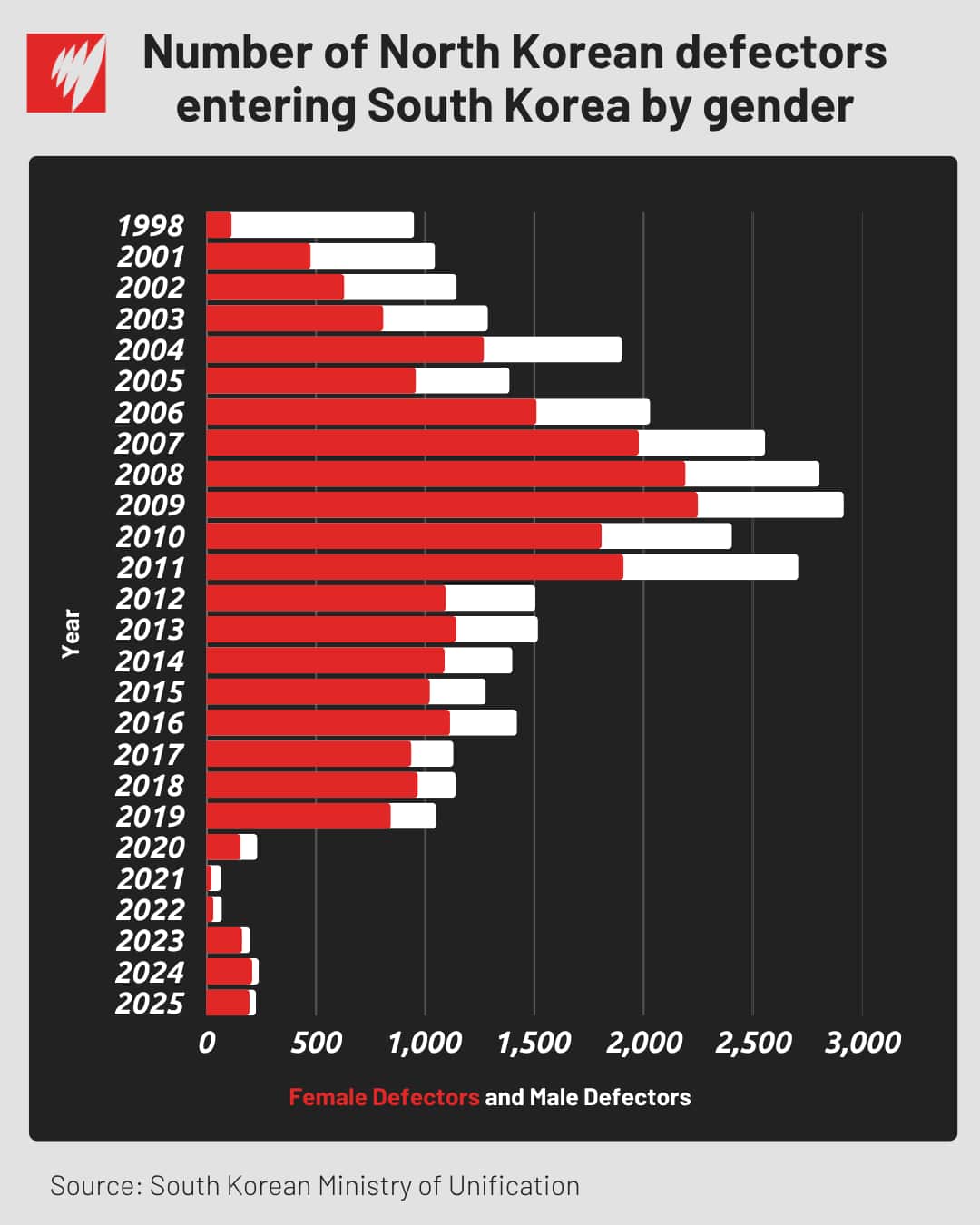
The rate of defection from North Korea has increased significantly since the 1990s. Many people fled the country after the devastating famine between 1995 and 1998, which killed between 600,000 and three million people.
Defections to South Korea peaked in 2009. During the COVID-19 pandemic, they decreased dramatically, but have begun to rise again since 2022.
Once North Koreans arrive in South Korea, they take part in a three-month course in a government-run integration centre.
They're also entitled to certain benefits, including a one-time payment of 8 million won (around $7,600) for a single-person household. They can access career counselling and job placements, and automatically get South Korean citizenship.
What it's like to defect from North Korea
As well as her marriage agency, Yujin runs retreats. At one of the retreats are a group of women who fled North Korea, including one woman who served in the army during the famine.
"The officers said: 'wait till you see what's going on outside, people are starving to death'," she said.
"I thought they were lying. It was true, I saw them myself."
Another woman at Yujin's retreat was caught trying to flee the country eight times in 10 years.
She was imprisoned multiple times, where she faced beatings and other punishments.
"They ripped my skin with a crochet hook in prison," she remembered.
Most defectors escape through China, but risk being sent back to North Korea if caught because of an alliance between the two countries.
'I felt an unimaginable emptiness'
Hyoju Han also escaped North Korea through China — and she's among the many defectors who has ended up marrying a southerner.
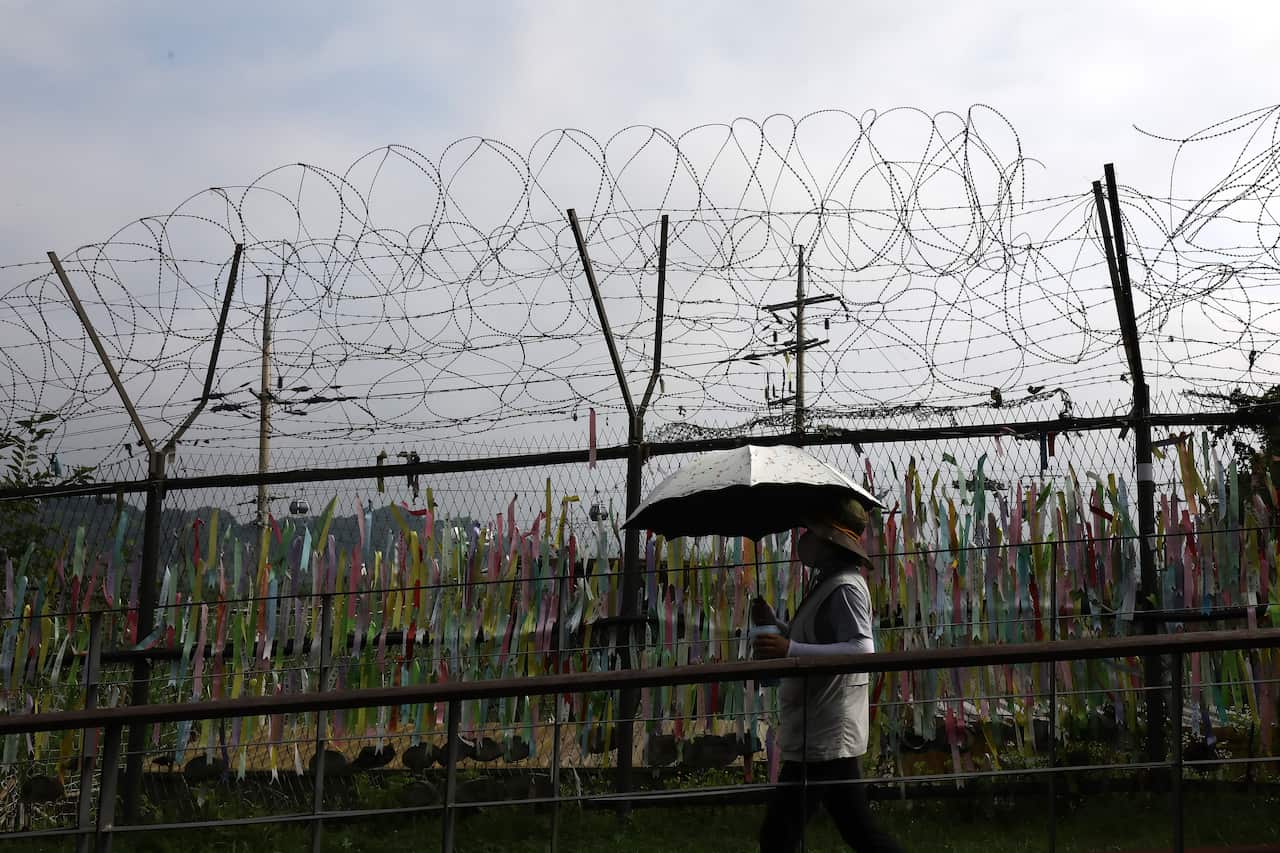
On her first date with her now-husband Jaewu Jeong, he took her to the DMZ, the demilitarised zone separating North and South Korea, because he wanted to her to see her homeland.
It might not sound like the most romantic place for a date, but for Hyoju it was significant: she was seeing her home for the first time in years.
"That our date was right on the North-South border was meaningful. A memorable day. I enjoyed it and got to see my homeland."
Seeing North Korea brought tears to her eyes. But her escape from home was motivated by a devastating loss.
Jaewu is not Hyoju's first husband. At 20 years old, she married a man she met while on a work brigade. Soon, they had son — but Hyoju was unhappy, struggling with married life and having a child so early.
After her son's first birthday, she left her husband and moved herself and her child back in with her parents.
"I needed to provide for my baby, so I left him in my mother's care and went crab fishing to earn money," she said. "For four months, I didn't have access to a cell phone or anything."
After returning at the end of the season, Hyoju ran into a neighbour, who told her that her son had died while she was away.
"I couldn’t see the sky. The world was collapsing," she said.
"I felt an unimaginable emptiness, it was like nothing I've felt before. For a while, maybe a month, I was completely out of my mind."
It was during this time that a friend told her about a smuggling trade between the North Korean border town of Hyesan and China.
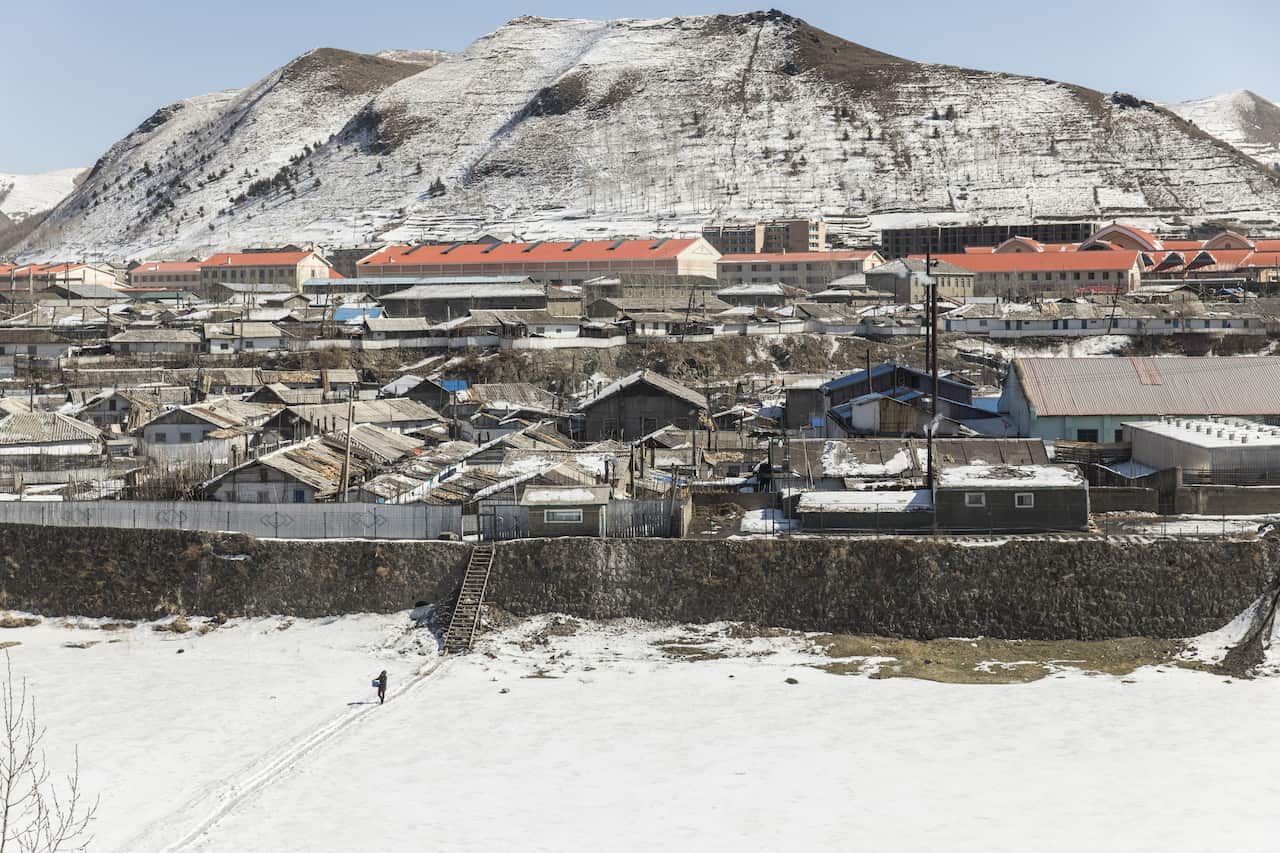
"With my baby dead, and no reason to stay home any longer I decided to go to Hyesan with her. She said, 'Don't tell your parents. Say you're going out to sea again'."
Eventually, Hyoju arrived in South Korea. Two years later, she met Jaewu through Yujin's marriage agency.
The match wasn't an immediate success.
"They met a couple [of] times and Hyoju said she wasn't that into him. I promised her other matches," Yujin said.
After a string of unsuccessful dates with other men, Yujin suggested Hyoju try dating Jaewu again. Soon, they had a son.
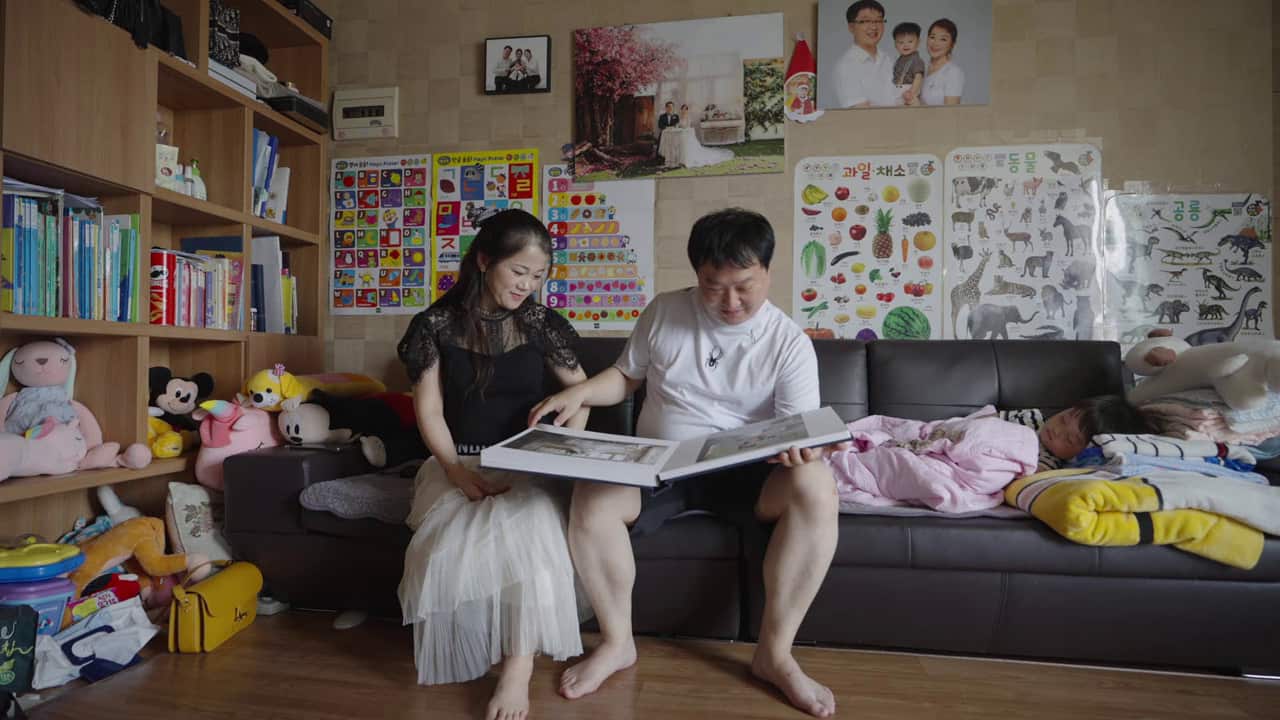
The couple have spent periods apart, with Jaewu working away during the week until the family can locate closer to his work.
"Not being able to see my son grow up every day is what's worst about being a weekend couple," he said.
Hyoju doesn't mind being apart during the week, and says their son is her ultimate priority.
"Romance isn't important to me. What's important is my son," she said.
Marriage is marketed to North Korean women as a way to access security. Hyoju says defectors are often "lost and afraid of living alone", so they look for a partner.
But she believes the temptation to marry soon after defecting can have negative consequences.
"It's better to have several years of adapting before getting married. More Northerners are getting divorces now," she said.
"Don't marry as soon as you arrive here. I myself now regret that I took that path."
Watch your favourite Dateline episodes around the clock on SBS On Demand's dedicated Dateline channel. For the latest from SBS News, download our app and subscribe to our newsletter.

Dateline is an award-winning Australian, international documentary series airing for over 40 years. Each week Dateline scours the globe to bring you a world of daring stories. Read more about Dateline

Have a story or comment? Contact Us







