in brief
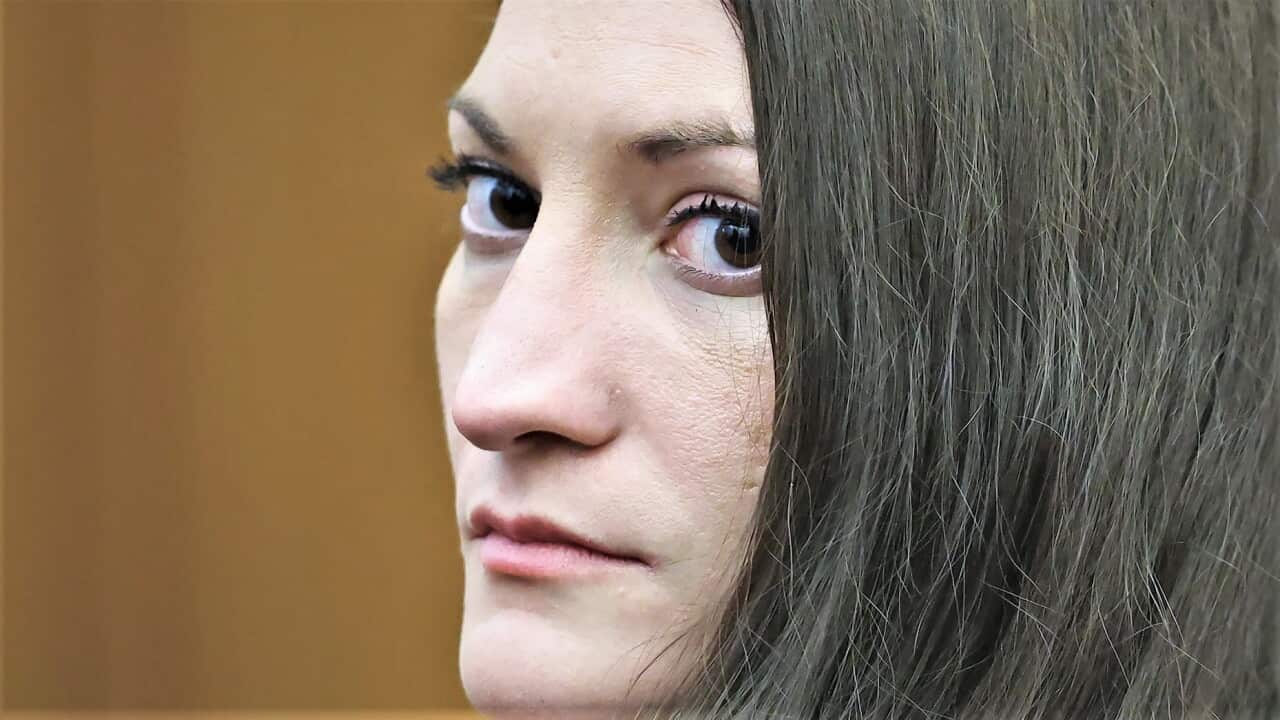
- The ongoing murder trial of Lindsay Clancy has captured global interest.
- The case has shone a spotlight on elements of mental health care failures, post-partum challenges, and criminal justice.
The case of Lindsay Clancy in the United States has captured international attention due to its horrific and complex nature, with one expert telling SBS News that the intrigue reflects a "call to change society".
The 36-year-old mother of three claimed to be suffering from postpartum psychosis when she strangled her three young children to death in their home in Duxbury, Massachusetts, in January 2023.
She then cut her wrists and jumped from a second-story window, leaving her paralysed from the waist down and using a wheelchair.
Clancy has pleaded not guilty by reason of insanity, saying she heard a voice ordering her to kill her children.
Prosecutors have rejected her argument, saying she had planned to murder her children and was able to understand the consequences of her actions.
News that makes sense
Your trusted source for staying up-to-date with the world around you. Get free daily news updates and analysis, straight to your inbox.
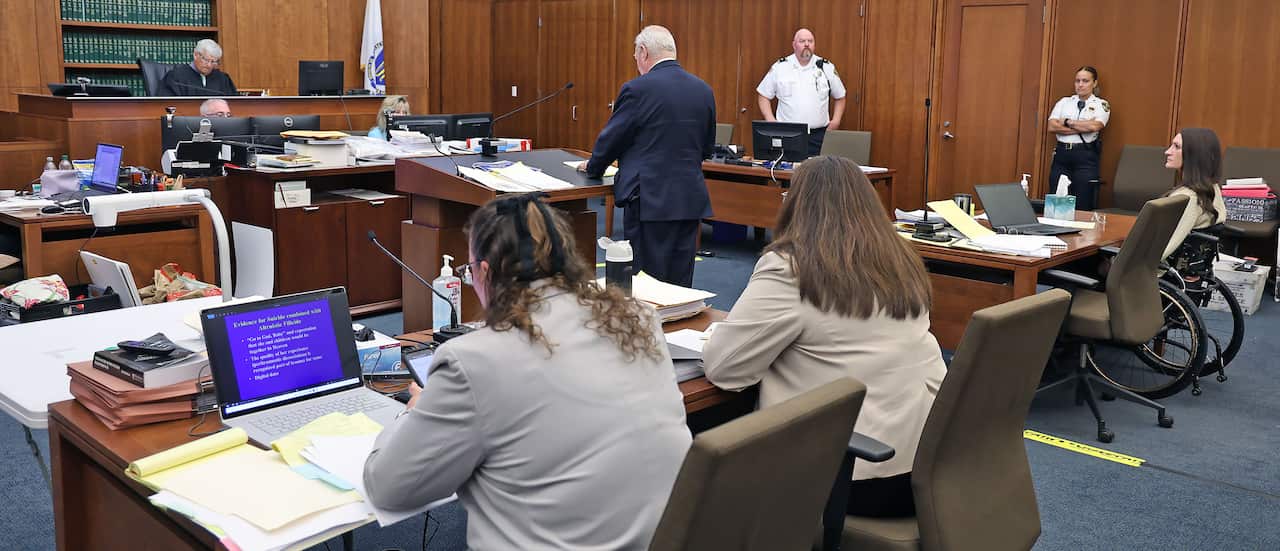
The five-week trial has come down to five days and nearly 30 hours of deliberation, with the case currently deadlocked as jurors say they cannot reach a unanimous decision.
The labour and delivery nurse faces a mandatory life sentence if found guilty, and could be committed to a psychiatric facility indefinitely if acquitted on mental health grounds.
Global intrigue
Internet sleuths, TikTok detectives, and social media discussions have pored over every aspect of the case, with both defenders and critics staking out their own various theories about exactly what happened.
Such ongoing digital scrutiny is reminiscent of other murder trials involving female perpetrators and, in some cases, family members.
In the same year Clancy strangled her children, Australian Erin Patterson laced beef Wellington with lethal death cap mushrooms and served it to her estranged husband's parents, his aunt, and his aunt's husband.
Decades prior, Lindy Chamberlain was convicted of murdering her own child and spent years behind bars before a royal commission and a final coroner's validated that a dingo had taken her baby, as she had always said.
Rachel Franks, honorary associate lecturer at the University of Newcastle and expert in true crime and crime fiction, told SBS News that such cases draw public attention because they upend our perception of violent perpetrators.
"There's a reason we refer to the bad guy as the bad guy," Franks said.
"The public is often much more drawn to cases where children are victims because the injustice of it is just so obvious.
"It is particularly disturbing for us when the perpetrators are women, because we are so trained to accept women as protectors, as the nurturers."
Globally, women commit far fewer murders than men. Research from the Australian Institute of Criminology shows women are responsible for roughly 13 per cent of homicides in Australia.
However, women who do kill are far more likely to target people they know, like their intimate partners, family members, or dependants. They are also more likely to use knives or poison, rather than firearms.
"People want justice to be black and white," Franks said.
"Cases like this highlight the complexity of law as a fairly blunt instrument in many ways, trying to adapt and bend to very complicated human circumstances that don't fit neatly into a box."
Psychosis and motherhood
The case has become something of a flashpoint for cultural understandings of motherhood and mental illness.
Right-wing political voices in the US have condemned Clancy, siding with the prosecution that, although she was suffering, the killings were planned and cruel.
"Lindsay Clancy deserves to die for murdering her three children," Katie Miller, wife of US President Donald Trump's top adviser Stephen Miller, said online.
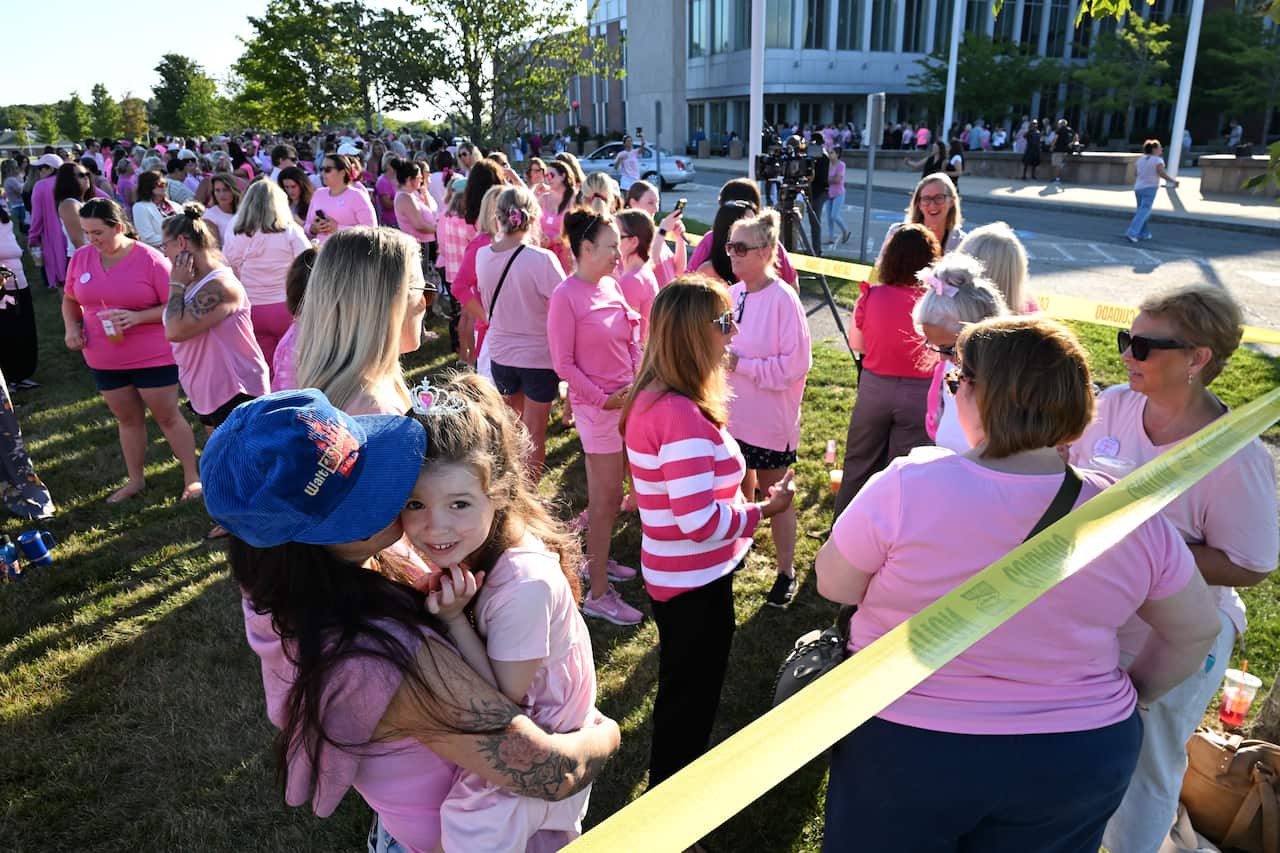
Throughout the trial, dozens of women dressed in pink attended the court in Plymouth to support Clancy and make a statement about women's health.
Kelly Woods, a lawyer from Chicago, told the Agence-France Presse news agency that the psychosis defence is a "very under-considered element of this case".
"I ultimately hope that there is more advocacy for postpartum depression and psychosis," she said.
Postpartum psychosis is a medical condition arising after birth that affects one to two mothers in every 1,000 and can cause extreme mood swings, hallucinations, and extreme disorientation.
In the months leading up to the killings, Clancy was prescribed a host of psychiatric drugs, contacted suicide hotlines, and submitted herself as an inpatient at mental health clinics.
During closing arguments, Clancy's lawyer Kevin Reddington said his client had received "lousy medical care" from doctors.
Adrienne Griffin, executive director of the non-profit Maternal Mental Health Leadership Alliance, said Clancy "was doing everything that she could to get help, and for whatever reason, she still slipped through the cracks".
Franks argues that true crime cases that are "this shocking" and receive "this much attention" reflect a collective call to "change society".
"In this instance, what better support mechanisms do we need to provide for people to get the help that they need?" she asked.
"There are opportunities to change policy and approaches and to think about things differently."
If you suspect you, or someone you know, may have postnatal psychosis, call one of these services for advice:
PANDA (Perinatal Anxiety & Depression Australia) — 1300 726 306.
Beyond Blue — 1300 22 4636.
Pregnancy, Birth and Baby — 1800 882 436.
You can also get help from your GP or hospital emergency department.
— With additional reporting by Agence France-Presse.
For the latest from SBS News, download our app and subscribe to our newsletter.







