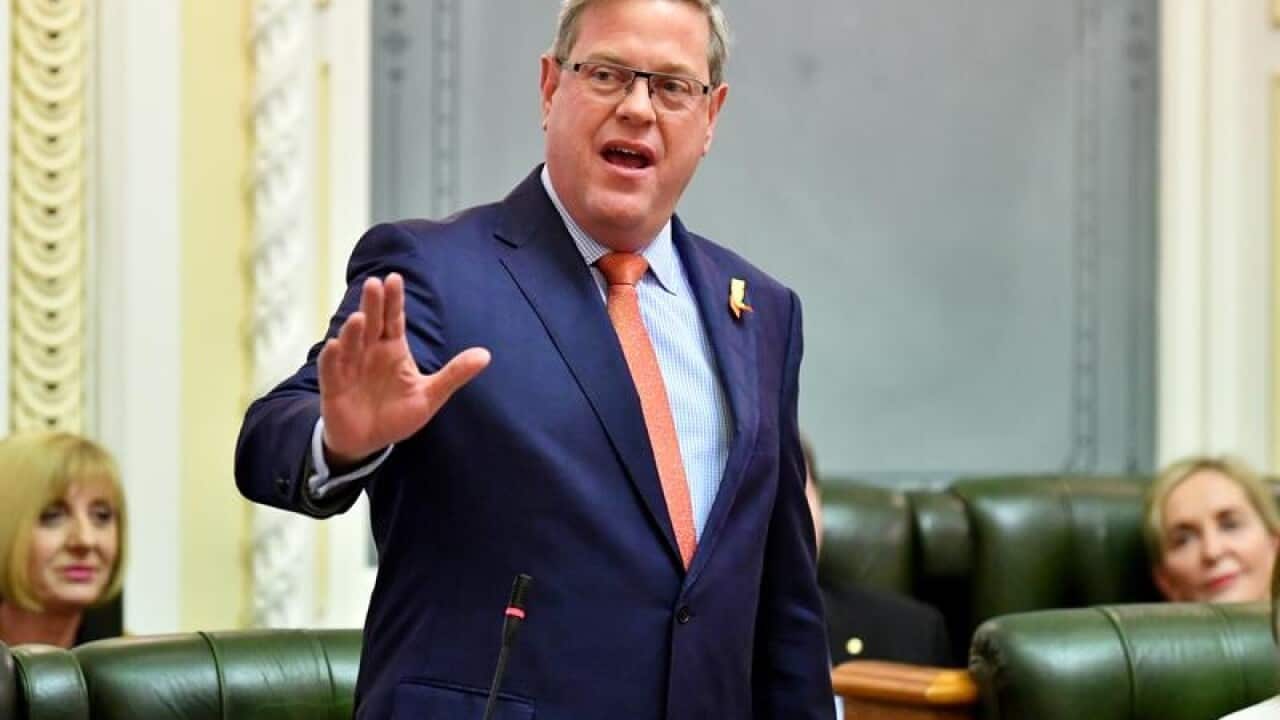
Queensland's Liberal National Party opposition has flagged a plan to freeze bonuses handed out to executives of state-owned energy companies until power prices fall.
LNP Leader Tim Nicholls has promised to implement the move if his party takes office at the upcoming Queensland election, but the Labor government has labelled the move a "cheap stunt."
Mr Nicholls said households are hurting under rising power costs while some government energy bosses are earning more than $900,000 per year and getting bonuses of more than $100,000.
"What we want to see is those chief executives and their management teams working hard to lower electricity prices, so bonuses will be frozen until power prices go down," Mr Nicholls told reporters in Brisbane on Sunday.
"The freeze will take place immediately and not be removed until we see evidence of falling power prices."
News that makes sense
Your trusted source for staying up-to-date with the world around you. Get free daily news updates and analysis, straight to your inbox.
The policy will apply to around 30 top executives at government-owned companies Powerlink, CS Energy, Stanwell, Energy Queensland, Energex and Ergon.
Mr Nicholls said there were a number of ways executives could lower prices, from general cost-savings measures within each company to sweeping changes like reducing investment in electricity infrastructure.
The opposition leader has previously claimed the Palaszczuk Labor government's policy of taking a 100 per cent dividend from state-owned power companies to pay down debt amounts to a "secret tax" on power.
Treasurer and acting Energy Minister Curtis Pitt said the LNP's plan was a gimmick which wouldn't have an effect on power prices.
"The drivers of electricity price increases must be addressed by coordinated action across jurisdictions." Mr Pitt said in a statement.
"The LNP wanted to sell our power businesses off to the private sector, but Labor's policy of retaining them in public ownership has seen the government make strategic interventions to put downward pressure on prices."
Mr Pitt has previously pointed out power bills rose 43 per cent under the previous Newman LNP government, while they have risen five per cent under Labor.
Power prices are a key issue for the state election, due by May next year but widely predicted to be held before the end of this year.







