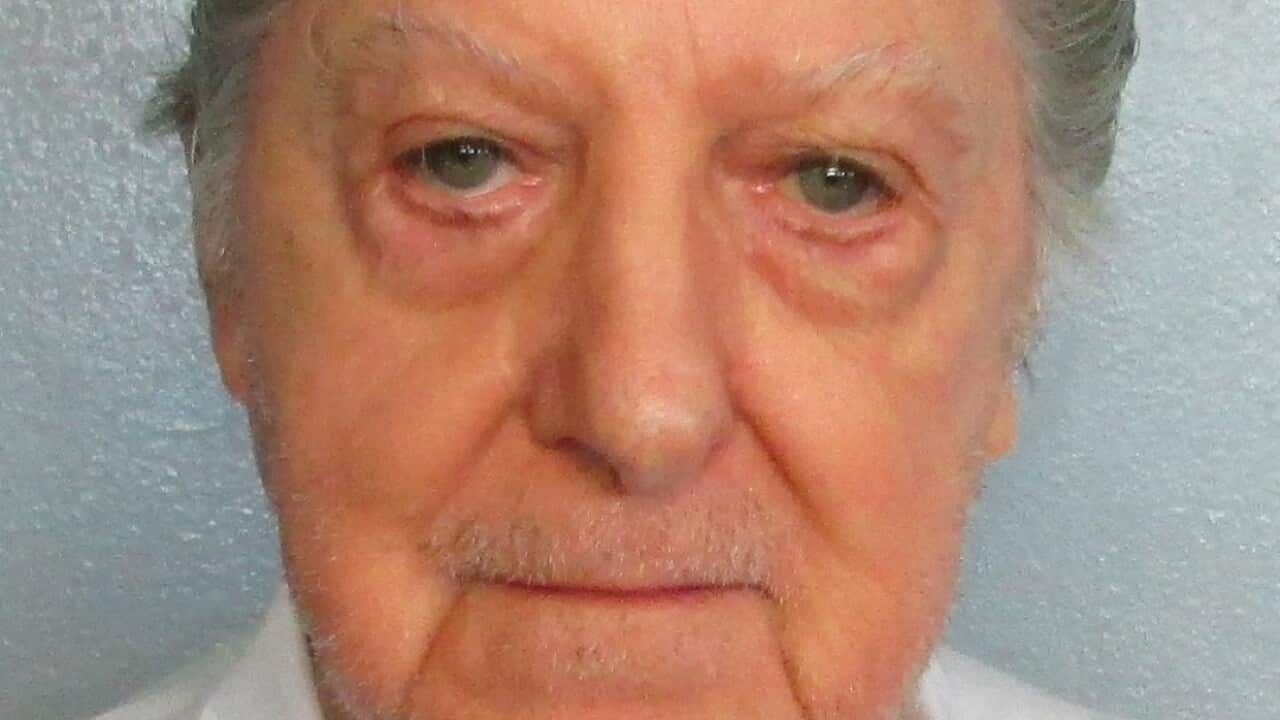
Walter Leroy Moody Jr, who used mail bombs to assassinate a federal appeals court judge and a civil rights lawyer in the US in 1989, has been executed at the Alabama prison where he spent decades denying his guilt.
With his execution by lethal injection on Thursday night, the 83-year-old became the oldest prisoner put to death in the modern era of US capital punishment, according to the Death Penalty Information Centre, a research group.
Moody’s reign of terror — deadly bombings and thwarted attacks in three Southern states, as well as menacing letters to judges and the media — raised fears of racial violence and unsettled the federal judiciary.
His complex case drew in people who would become household names of US law enforcement: Louis Freeh, a future FBI director; Robert Mueller, the special counsel investigating Russian interference in the 2016 presidential election; and Jeff Sessions, now the US attorney-general.
News that makes sense
Your trusted source for staying up-to-date with the world around you. Get free daily news updates and analysis, straight to your inbox.
Although Moody was found guilty on scores of federal charges, his execution was punishment for a 1996 state court conviction for the murder of Judge Robert Vance Sr of the 11th U.S. Circuit Court of Appeals.
Mr Vance’s son, Robert Vance Jr, himself a judge in Alabama, said that he had not forgiven Moody because “he has not acknowledged any remorse or any acknowledgment that he was guilty.”
“I’m not a psychiatrist, but if you’re talking about using labels like psychopath, this seems to be the kind of person that would fit that description because of absolute lack of empathy or concern for others,” Mr Vance said.
Moody was pronounced dead Thursday night inside a south Alabama prison, ending a generations-long legal drama that began in 1972, when he planned a bombing against an automobile dealer who had repossessed his car.
His unsuccessful efforts to have his conviction overturned in that case stirred a protracted rage against the 11th Circuit, which has jurisdiction in Alabama, Florida and Georgia, Moody’s home state. After the 11th Circuit rejected Moody’s appeal in August 1989, the court noted in a subsequent ruling, he began trying to develop “war gases” and prepared what he termed a “Declaration of War” against the appellate court.
In December 1989, Moody mailed a parcel with a bomb — a steel pipe, smokeless powder and 80 finishing nails — to the suburban Birmingham, Alabama home of Robert Vance Sr, who had only considered Moody’s appeal when it was before the full court. The bomb exploded when Vance opened the package, killing him and gravely injuring his wife.
A bomb two days later killed Robert Robinson, an African-American lawyer in Savannah, Georgia. Officials intercepted a device that was sent to the 11th Circuit’s offices in Atlanta, as well as a bomb that was mailed to a Florida office of the NAACP.
Prosecutors believed Moody disguised his motive by using the name of a fictitious group when he vowed to kill judges and railed against African-Americans and the Atlanta-based 11th Circuit’s treatment of them.
Federal officials began to focus on Moody after an investigator described one of the bombs to a chemist with what was then known as the Bureau of Alcohol, Tobacco and Firearms, who sketched the device on a napkin and noticed its similarity to one Moody had built in 1972.
“That’s Moody’s bomb,” the chemist said in an episode Freeh described in his memoir, which noted that Moody’s companion ultimately cooperated with investigators and provided crucial information.
Moody, who attended law school and apparently resented that he could not practice, maintained his innocence. In a recent letter to Mr Vance Jr, he wrote, “Had my Dad been murdered, I would want to know who had done it.”
Yet federal officials long pointed to a recording, partly transcribed in a court ruling, of Moody talking to himself in jail after the killings: “Now you’ve killed two. ... Now you can’t pull another bombin’.”
“I never came across someone like him: very brilliant, very determined, very skillful,” Freeh recalled on Thursday, adding, “He made it a campaign to declare war against the courts and kill these innocent people, but I’ve never seen a defendant like that.”
Legal questions that often surface in capital cases were not at issue Thursday as Moody’s execution neared. There were not, for example, last-minute questions about his competency or Alabama’s reliance on a lethal injection protocol that includes midazolam, a sedative whose use in executions has been bitterly disputed.
Instead, Moody’s final efforts to avoid execution, which the US Supreme Court rejected, were largely procedural, including whether the federal government could turn him over to Alabama — and its execution chamber — while Moody served his federal sentence of seven life terms, plus 400 years. (The federal case included charges connected to the bombs sent to Mr Vance Sr and Mr Robinson. Mr Freeh, who prosecuted the federal case at Mr Mueller’s behest, said he believed Robinson’s killing was intended “to create a diversion” to distract investigators.)
The Justice Department said Mr Sessions, Alabama’s attorney-general when Moody was tried in state court, had determined that the federal government did not object to Moody’s being in Alabama’s custody “for purposes of carrying out the capital sentence.”
In a plea for clemency to Governor Kay Ivey, one of Moody’s lawyers noted that Vance was “by all accounts, an opponent of capital punishment.” On Thursday, the judge’s son acknowledged that his father had expressed reservations about executions.
“But he also made clear that as a judge, he has to follow what the law dictates and put aside his personal views, and he had to do that several times sitting as a judge,” Mr Vance said of his father.
“Moody was tried, convicted by a jury of his peers twice, the final time with the recommendation of the death penalty,” he said. “I think the legal system worked well in getting those convictions.”







