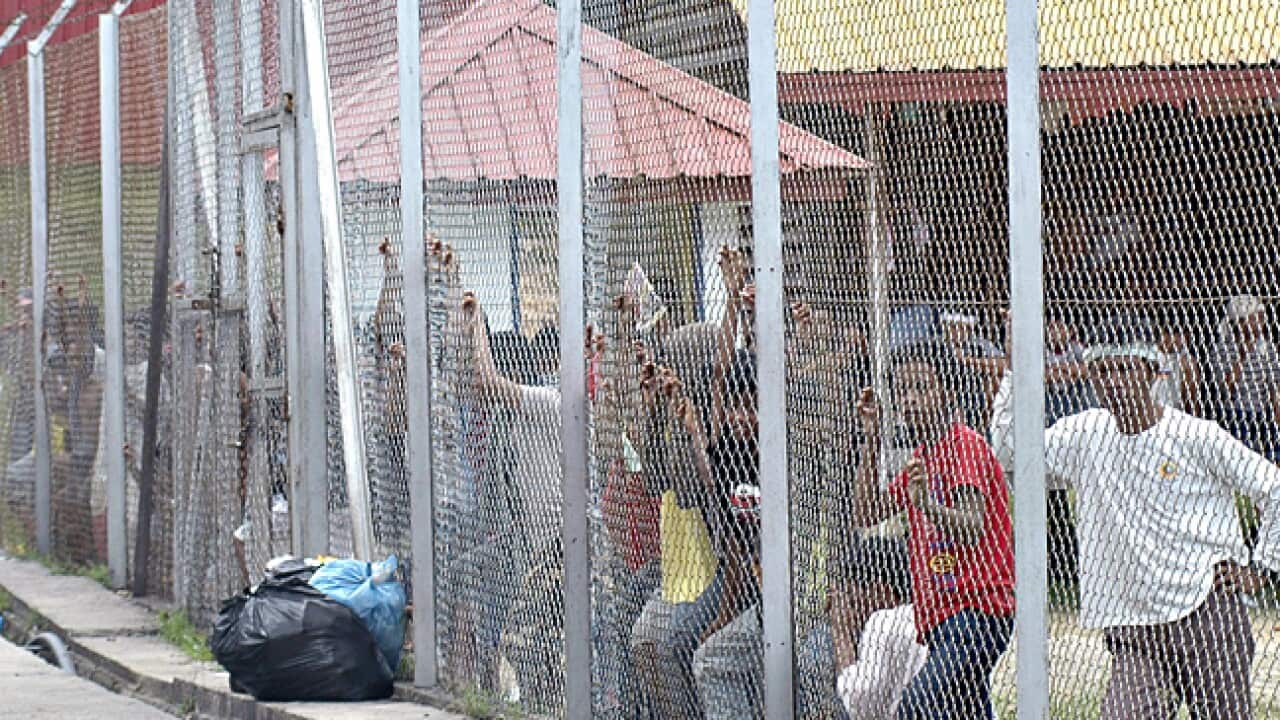
The federal government's asylum seeker policy is in tatters after the High Court scuttled Prime Minister Julia Gillard's Malaysian people-swap deal.
After hearing a challenge to the controversial policy brought by refugee lawyers on behalf of two asylum seekers, the court on Wednesday ruled the plan unlawful.
The court ordered Immigration Minister Chris Bowen and his department be restrained from sending asylum seekers to Malaysia.
In a historic 6-1 majority decision, the court said Mr Bowen's declaration that Malaysia was an appropriate place to send asylum seekers was wrong.
"The declaration made ... was made without power and is invalid," Chief Justice Robert French said in court.
News that makes sense
Your trusted source for staying up-to-date with the world around you. Get free daily news updates and analysis, straight to your inbox.
The court found that a country must be bound by international or domestic law to provide protection for asylum seekers to qualify as an appropriate destination under the law.
When the challenge was first brought before the court Mr Bowen appeared confident the deal would survive, insisting the government was on "very strong legal grounds".
But the decision is so wide-reaching it has also cast doubt over the government's plan to send asylum seekers to Papua New Guinea's Manus Island and the coalition's plan to reopen the processing centre on Nauru.
Minister Morrison says the government has not ruled out Nauru.
Opposition immigration spokesman Scott Morrison said the court's decision represented another in a long line of Gillard government bungles.
"Once again the government's asylum and border protection policy is a complete and utter mess," Mr Morrison told reporters in Adelaide.
"It's back to square one." Refugee lawyer David Manne said he had spoken to his clients and they were "extremely relieved" by the decision.
Mr Manne called on the government to respect the decision and process his clients' applications for asylum.
"These people came here in fear for their lives, seeking safety," Mr Manne told reporters in Melbourne.
"They were petrified at the prospect of being sent to Malaysia where they really felt they'd be harmed.
"Quite clearly it would not have been lawful."
Australian National University international law expert Donald Rothwell said the fact that Malaysia was not a signatory to the UN refugee convention was likely "a key factor" in the court's decision.
The court's decision cannot be appealed but Professor Rothwell said the government may seek other ways to revive the policy through legislative changes or other means.
He said any new declarations in relation to Manus Island or Nauru "would need to be declarations read in light of the court's judgment today".
Prof Rothwell said at face value Wednesday's decision also meant that unaccompanied minors could not be sent to Malaysia, Manus Island or Nauru, without certain conditions being met.
Refugee Council of Australia president John Gibson said it appeared that only countries that had signed the UN refugee convention would satisfy the High Court's criteria for protecting asylum seekers.
"Malaysia is off the table - full stop," Mr Gibson told Sky News.
Charities welcomed the decision and Australian Lawyers Alliance national president Greg Barns said it represented a victory for human rights in Australia.
"The decision will bring welcome relief to many asylum seekers who have come to this country seeking a better life and freedom from persecution and fear for themselves and their families," Mr Barns said in a statement.
Former Labor powerbroker Graham Richardson said the decision made the government look like a joke. "This is a thumping in the High Court," Mr Richardson told Sky News.
"They didn't just go down, they got slaughtered." Under the deal first announced by Ms Gillard on May 7, the government planned to send 800 asylum seekers to Malaysia in exchange for 4000 already-processed refugees. Malaysia and Australia signed the agreement in late July.







