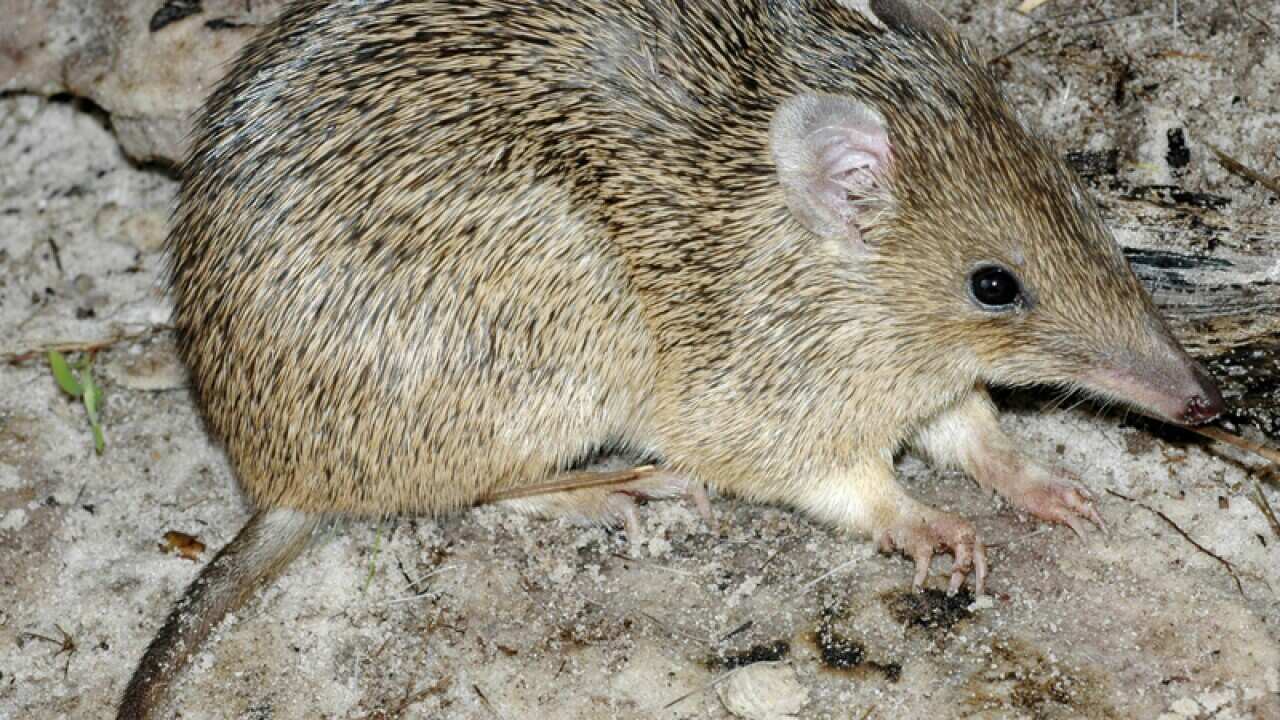
Australia's declining mammal populations are the canaries in the coal mine of an uncertain future, a researcher says.
Twenty-nine Australian land mammals have become extinct over the past two centuries, with 56 currently facing extinction.
Australia could lose more than a third of the 315 species that were present when Europeans first arrived thanks to poor fire management, rapacious feral cats and trampling buffalo and horses.
The Ecological Society of Australia is holding its annual meeting in Alice Springs this week to hear from researchers around the country.
Dr Graeme Gillespie from the Northern Australia Hub says Australia's tropical savannas are one-fifth of the country's landmass and one of the most fire-prone environments in the world, due to northern Australia's long dry season.
They represent three-quarters of land burnt each year, with dire consequences for their smaller inhabitants, particularly in Kakadu National Park, which has been the site of an 18-year study into declining mammal populations.
The latest round of data suggests this has slowed down or stabilised, "but there's certainly no evidence of recovery", Dr Gillespie told AAP on Monday.
"Kakadu is meant to be a place where we can be close to nature. If that nature becomes impoverished, where do you go?"
He says there are a number of factors that combine in different ways to quash mammal populations.
"If you have an inappropriate fire regime removing the understory vegetation, logs and shelter for animals, and if you've lots of herbivores and pigs running around eating all the resources that are left, then smaller animals are going to be much more vulnerable to predations from feral cats because they have fewer places to hide and are going to spend more time out uncovered trying to find food."
He said a multi-pronged approach was needed to tackle all the threats to small mammals, such as the northern quoll, bandicoots, brush-tailed possums, the rabbit-eared rat and many other marsupials and rodents.
"The things about loss of biodiversity is that we need to look at these things as canaries in the coalmine," Dr Gillespie said.
"It might be that any one of those species are not very important on its own, but when you take the whole package... there are very large ecological processes that we don't fully understand that may have direct consequences on us: it could effect productivity, it might be the early effects of climate change."
The conference will close on Friday.
Share


