From regional Queensland to outer Melbourne, Defence sites across Australia are at the centre of a growing legal and environmental battle over PFAS 'forever chemicals' linked to the manufacturing company 3M.
The Labor government will seek $2 billion in damages in a legal case against 3M, which is considered the largest legal claim ever brought by the government.
"We are taking on 3M on behalf of the Australian people and the Australians that are affected," Assistant Defence Minister Peter Khalil said.
"Today's announcement demonstrates that this government will stand up for Australians and hold big companies to account."
PFAS refers to a large group of synthetic chemicals used worldwide in manufacturing since the 1950s for water resistance.
News that makes sense
Your trusted source for staying up-to-date with the world around you. Get free daily news updates and analysis, straight to your inbox.
Their toxicity was recognised in recent decades, with PFOS, PFOA, and PFHxS identified as the most harmful. Although these substances were banned in Australia in 2025, their continued use in legacy fire-fighting practices still causes problems.
The government alleges the company withheld information, misrepresented the effects of one of its products, and gave false assurances about environmental impacts and disposal.
3M has said it will fight the allegations in court.
"3M has never manufactured PFAS in Australia and ceased sales of the products at issue in Australia around two decades ago," they said.
"Despite this, the Department of Defence continued to use PFAS-containing fire-fighting foams for nearly two decades longer, as noted in a recent legislative committee report.
"We will defend ourselves against these claims through the legal process."
Where are the Defence sites located?
The foams are no longer used by defence, but it says it has spent $1.3 billion removing them from 28 contaminated sites across the country and surrounding areas where locals have been impacted, and compensating affected people.
On its website, the Department of Defence lists 28 PFAS management sites that are "being investigated and managed". The department confirmed these are the sites key to the case against 3M.
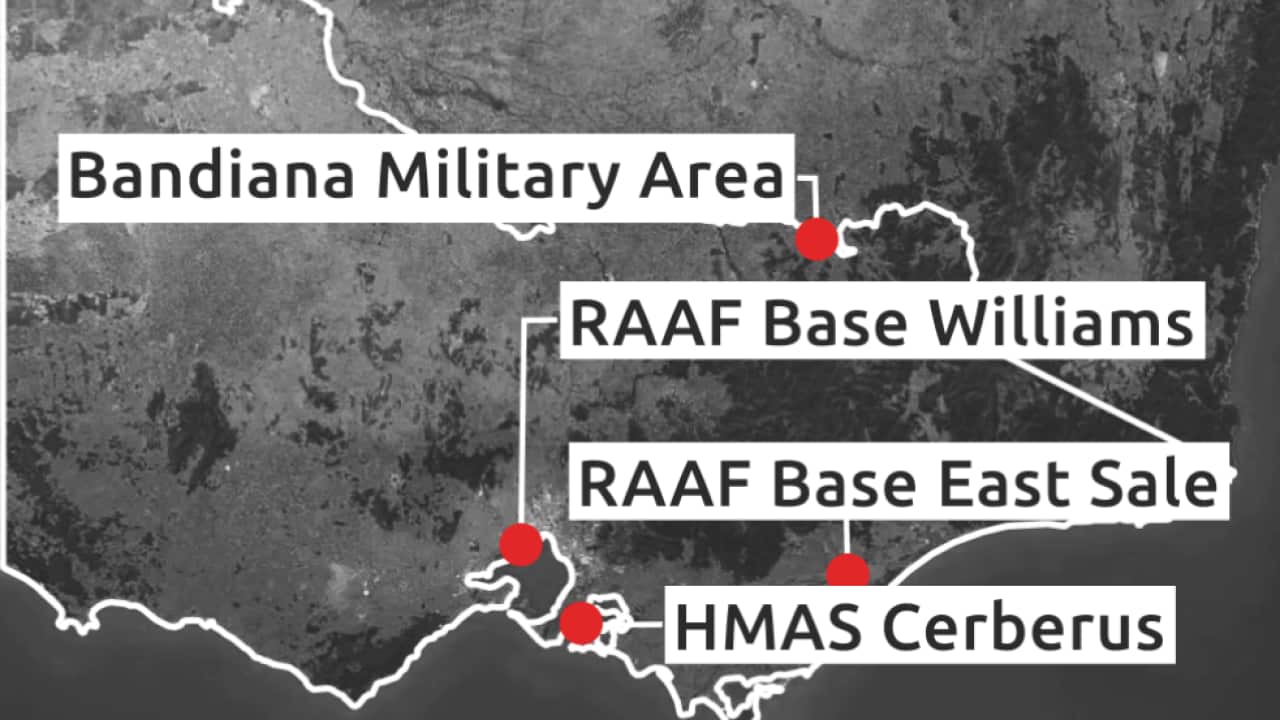
Watch the image below change to see where the defence sites are located.
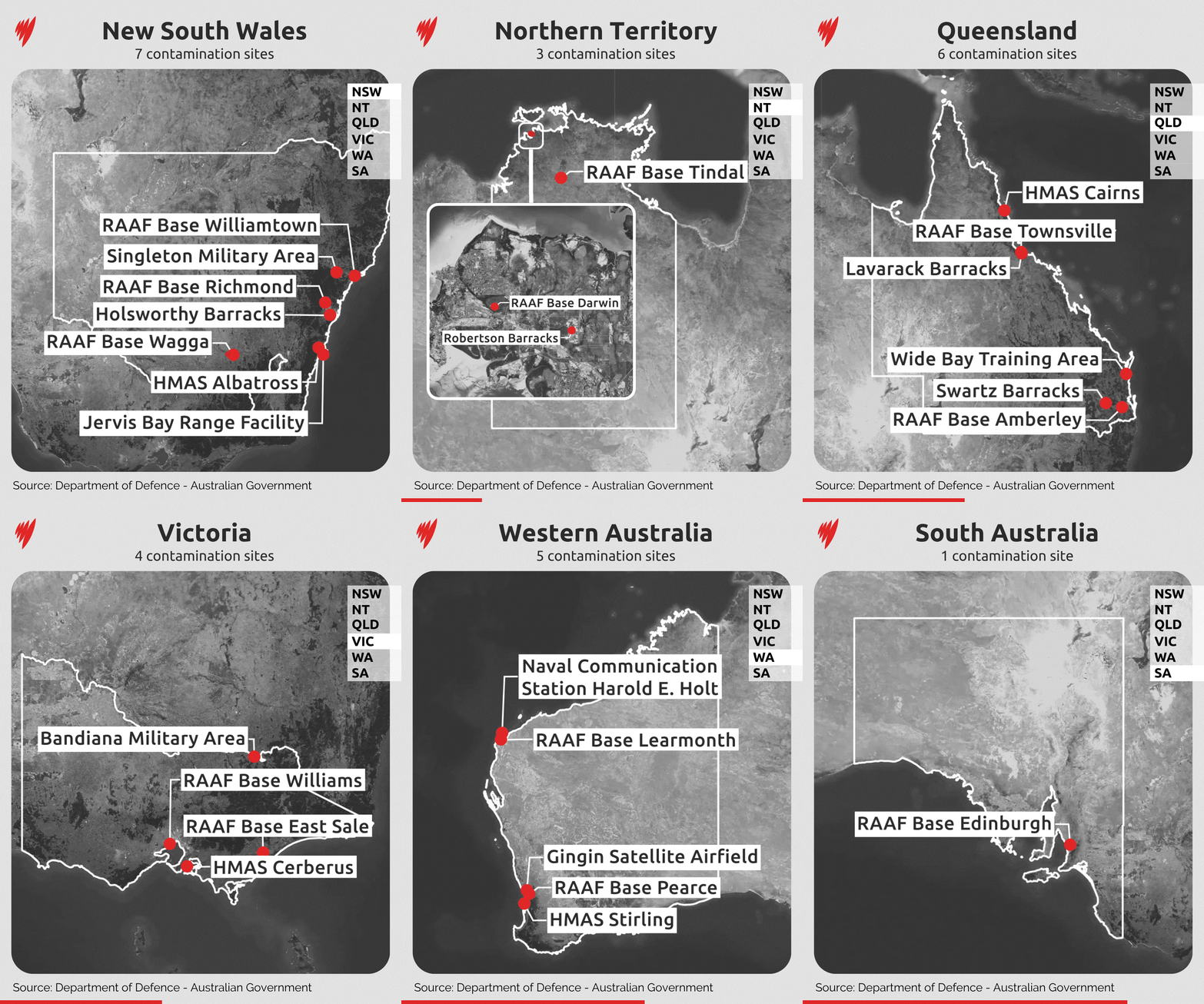
The sites are located in almost every state and territory, with the majority located in NSW, Queensland, and Western Australia.
The ACT's base in Jervis Bay has been impacted, as well as three sites in the NT — the RAAF base Tindal, RAAF Base Darwin and Robertson Barracks.
In South Australia the RAAF Base Edinburgh is affected as well as four sites in Victoria — RAAF Base East Sale, HMAS Cerberus, Bandiana Military Area, and RAAF Base Williams - Laverton and RAAF Base Point Cook
Some of these are near population centres that have had groundwater impacted by PFAS chemicals. As a result of PFAS use at the Williamtown base, outside the Newcastle area, around 500 Williamtown residents signed up to the class action against the Department of Defence.
Following the announcement of the Williamtown class action, two others were also announced at other contaminated sites around Australia; one in Oakey, QLD, the other in Katherine, NT.
The legal battle dragged on for years, until February of 2020 when Defence agreed to settle all three lawsuits for $212 million.
The defence department has managed approximately 200,000 tonnes of contaminated soil, and seven water treatment plants have operated near Defence sites to prevent these chemicals from leaching into the surrounding environment.
Poisoning 'firefighters'
Saimon Moraes Silva, director of the Biomedical and Environmental Sensor Technology (BEST) Research Centre at La Trobe University, said: "Communities living around Defence airfields have already faced water restrictions, soil excavation and years of uncertainty, while taxpayers have funded an enormous clean-up effort".
"PFAS-based firefighting foams were marketed for years as essential safety tools, even as evidence mounted that these compounds persist in the environment, bio-accumulate, and are linked to cancers, liver damage and immune dysfunction," he said.
Generally, PFAS are a group of about 15,000 toxic, synthetic chemicals used for their resistance to heat, stains and grease.
They have been widely used in products such as cookware and firefighting foams and are often called "forever chemicals" because they don't break down naturally in the environment.
The decision has also been "welcomed" by Australia's firefighting community, as the chemicals impacted the firefighting foams.
Mick Tisbury, assistant chief fire officer, said that "3M have been making ridiculous amounts of profits on the carcasses of firefighters and they need to be held to account".
"The firefighting foam that 3M produced ... was very effective at fighting fires. It was used to suppress petrochemical fires, so oil-based fires, and it did a really good job," he told SBS News.
"But what it also did is it poisoned firefighters. It destroyed the environment and is a reason why it's called a forever chemical because it doesn't go away, and it continues to harm firefighters."
'A significant step'
A Senate inquiry in November recommended legal action against 3M and said any settlement should be used to fund remediation of contaminated sites.
Independent Senator Lidia Thorpe, who chaired the inquiry, said the lawsuit must not be treated as a budget cost-recovery exercise and criticised the government for downplaying PFAS's health impacts.
"The government must finally come clean about the health risks posed by these toxic chemicals, update its public health advice, and provide proper health supports for affected communities," she said.
"Today's announcement is a significant step, but we cannot stop here."
— With additional reporting by the Australian Associated Press.
For the latest from SBS News, download our app and subscribe to our newsletter.







