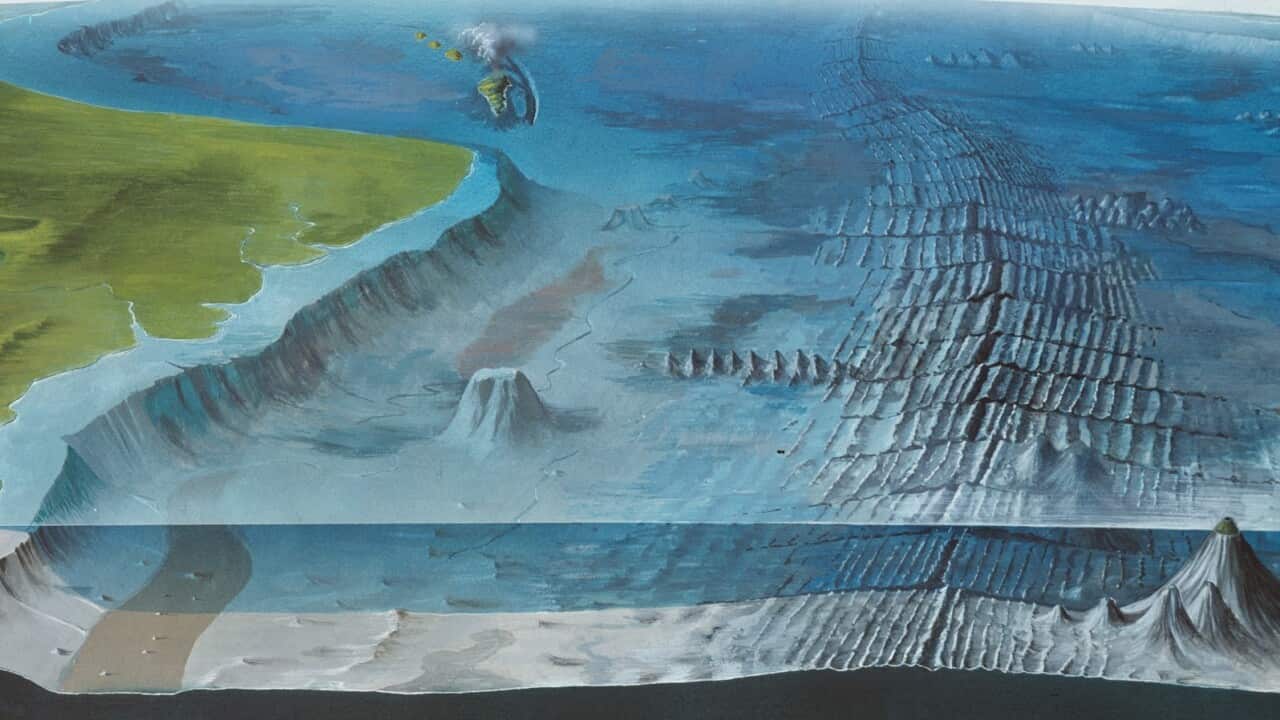
Using data collected from underwater drones, merchant ships, fishing boats and even explorers, a new scientific project aims to map the ocean floor by 2030 and solve one of the world's enduring mysteries.
With 190 million square km of water - or about 93 per cent of the world's oceans with a depth of over 200 metres- yet to be charted, the initiative is ambitious.
Satinder Bindra, director of the Seabed 2030 project, said the work can be completed within the period and will shed light on everything from tsunami wave patterns to pollution, fishing movements, shipping navigation and unknown mineral deposits.
"We know more about the surface of the Moon and Mars than our own backyard. This in the 21st century is something that we are working to correct," Bindra told Reuters.
News that makes sense
Your trusted source for staying up-to-date with the world around you. Get free daily news updates and analysis, straight to your inbox.
"For too long now we have treated our own oceans as a forgotten frontier."
The project is a collaboration between Japan's philanthropic Nippon Foundation and GEBCO, a non-profit association of experts that is already involved in charting the ocean floor.
GEBCO operates under the International Hydrographic Organisation and UNESCO, the United Nations cultural agency.
"There's unanimity within the scientific and the mapping community that a map is essential," Bindra said.
The initiative has received support from Dutch deep-sea energy prospector Fugro, which was involved in the search for Malaysia Airlines flight MH370, which disappeared in 2014. Fugro has contributed 65,000 square km of data.
Ocean Infinity, which has taken up the search for MH370, is another company contributing to the 2030 initiative.
Bindra said they are also looking to tap research missions as well as explorers searching for sunken wrecks together with data pulled from ships, fishing boats and commercial companies.
The project, which has an estimated cost of $US3 billion, will leave waters closer to shore to national research bodies. The US National Oceanic and Atmospheric Administration is separately supporting the initiative.
Bindra said data obtained from the multiple sources would be pulled together by experts at four centres around the world then collated at Britain's National Oceanography Centre.







