
NASA's first robotic lander designed to study the deep interior of a distant world is hurtling closer to a touchdown on Mars after a six-month voyage through space.
Travelling 548 million kilometres from Earth, the Mars InSight spacecraft is due to reach its destination on the dusty, rock-strewn surface of the Red Planet about 7am AEDT on Tuesday.
The mission control team at NASA's Jet Propulsion Laboratory near Los Angeles prepared to conduct a final adjustment to the InSight's flight path on Sunday to manoeuvre the spacecraft closer toward its entry point over Mars.
News that makes sense
Your trusted source for staying up-to-date with the world around you. Get free daily news updates and analysis, straight to your inbox.
If all goes to plan, InSight will streak into the pink Martian sky nearly 24 hours later at 19,310km/h.
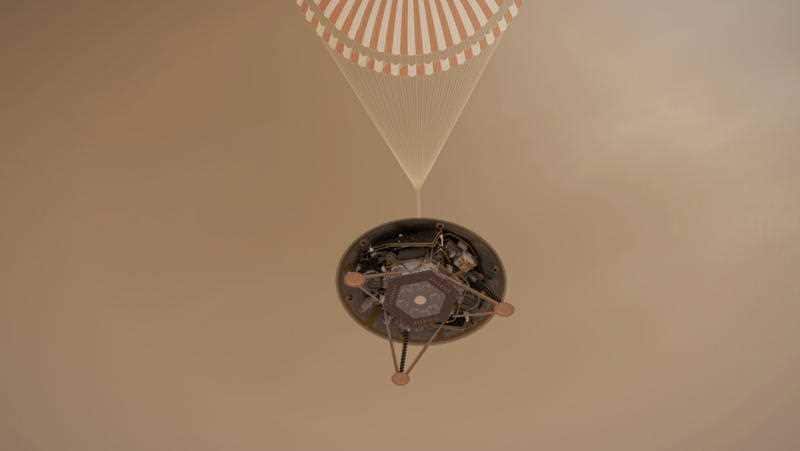
Its 123km descent will be slowed by atmospheric friction, a giant parachute and retro rockets.
The stationary probe, launched from California in May, will then pause for 16 minutes for the dust to settle around the landing site before its disc-shaped solar arrays unfurl to provide power.
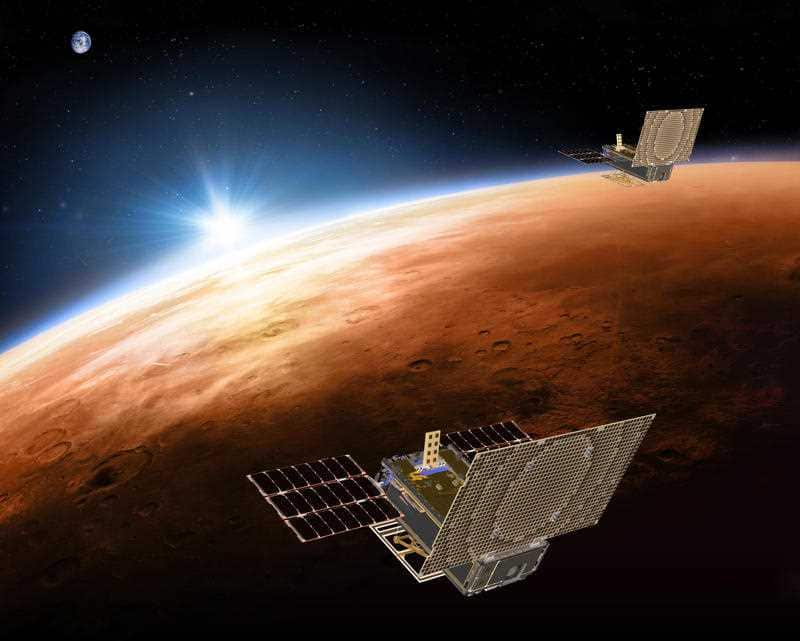
Engineers hope to get real-time electronic confirmation of the spacecraft's safe arrival from miniature satellites that were launched along with InSight and will fly past Mars.
The JPL controllers also expect to receive a photo of the probe's surroundings on the flat, smooth Martian plain close to the planet's equator called the Elysium Planitia.
The site is about 600km from the 2012 landing spot of the car-sized Mars rover Curiosity, the last spacecraft sent to the Red Planet by NASA.
The smaller 360kg InSight marks the 21st US-launched Martian exploration including the Mariner fly-by missions of the 1960s.
Nearly two dozen other Mars missions have been sent from other nations.
InSight is the first dedicated to unlocking secrets from deep below the Martian surface. It will spend 24 months - about one Martian year - using seismic monitoring and underground drilling to gather clues on how Mars formed and, by extension, the origins of Earth and other rocky planets of the inner solar system more than four billion years ago.
InSight's primary instrument is a highly sensitive French-built seismometer, designed to detect the slightest vibrations from "marsquakes" and meteor impacts.
Scientists expect to see a dozen to 100 marsquakes during the course of the mission, producing data to help them deduce the size, density and composition of the planet.







