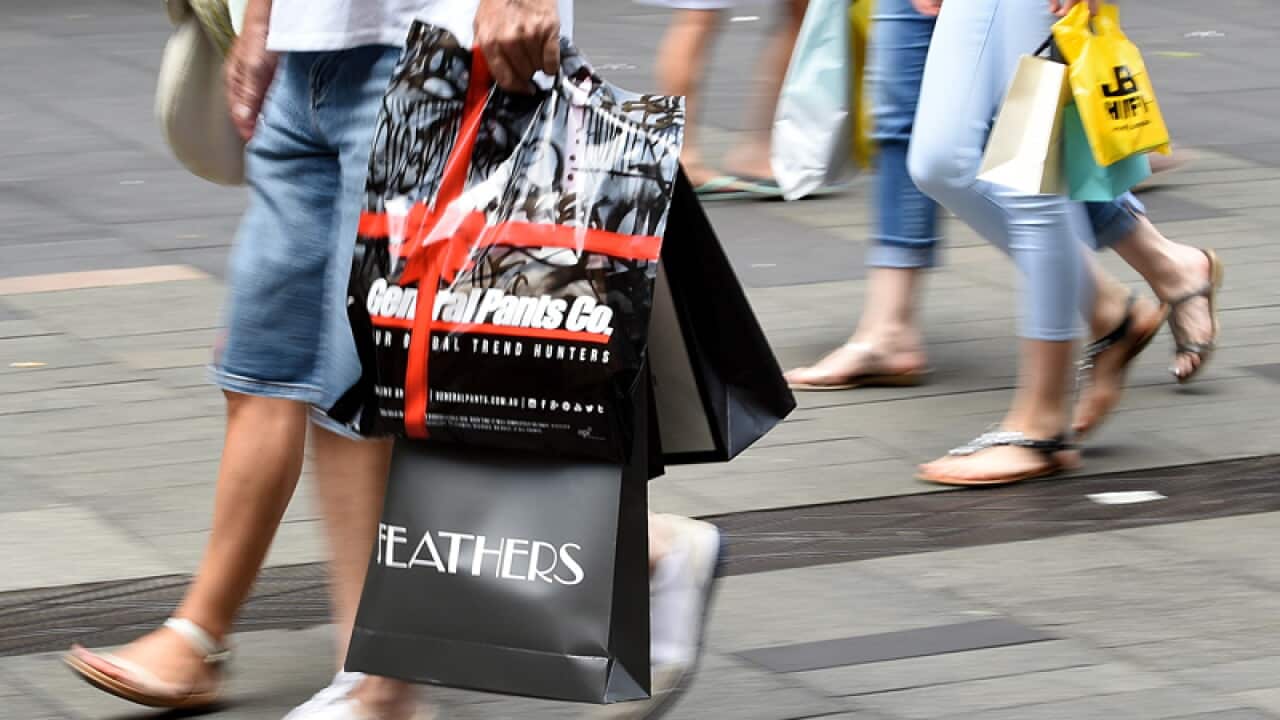
Hardware sector discounting sparked by the failure of Masters and clothing retailer price wars drove already weak retail spending into negative territory in December, with economists expecting little lift in sales any time soon.
Retail sales fell 0.1 per cent to $25.6 billion in December, according to Australian Bureau of Statistics retail trade figures, missing market expectations of a 0.3 per cent rise.
The sales slide was weighed on by a 2.3 per cent slump in household goods sales, which in turn was driven by a near-seven per cent fall in hardware, building and garden supplies.
Citi economists said the liquidation sale ahead of the December 11 closure of Masters Home Improvement - Woolworths' failed challenger to Bunnings - was responsible for the decline in household goods sales.
"The decline in hardware et al was so large that it produced a fall in the household goods group which masked the influence of the rise in food, department stores, clothing and cafes, restaurants and take away food groups on the headline data," Citi economists said.
News that makes sense
Your trusted source for staying up-to-date with the world around you. Get free daily news updates and analysis, straight to your inbox.
"However, if we assume no change in hardware et al from the November data, the December retail sales result would have been a consensus matching 0.3 per cent."
National Australia Bank senior economist Tapas Strickland said retail sales volumes were actually up 0.9 per cent in the December quarter but that growth had occurred amid heavy competition and discounting.
He said retail sales also remained subdued because consumers were cautious with spending, preferring to pay down debt.
"It is likely headline retail sales will continue to grow at an overall moderate pace given continued weakness in the more mining-dominated states, and little let-up in the subdued price environment coming from heightened retail competition," he said.
"Soft income growth and a tilt toward part-time employment growth are also likely contributing."
ANZ senior economist Jo Masters said December retail prices were more subdued than the previous quarter due to a 0.7 per cent drop in prices for clothing, textiles and bedding.
Ms Masters said given the subdued retail trade prints for November and December, sales growth has likely slowed further at the beginning of the current calendar year.







