Over the strong objections of indigenous groups, activists and environmentalists, Brazilian authorities gave a green light Wednesday to what will be the world's third largest hydroelectric plant and dam.
The massive $11 billion project is to be built in western Para state, along the Xingu river in Brazil's Amazon rainforest.
Once completed, the Belo Monte plant will generate some 11,200 megawatts of energy, equivalent to about 11 percent of the power currently produced in Brazil.
News that makes sense
Your trusted source for staying up-to-date with the world around you. Get free daily news updates and analysis, straight to your inbox.
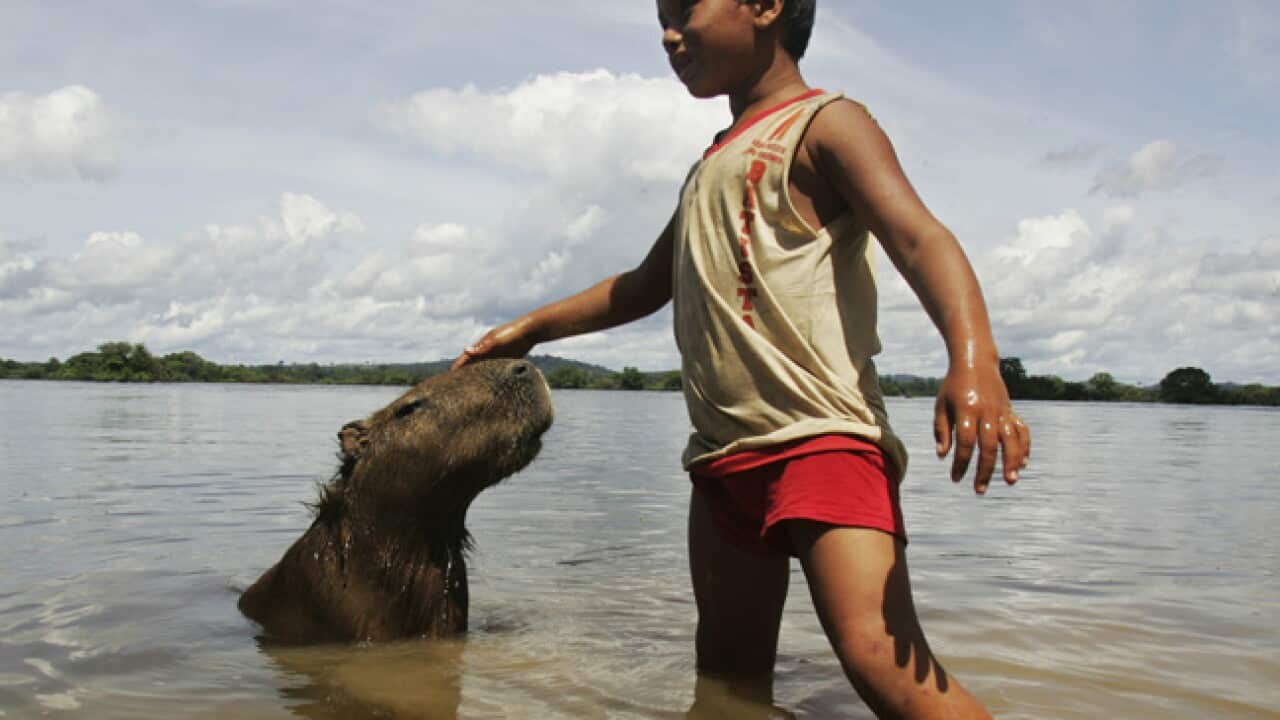
Indigenous communities, ecologists and the Catholic Church have spent more than a year campaigning against the dam, which will flood an area of 516 square kilometers (198 square miles) along the banks of the Xingu.
Construction of the dam will displace 16,000 people, according to government figures.
Local communities also fear the arrival of thousands of workers in the jungle area.
Norte Energia said the hydroelectric project will create 18,000 new jobs and an additional 23,000 more jobs indirectly. Counting families, the dam will support some 96,000 people.
HALT TO PROJECT DEMANDED
The Inter-American Commission on Human Rights, an arm of the Organization of American States, had asked the government to halt construction to allow more time to hear objections from indigenous communities affected by the project.
"This criminal project will lead to the destruction of a large area of the rainforest, and will affect tens of thousands of people," said Antonia Melo, an indigenous leader.
"We will not back off our efforts to stop this dam," he added.
The project was also opposed by American filmmaker James Cameron, whose blockbuster hit film "Avatar" told the story of a peaceful native people on another planet forced to wage a bloody fight against strip miners from Earth.
The government says the country desperately needs the energy provided by the hydroelectric plant.
"Belo Monte will guarantee Brazil's energy security" said Energy Minister Edson Lobao, in announcing the plan.
The Brazilian Institute of Environment and Renewable Resources (IBAMA) said the dam was "based on a serious technical analysis" which included compensation for the indigenous population.
At a capacity of slightly more than 11,000 megawatts, Belo Monte will rank behind the 18,000-megawatt Three Gorges Dam in China and the 14,000-megawatt dam in Itaipu on the Brazil-Paraguay border.
Brazil's current energy capacity is 112,000 megawatts, and is expected to double by 2019, surpassing 240,000 megawatts, the government says.
Officials said the first building stage for Belo Monte will be finished in 2015, with construction expected to be completed in 2019.
What do you think? Given the widespread belief that renewable energy sources should be pursued in place of burning fossil fuels, should hydroeletricity projects be implemented at the cost of the environment - and peoples' homes? Have your say below.







