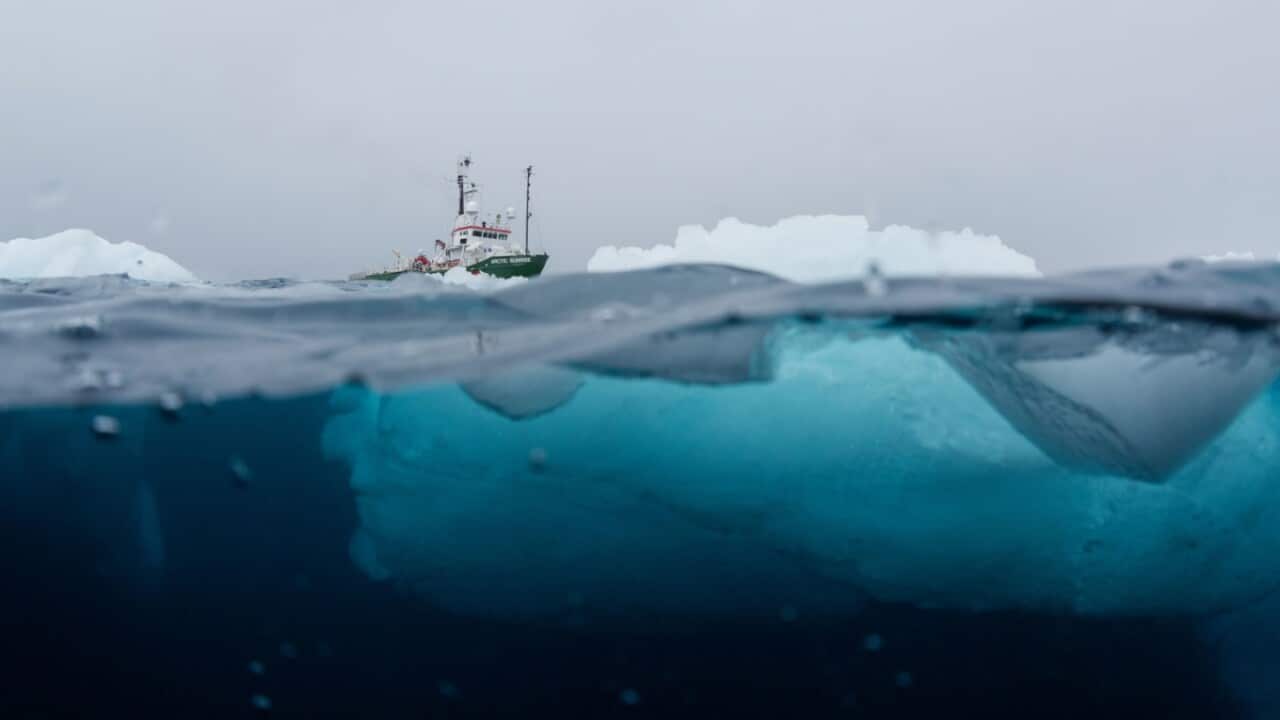
Plastic waste and toxic chemicals have found their way to remote regions in Antarctica, research by Greenpeace shows.
The environmental organisation’s findings have been detailed in a new report, collated after an expedition to the Antarctic to learn more about the area’s biodiversity.
Microplastics and chemicals used in a range of household goods were reportedly found in samples taken from Antarctic's waters and snow between January and March this year.
News that makes sense
Your trusted source for staying up-to-date with the world around you. Get free daily news updates and analysis, straight to your inbox.
“We may think of the Antarctic as a remote and pristine wilderness [but] these results show that even the most remote habitats of the Antarctic are contaminated with microplastic waste and persistent hazardous chemicals,” said Greenpeace’s Frida Bengtsson.
“We need action at the source to stop these pollutants ending up in the Antarctic in the first place, and we need an Antarctic Ocean Sanctuary to give space for penguins, whales and the entire ecosystem to recover from the pressures they’re facing.”
What are microplastics?
Greenpeace said microplastics - particles of plastic less than 5mm in length - were detected in nine of 17 water samples it collected on its expedition.
Microplastics come from two main sources: plastic pellets (the pea-sized raw material used in the production of most plastics) and microbeads (tiny capsules found in synthetic cosmetic and cleaning products such as body scrubs, toothpaste and washing powders).
They can be lost down factory drains or produced during the degradation of plastic products, often ending up on beaches and in the ocean.
Fish and plankton are eating increasing amounts of microplastics, which could be passed up the food chain to human consumers, according to the Australian Marine Conservation Society.
Marine wildlife often mistakes the small pieces of plastic for fish eggs, it says, which can result in death.
There is growing concern internationally about the increasing presence of polluting microplastics in waterways, with many countries having banned their use in cosmetic products.
While the United States has banned microbeads, Australia is relying on companies to voluntarily phase them out by the middle of this year.
Which chemicals were found?
Seven of nine snow samples taken by Greenpeace found chemicals known as PFAs (polyfluorinated alkylated substances), which are thought to be potentially harmful to humans and wildlife.
PFAs can provide resistance to heat and abrasion, and can also be used as a wetting agent.
They are commonly used in the manufacturing of non-stick cookware and are found in firefighting foam, metal plating and certain articles of clothing and furniture.
An expert health panel notified the Australian Government last month of a possible link between PFAs and an increased risk of testicular and kidney cancer, following a months-long study.
How did they get there?
Greenpeace said it was possible the plastics and chemicals ended up in the Antarctic via winds and ocean currents.
It also said the snow samples it collected included freshly-fallen snow, suggesting some of the chemicals were deposited from the atmosphere.
Greenpeace said it is possible for some PFAs to be become bound to atmospheric particles, then be transported through the atmosphere and washed out in rain and snow.
Plastic and chemical pollution has also been detected in the Arctic, and in remote places including the Mariana Trench - the deepest known part of the Pacific Ocean.







