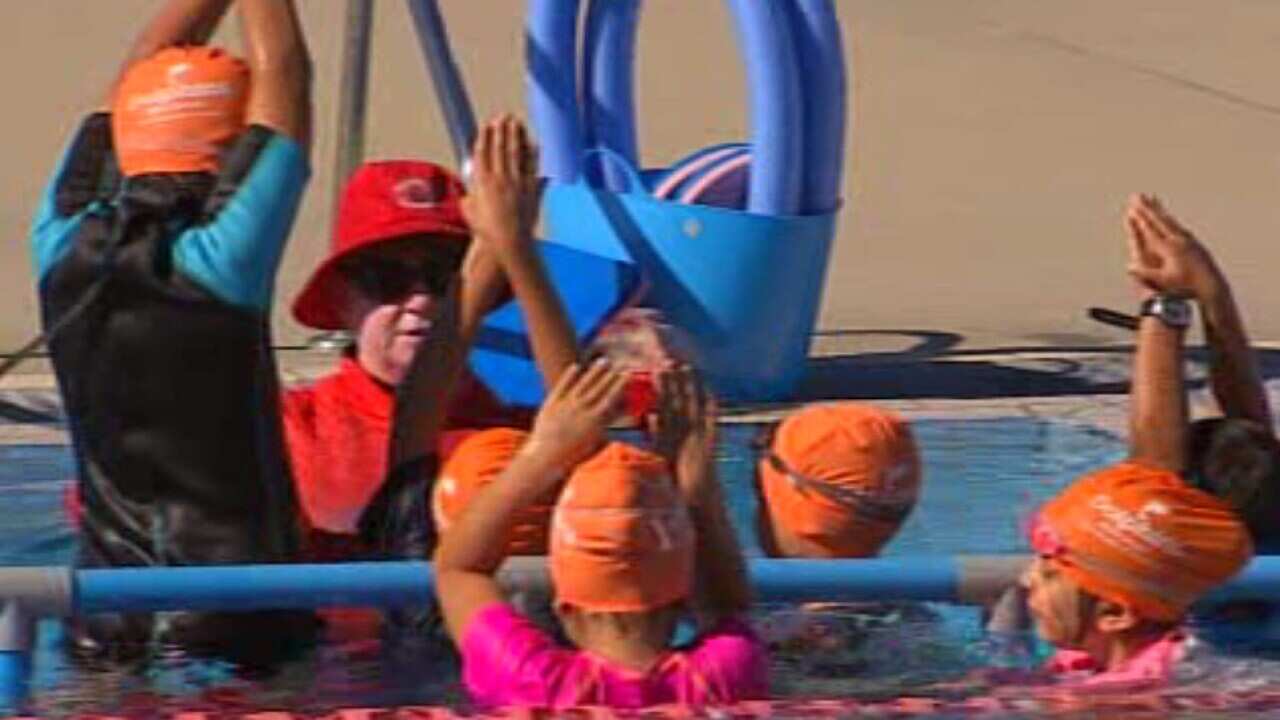
Primary school students in Year 2 at Old Guildford Public in Sydney's west have been learning how to swim.
They're learning water safety skills such as floating, breathing techniques and to have greater confidence underwater.
Kristal Grainger, from Royal Life Saving Society Australia, said it's just one example of communities around the country that have not had the opportunity to teach their kids to swim.
"On Monday there were some children that were very frightened and wouldn't let go of their swim instructor and there are also some children that have never been into a pool before, so this is a very new experience for them," Ms Grainger told SBS.
"One of the things that I've been seeing today is that we have children putting their head underwater and blowing bubbles which is just fantastic to see."
News that makes sense
Your trusted source for staying up-to-date with the world around you. Get free daily news updates and analysis, straight to your inbox.
It's the first time 7-year-old student Vivian So has been in a swimming pool. Her family is orginally from Cambodia and she said she's enjoying the lessons, despite feeling a little frightened at first.
Fellow classmate, Jasmine Otutaha, said she was having fun too.
The 8-year-old who is blind, now boasts of several new swimming moves.
"I learnt bubbling under the water, paddling, and kicking, like, a starfish, and superman. Yeah, I'm having fun," she said.
The Royal Life Saving Society found that out of the 400 students at Old Guildford Public - only four knew how to swim.
Teaching the theory of water safety is mandatory in schools. Getting in the water to practice - is not.
Alexandra Brewin is a teacher at the school. She said many of the students come from migrant families with limited swimming skills.
"The kids here today are from many different cultural backgrounds. And a lot of them come from background where swimming was a priority, so they don't understand the importance of teaching their children to swim.
Transport costs and the cost of booking pool facilities can pose challenge to schools with tight budgets. That prompting the Royal Life Saving Society, along with business group IMC, to funding the program for three years.
It's hoped the childrens achievements will encourage other new migrants in the community to learn how to swim, too.
Swim school co-ordinator at Granville Swimming Centre, Suzanne Raven, says she teaches many young, middle-aged, and older people who have never learnt to swim.
"We work very closely with the community to have programs for them, specifically designed for them to actually make them feel comforable in and around the water which is great." said Ms Raven.
Most drownings occur in summer, but about 40 per cent occur during autumn and winter. Ms Grainger says inland waterways account for 60 per cent of drownings for children aged 5 to 14.
"It's really important that we understand that drowning occurs all year round and in all different aquatic environments. So, rivers, lakes and dams - inland waterways in particular. And that's an important part of what we're doing today. Although the program is focused in the pool it's really important that the children learn water safety skills that they can transition to the inland waterway environment." says Ms Grainger.
It's a skill they'll enjoy for years to come and one that could one day save their life.







