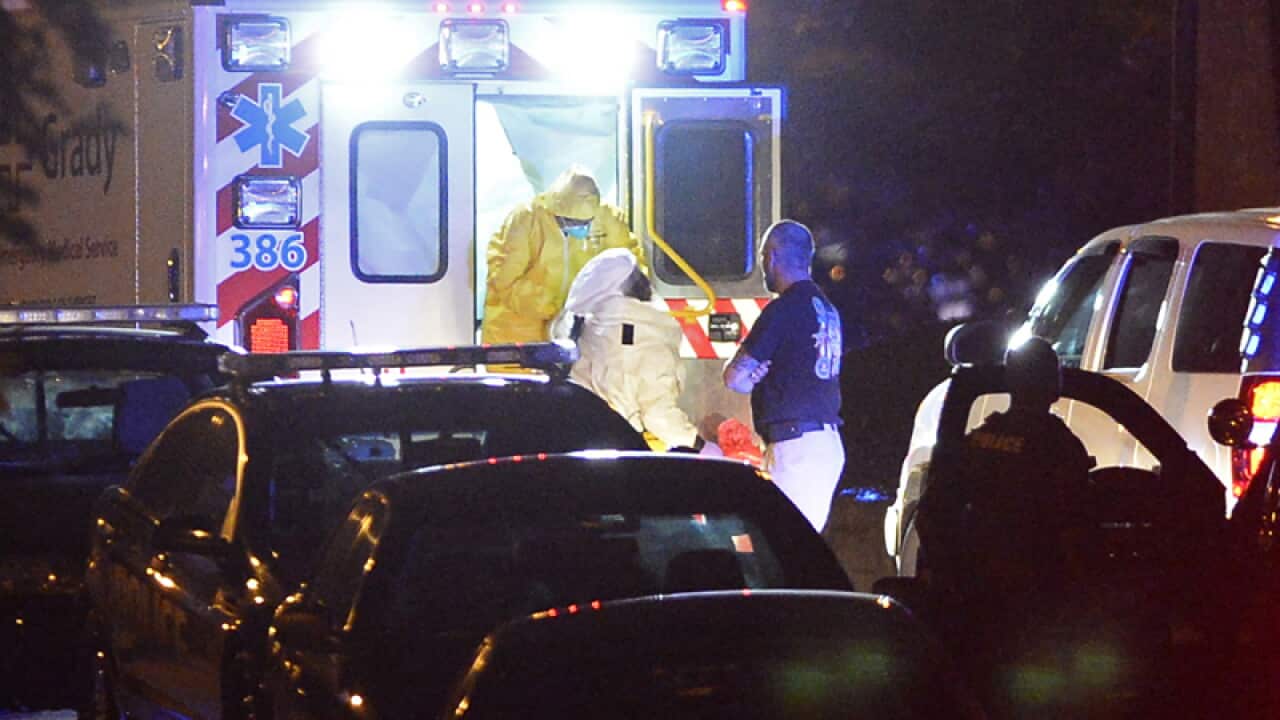
The second infection of a US healthcare worker who treated the country's first Ebola patient has exposed a series of gaps in its preparedness for confronting the deadly virus.
President Barack Obama said last month the US was ready for the "unlikely event" that the haemorrhagic virus ravaging West Africa could make its way into the country, and that any emergence would be quickly contained.
But when a Liberian man with a fever, body pains and recent history of travel to the country the worst-hit by current epidemic first walked into a Dallas hospital on September 25, he was sent back home after about four hours.
That decision put other emergency room patients, the man's family and hospital staff at risk of exposure to Ebola.
When he was rushed via ambulance back to that same hospital on September 28, vomiting and experiencing diarrhoea which made him highly contagious, dozens of healthcare staff may have been infected by not adequately protecting themselves.
News that makes sense
Your trusted source for staying up-to-date with the world around you. Get free daily news updates and analysis, straight to your inbox.
Thomas Eric Duncan was not diagnosed with Ebola until September 30 and he died on October 8.
"Unfortunately, in our initial treatment of Mr Duncan, despite our best intentions and a highly skilled medical team, we made mistakes," admitted Dr Daniel Varga, chief clinical officer of Texas Health Resources, which runs the hospital.
"We did not correctly diagnose his symptoms as those of Ebola. We are deeply sorry," he said, in written testimony to politicians on the House Energy and Commerce Committee, which is studying the public health response to the outbreak.
The CDC has identified 118 people who either had definite or possible contact with Duncan, more than half of whom are healthcare workers.
The first case of infection in the US was announced on Sunday, in Nina Pham, a nurse who had cared for Duncan, followed by another female healthcare worker on Wednesday. She has been identified as nurse Amber Vinson, according to The Dallas Morning News.
The Centers for Disease Control and Prevention chief Thomas Frieden described the situation as "very concerning".
"The investigation is identifying additional healthcare workers who will be very closely monitored and we are planning for the possibility of additional cases in the coming days," he said.
The US Centers for Disease Control and Prevention (CDC) issued an alert for all 132 passengers who travelled on an October 13 flight from Cleveland, Ohio to Texas with the Ebola-infected nurse who had not yet become symptomatic.
Frieden said the case was "very concerning" and warned that health workers who have been exposed to Ebola patients should not use public transport.
"She was in a group of individuals known to have exposure to Ebola. She should not have travelled on a commercial airline," he said.
The woman was isolated at Texas Health Presbyterian hospital in Dallas late on Tuesday with a fever, and the crew on the flight said she had not been symptomatic when she flew a day earlier.
National Nurses United said that their discussions with staff at the Texas Health Presbyterian Hospital Dallas revealed the facility was woefully unprepared to deal with an Ebola patient when Duncan arrived.
"Mr Duncan was left for several hours, not in isolation, in an area where other patients were present," the union said of his arrival on September 28.
The union said blood specimens were not specially sealed or hand delivered to labs as required, and that nurses who treated him were not properly covered.
But Varga insisted that the hospital and Pham herself had had the correct equipment.
The nurses' union has sent a letter to Obama asking for better training and improved protective equipment so that nurses are not placed in harm's way.
Frieden admitted on Tuesday he made a mistake by not sending a specialised CDC team to Dallas right away to train staff and oversee the response.
He vowed to immediately dispatch an expert team anywhere needed, should future cases arise.







