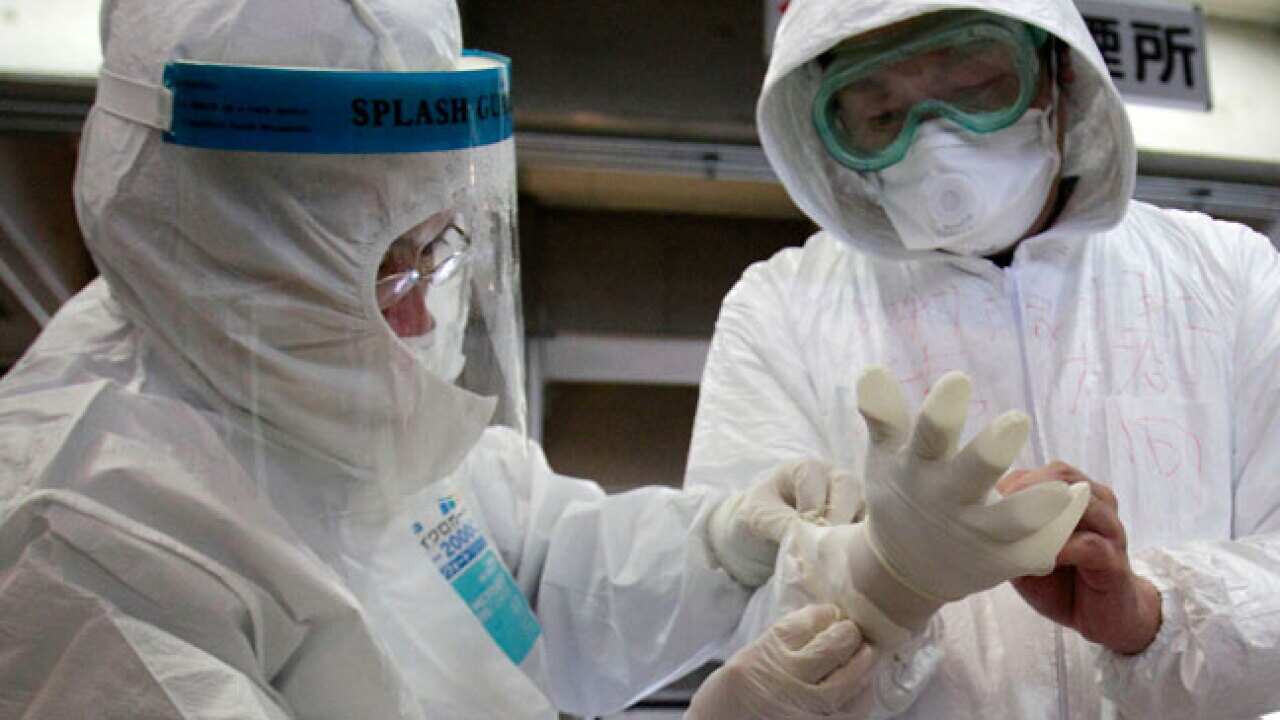
Dubbed by some as 'modern day samurai' the emergency workers at the Fukushima Dai-ichi risk explosions, fire and an invisible enemyas they race to avert disaster.
They risk explosions, fire and an invisible enemy - radiation that could kill quickly or decades later - as they race to avert disaster inside a dark, overheated nuclear plant.
The 180 emergency workers at Japan's crippled Fukushima Dai-ichi complex are emerging as public heroes in the wake of a disaster spawned by an earthquake and a tsunami.
News that makes sense
Your trusted source for staying up-to-date with the world around you. Get free daily news updates and analysis, straight to your inbox.
Dubbed by some as modern-day samurai, the technicians were back at work late after a surge of radiation forced them to leave their posts for hours.
"I don't know any other way to say it, but this is like suicide fighters in a war," said Keiichi Nakagawa, associate professor of the Department of Radiology at the University of Tokyo Hospital.
Anonymous workers
Small teams of the still-anonymous emergency workers rush in and out for 10 to 15 minutes at a time to pump sea water into the plant's overheated reactors, monitor them and clear debris from explosions. Any longer would make their exposure to radioactivity too great.
They also struggle with broken equipment and a lack of electricity.
Even at normal times, workers wear coveralls, full-face masks with filters, helmets and double-layer gloves when they enter areas with a possibility of radiation exposure.
Some of them carry oxygen tanks so they don't have to inhale any radioactive particles into their lungs.
But the burst of radioactivity on Wednesday led the government to order an evacuation of the Dai-ichi complex for about five hours.
"The workers cannot carry out even minimal work at the plant now," Chief Cabinet Secretary Yukio Edano said of the evacuation.
Seven-years of exposure in minutes
The highest reading among various locations that had to be accessed by the workers hit 600 millisieverts, equal to several years of daily exposure limit, according to statistics released by Tokyo Electric Power Company.
Millisieverts measure exposure to radiation, which can cause cancer and birth defects. Severe exposure can cause burns and radiation sickness - nausea and vomiting and harm to blood cells.
A typical individual might absorb 6 millisieverts a year from natural and manmade sources such as X-rays.
Small additional annual exposures of under 100 millisieverts are believed to produce no discernible harm but more carries health risks.
Tony Irwin, an Australian-based nuclear consultant, said the normal dose for a radiation worker is 20 millisieverts a year, averaged over five years, with a maximum of 50 millisieverts in any one year.
"So they would be trying to rotate people to make sure they're within that limit. Now many countries have an emergency limit of 100 millisieverts a year," he said.
"They'll wear radiation monitors, so they can see exactly what they're getting on a real
time basis."
Yet, Japan's Ministry of Health Labour and Welfare raised the maximum legal exposure for nuclear workers to 250 millisieverts from 100 millisieverts.
It described the move as "unavoidable due to the circumstances."
Risk of explosions
The workers' challenges this week have included struggling for hours to open a pressure-release valve and allow water to enter the reactors.
When a worker left the scene for a short period, the water flow ceased and fuel for pumps bringing up the water ran out.
A building housing a spent fuel storage pool exploded on Tuesday, making two huge holes on the upper side of the wall on the building.
A plant worker spotted a fire shortly thereafter that was later put out.
The workers also have had to walk around the area to measure radioactivity in each place where they were supposed to enter, and remove contaminated debris.
Nausea and exhaustion
"Workers persevere amid fears of 400 millisieverts," read one headline in the nationally circulated Yomiuri newspaper.
The newspaper said one male worker who was opening a valve to let out built-up steam was hospitalised after complaining of nausea and exhaustion after being exposed for 10 minutes of radiation, despite wearing head-to-toe protective gear and a mask.
"The thing I've been concerned about right now are the workers.
They are at a tremendous risk," said Don Milton, a doctor who specialises in occupational health and directs the Maryland Institute of Applied Environmental Health at the University of Maryland.
Milton noted reports that some workers have already shown signs of acute radiation sickness. That would be even worse than it sounds because "the sooner it comes on after exposure, the worse it is."







