Key Points
- Poland has estimated the financial cost of World War Two losses to be $1.9 trillion
- The leader of the country's ruling party said he would ask Germany to negotiate the reparations
Poland on Thursday estimated the financial cost of World War Two losses to be A$1.9 trillion and said it would "ask Germany to negotiate these reparations".
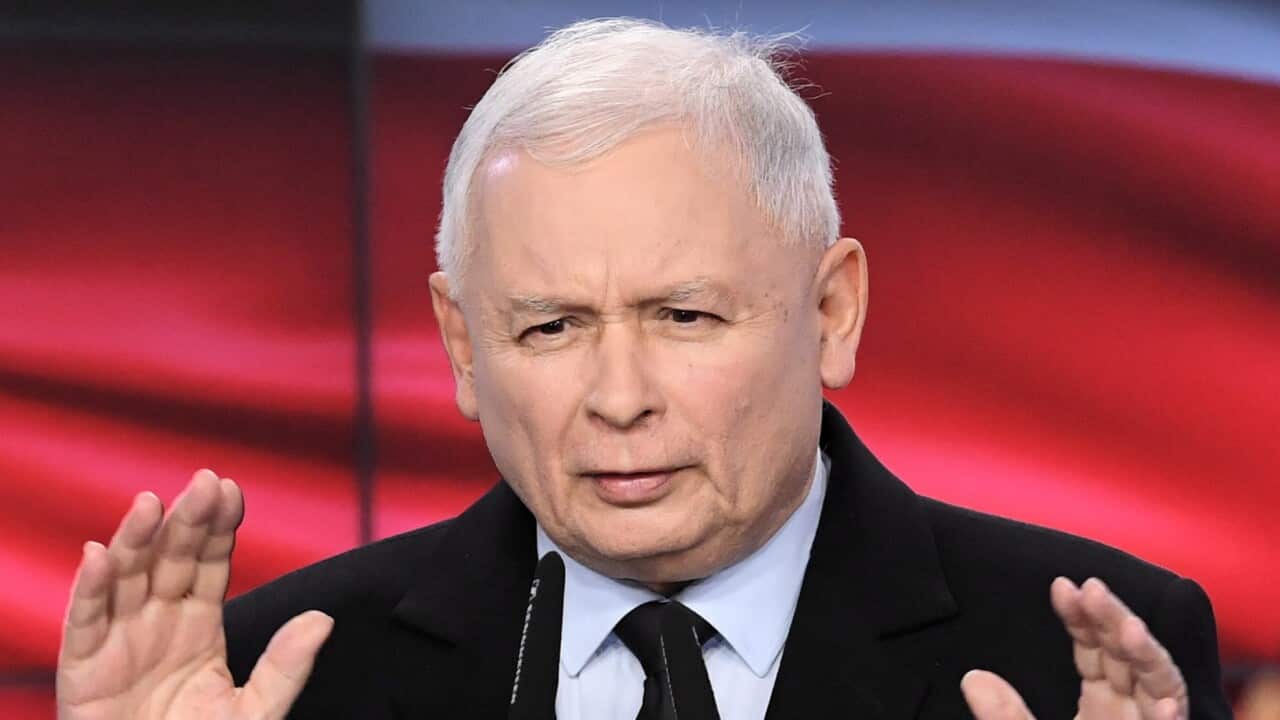
"It is a major sum of 6.2 trillion" Polish zloty, said Jaroslaw Kaczynski, head of the ruling Law and Justice party and widely considered to be Poland's de facto leader.
Most of this sum "is compensation for the deaths of more than 5.2 million Polish citizens," he stressed.
Mr Kaczynski said that receiving reparations would be a "long and difficult" process.
"It is a decision we will implement," he said, speaking on the anniversary of Nazi Germany's invasion of Poland on 1 September, 1939.
News that makes sense
Your trusted source for staying up-to-date with the world around you. Get free daily news updates and analysis, straight to your inbox.
Mr Kaczynski was speaking at a conference dedicated to the presentation of a report on Poland's losses in the 1939-1945 war.
Since coming to power in 2015, Poland's governing Law and Justice (PiS) party has often championed the issue of war reparations.
Work on the reparations report started in 2017, when the conservative government insisted that Germany had a "moral duty" in the matter.
German position 'unchanged'
Germany has often rejected Poland's claims, pointing to a 1953 decision by Poland to renounce claims against East Germany.
The German government on Thursday turned down the Polish call to negotiate on reparations.
"The German government's position is unchanged, the reparations issue is closed," a foreign ministry spokesman said in an email to news agency AFP.
He cited the 1953 decision, calling it a "significant foundation for Europe's order today".
The liberal Polish opposition believes the report is mainly intended for domestic political purposes, coming as it does a year ahead of parliamentary elections.
"The PiS initiative on war reparations has been appearing for several years, whenever PiS needs to build a political narrative," said Donald Tusk, chairman of the main opposition Civic Platform (PO).
"This is not about any reparations from Germany, but a political campaign" in Poland, he added, with Kaczynski seeking to "rebuild the support of the ruling party through this anti-German campaign".
'Unbelievably criminal, unbelievably cruel'
But Mr Kaczynski insisted that the reparations report needs to be acted upon.
"We have not only prepared a report... but we have also taken a decision, a decision on further action," he said.
Mr Kaczynski added: "That action is to ask Germany to negotiate these reparations. And this is a decision that we will implement."
"The Germans invaded Poland and did us enormous damage. The occupation was unbelievably criminal, unbelievably cruel and caused effects that in many cases continue to this day," he said.
Apart from the overall death toll put at 5.3 million, the new report provides other shocking statistics, including that 2.1 million Polish citizens were deported to undertake forced labour in Nazi Germany.
As a result of being forced to undergo pseudo-medical experiments and detention in concentration camps, 590,000 Poles were disabled.
Over the duration of the six-year World War, Poland lost 50 per cent of its lawyers, 40 per cent of its doctors and 35 per cent of university professors.
Human losses were calculated as the loss of wages that a person would have earned for the rest of his or her life, and thus the loss to the national GDP.
Material losses were also tallied at an estimated 800 billion zlotys ($248 billion).
The total figure also includes multi-billion losses related to cultural and artistic assets and in the banking sector.







