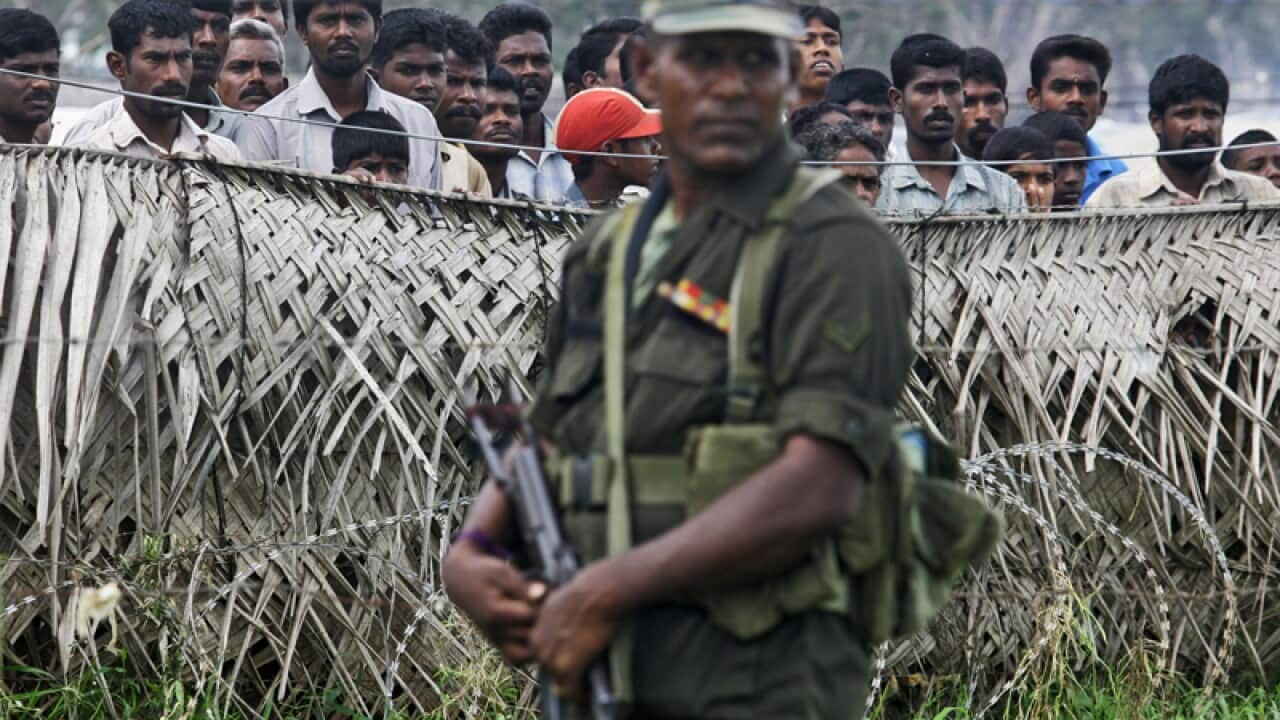
Sri Lanka's new government has pledged to devolve power to the country's Tamil minority, in a step towards national reconciliation six years after a controversial military offensive crushed a separatist rebellion.
Prime Minister Ranil Wickremesinghe, in his first address to parliament since taking office, said on Tuesday that politicians needed to bring a political conclusion to the conflict between government troops and Tamil Tiger rebels that ended in 2009.
Critics say the previous regime failed to deal with the ethnic divisions that led to conflict on the island, whose Sinhalese majority has traditionally dominated positions of power.
Wickremesinghe said his government would revive a 1987 constitutional amendment that promised a de facto federal arrangement for the island's Tamil-dominated northern and eastern regions.
"We will implement the 13th amendment within a unitary state," said Wickremesinghe.
Successive governments failed to implement the controversial 13th amendment due to pressure from the Sinhalese population, who saw it as a sell-out to the minority community.
The country's main Tamil political party, the Tamil National Alliance, has distanced itself from demands for a separate homeland and said it accepts power-sharing.
Sri Lanka's former president, Mahinda Rajapakse, was a hard-line Sinhala nationalist who came to power in 2005 promising an "honourable peace" with Tamil rebels, but ended up fighting against them.
Rajapakse ordered a no-holds-barred military offensive that ended the 37-year-old separatist war, but his forces were subsequently accused of killing up to 40,000 Tamil civilians - a charge he has denied.
Wickremesinghe told parliament during its first session since the January 8 presidential election that he hoped to push through several pieces of legislation to make key institutions independent.
A right to information act will also be passed and many of the executive powers currently held by the president will be transferred to parliament.
Share


