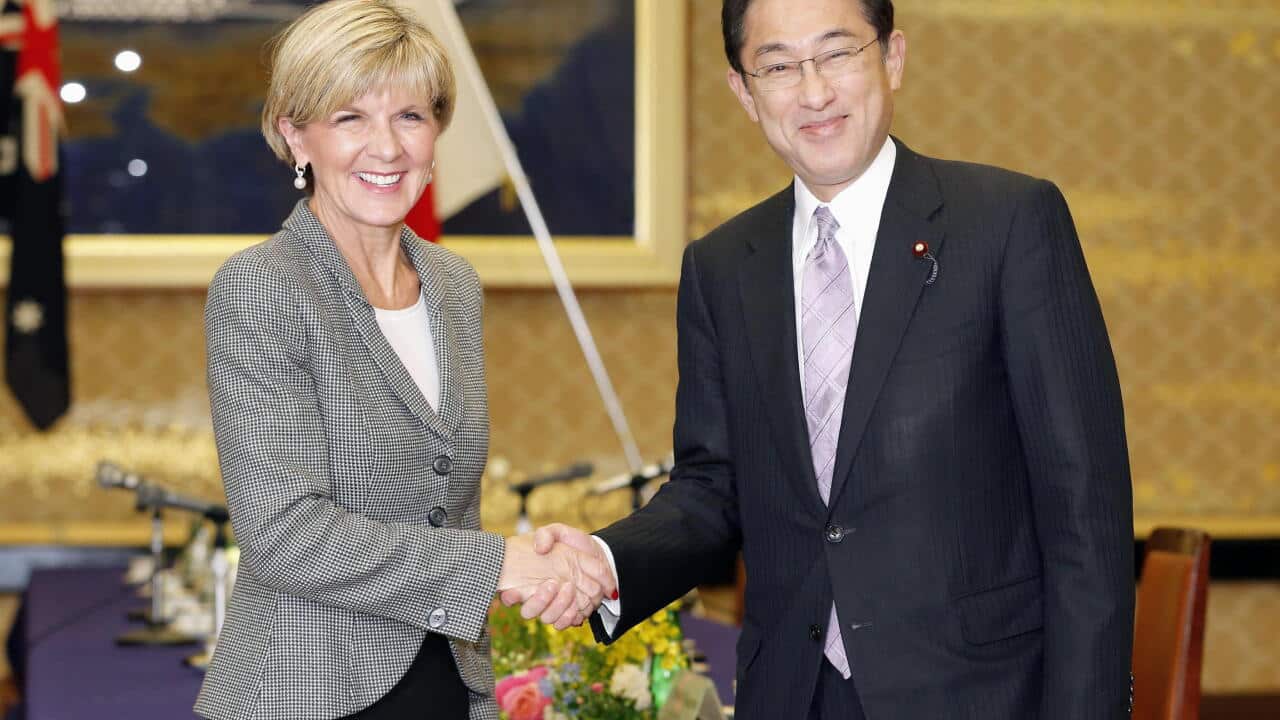
Foreign Minister Julie Bishop is keen to see Australia and Japan increase defence training and joint exercises in the wake of the Asian country's military reforms.
Peacekeeping operations, humanitarian assistance and disaster relief are areas of increased co-operation in the long term, Ms Bishop told the Japan National Press Club in Tokyo on Tuesday.
Australian and Japanese peacekeepers are currently deployed together in South Sudan.
Ms Bishop said Japan's new security legislation showed it is prepared to make a greater contribution to international peace and security and is now able to exercise, in a limited way, its right of collective self defence under a UN charter.
It was up to Japan's lawmakers to determine how that would come about.
News that makes sense
Your trusted source for staying up-to-date with the world around you. Get free daily news updates and analysis, straight to your inbox.
But Ms Bishop noted Japan's efforts would be a "vital and necessary complement to the United States" pivot to Asia.
She said China had a right to enjoy greater strategic influence consistent with its economic weight but warned it should act in a way that improved regional and global security.
On the South China Sea maritime dispute, Ms Bishop said Australia's commitment to freedom of navigation and international law was "unshakable".
She hoped for a peaceful resolution and expressed concerns about reclamation work.
China has ramped up construction of artificial islands in a move some experts believe is aimed at bolstering its territorial claims.
Vietnam, Malaysia, Philippines, Taiwan and Brunei also claim parts of the sea.
Ms Bishop flagged she'll be seeking more information about the intended use of construction when she travels to Beijing.
Meanwhile, Japan and Australia have signed an agreement to increase defence, diplomacy and development co-operation to support the economic future and stability of Pacific island nations.
Asked if the strategy was about countering Beijing's aid influence in the region, Ms Bishop told reporters she welcomed other countries' help to develop Pacific Island nations.







