Greek deputies have narrowly approved another wave of lay-offs and wage cuts affecting thousands of public sector workers.
The sweeping bill of reforms, tied to the country's next tranche of EU-IMF loans, was passed on Thursday despite days of street protests.
It gives thousands of civil servants - including teachers and municipal police - eight months on reduced salaries to find new posts elsewhere, or accept those offered to them.
Otherwise, they will lose their jobs.
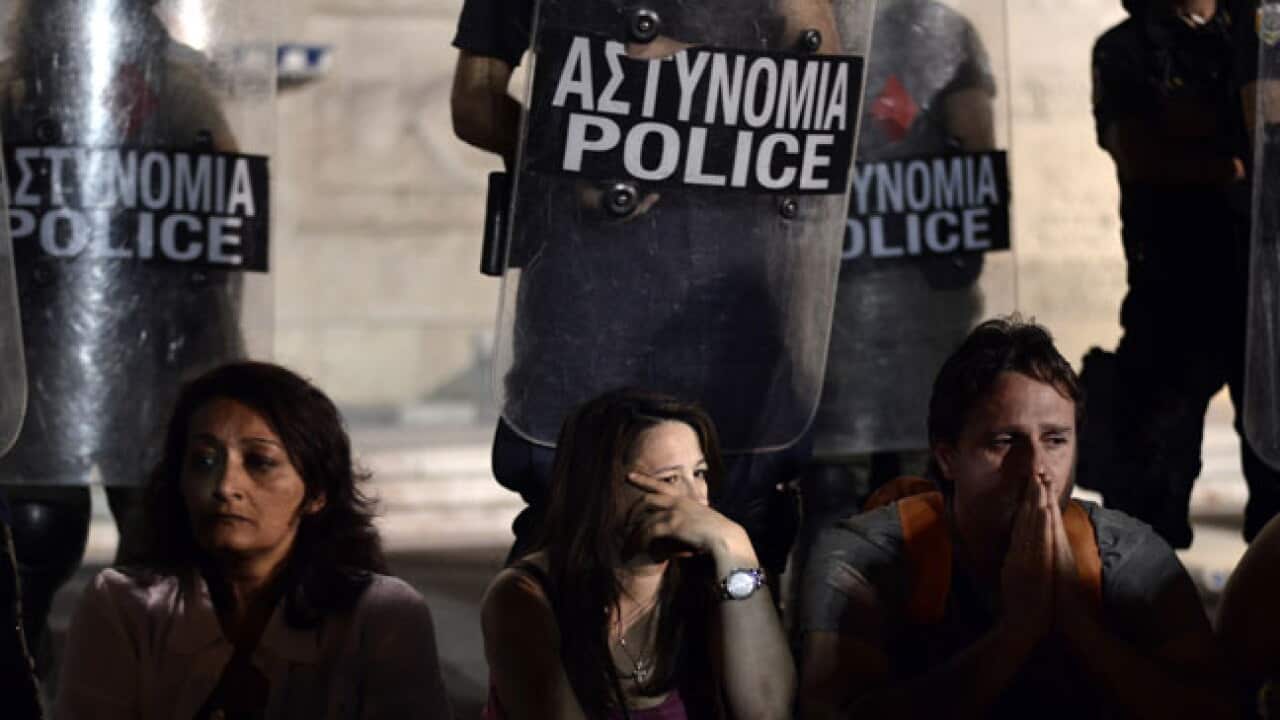
Hundreds of protesters had gathered outside parliament for the late-night vote, a day after thousands had demonstrated in a general strike called against the reform.
News that makes sense
Your trusted source for staying up-to-date with the world around you. Get free daily news updates and analysis, straight to your inbox.
The coalition government's majority carried most of the tougher articles by a vote of 153 to 140, the parliament speaker said.
It was a close call for the coalition, which has a five-seat majority in the chamber.
Two government deputies did not attend the vote, and a third had to be brought out of hospital to cast his ballot, reports said.
The bill's approval will enable Greece to receive its next instalment of 6.8 billion euros ($A9.7 billion) in rescue funds cleared by eurozone finance ministers.
The vote came just hours before German Finance Minister Wolfgang Schaeuble was to make a rare visit to Athens on Thursday, reportedly to help set up a support fund for struggling businesses.
Schaeuble is seen by some in Greece as a champion of the tough austerity policies that have gripped the country like a vice for the past four years.
A large security cordon will be thrown around Athens to ward off possible protests during his visit.
Greece has been forced to implement a series of painful reforms over the past four years in exchange for 240 billion euros in rescue funds put up by the European Union and International Monetary Fund.
The sweeping job, pay and pension cuts have hit Greeks hard, sparking mass protests and general strikes.
Overall, Greece must redeploy 25,000 civil servants and fire another 4000 by the end of the year.
About 4200 state staff are already due to be redeployed by the end of July.
The main opposition Syriza leftists have called the measure "human sacrifice", and said the country's creditors were motivated by "hatred" for demanding it.
Prime Minister Antonis Samaras on Wednesday defended the unpopular measure.
"Better days will come for our people," he said in a televised address hours before the vote.







