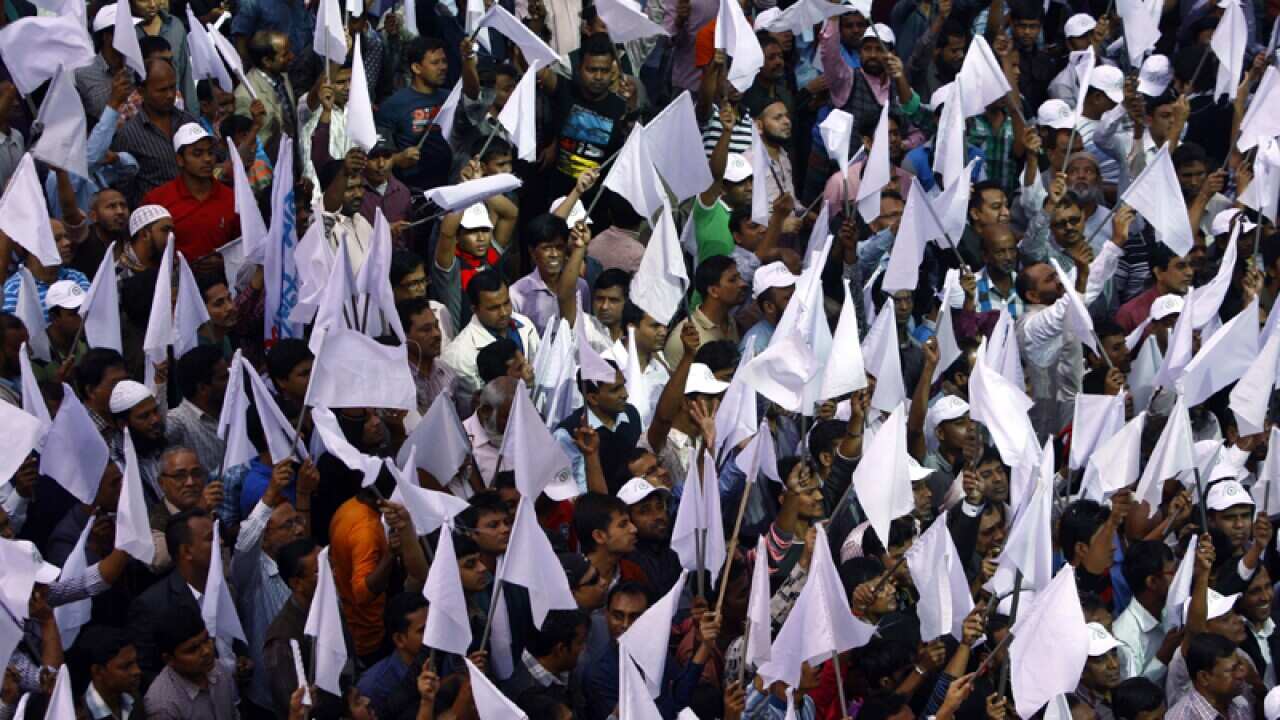
Continuing protests in Bangladesh sparked by the execution of a top Islamist leader have seen 13 more people killed, as the prime minister warned of a crackdown.
Police said they opened fire after Islamist supporters torched houses and fought street battles with them during a third day of unrest over the hanging of Abdul Quader Molla for mass murder during the 1971 war of independence.
Six people were killed on Sunday, including four in the northern town of Patgram, and another seven died elsewhere overnight, police said.
The deaths occurred as Islamist supporters enforced a nationwide strike over the execution of Molla, a senior leader of the Jamaat-e-Islami party.
"Police fired rifles after Jamaat protesters torched at least 20 houses belonging to ruling party supporters," government administrator Habibur Rahman told AFP of the violence in Patgram.
"We have banned protests and gatherings in the area to prevent further violence."
Molla's execution on Thursday night triggered fresh violence in the impoverished country, already reeling from political unrest in the build-up to a deeply divisive national election scheduled for January 5.
Twenty-five people are now known to have died and dozens more have been injured in the clashes since Thursday between outraged Jamaat activists and police and between the activists and supporters of the ruling Awami League.
Prime Minister Sheikh Hasina warned of strong action against the rioters, saying "We have shown enough patience. We will not tolerate any more."
"People of the country know how to reply to these atrocities (the latest violence), we (government) also know how to respond to, control you (the rioters)," she told a rally late on Saturday to commemorate those killed in the 1971 war of independence from Pakistan.
Molla, 65, became the first person to be executed for his role in that war. Jamaat called the hanging a "political murder" and said it would avenge it.





