
Emergency crews are racing to reach survivors as more than 1,300 people have died from catastrophic floods and landslides in Indonesia, Sri Lanka and Thailand — with nearly 1,000 people missing.
Days of heavy monsoon rains inundated vast areas, leaving thousands stranded and many clinging to rooftops and trees waiting for help.
The flooding and landslides killed at least 1,303 people, with 753 people confirmed dead in Indonesia, 410 in Sri Lanka and 181 in Thailand, officials said.
In Indonesia, the hardest-hit nation, rescuers struggled to access villages on Sumatra island, where roads have been washed out and bridges collapsed.
At least 650 people remain missing, according to the country's National Disaster Management Agency.
News that makes sense
Your trusted source for staying up-to-date with the world around you. Get free daily news updates and analysis, straight to your inbox.
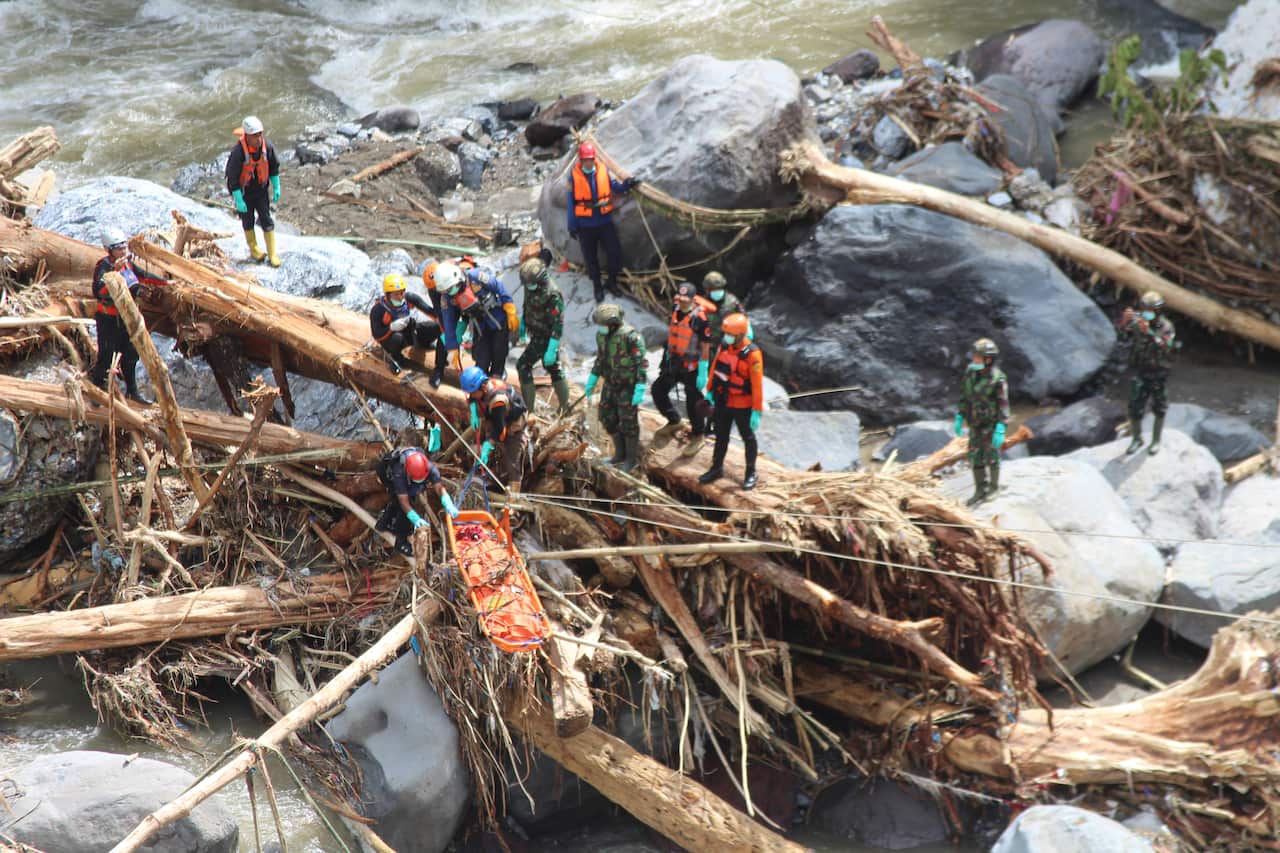
Helicopters and boats have been deployed, but officials warn worsening weather and damaged infrastructure are slowing operations.
Floods and landslides in North Sumatra carried away millions of cubic metres of felled timber, officials said, sparking public concern that illegal logging may have contributed to the disaster.
Batang Toru, the lush forested area, has turned into a wasteland of broken logs and shattered homes. Roads have vanished, replaced by rivers of sludge.
Rianda Purba from activist group, Indonesian Environmental Forum, said: "This is not just a natural disaster, it's a man-made crisis."
"Deforestation and unchecked development have stripped Batang Toru of its resilience. Without urgent restoration and stricter protections, these floods will become the new normal," he said.
Sri Lanka's worst disaster in recent years
Military-led rescue teams in Sri Lanka scoured flood-devastated areas for 336 people still missing in the aftermath of Cyclone Ditwah, the Disaster Management Centre said.
Roads were blocked by landslides and bridges have collapsed, making access difficult.
In Kandy, residents struggled without running water, relying instead on bottled water collected from natural springs. Authorities warned conditions could worsen as more rain is forecast in the coming days.
Sri Lankan President Anura Kumara Dissanayake described the disaster as the worst to strike the country in recent history, saying it remains impossible to determine the full scale of casualties.
He warned the number of casualties is likely far higher than current figures.
He said government agencies were working to reach isolated communities.
In southern Thailand, clean-up has started on streets and in buildings after massive floods affected more than 1.5 million households and 3.9 million people.
Authorities are working to restore infrastructure, including water and electricity.
— With additional reporting by PA Media news agency via Australian Associated Press
For the latest from SBS News, download our app and subscribe to our newsletter.







