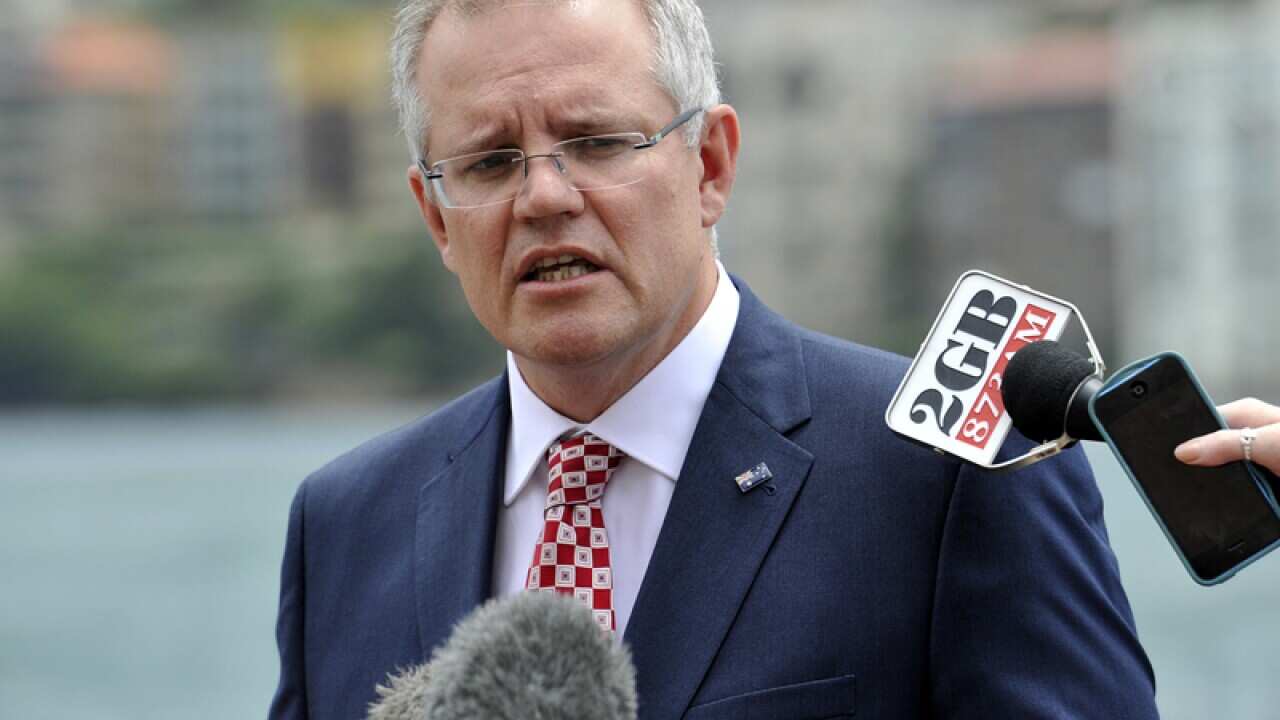
Treasurer Scott Morrison has used the first parliamentary sitting day of the year to assure voters the Australian economy is improving, even in the face of "very serious" global headwinds.
But Reserve Bank governor Glenn Stevens has indicated another interest rate cut could be on the cards, if needed to lift demand.
Mr Morrison says Australia is transitioning to a more diversified economy in the wake of the unwinding mining investment boom.
"What we are seeing is an Australian economy that is growing at twice the rate of comparable economies like Canada, for example, which also has a commodities base," Mr Morrison told parliament on Tuesday.
He echoed comments from Mr Stevens after the central bank's first board meeting of the year, where it left the cash rate at a record low of two per cent for another month.
News that makes sense
Your trusted source for staying up-to-date with the world around you. Get free daily news updates and analysis, straight to your inbox.
Mr Stevens said the non-mining parts of the Australian economy have continued to strengthen, business conditions are now above average, employment growth is picking up and the unemployment rate declined in the second half of 2015.
However, while several advanced economies have recorded improved growth, China's growth has continued to moderate and conditions have become more difficult for a number of emerging economies.
Commodity prices have also declined further, while financial markets have again turned volatile as participants grapple with uncertainty about the economic outlook.
"Given these conditions, it is appropriate for monetary policy to be accommodative," Mr Stevens said.
"Continued low inflation may provide scope for easier policy, should that be appropriate to lend support to demand."
The uncertainty about the global outlook has certainly ruffled the confidence of consumers, which declined across January for the first time since 2008 - ominously the year the global financial crisis erupted.
The ANZ-Roy Morgan consumer confidence gauge fell a further 0.9 per cent in the past week to be 4.4 per cent down over a four-week period, wiping out the gains made after Malcolm Turnbull toppled Tony Abbott as prime minister.
"The weakness in confidence highlights the powerful links between international instability and the domestic economy," ANZ chief economist Warren Hogan said.
He expects the case for a further 50 basis points of cash rate cuts will build during 2016.
Commonwealth Securities economist Savanth Sebastian expects talk of a possible rise in the GST rate as part of the Turnbull government's tax reform would have also played its part in the weaker confidence result.







