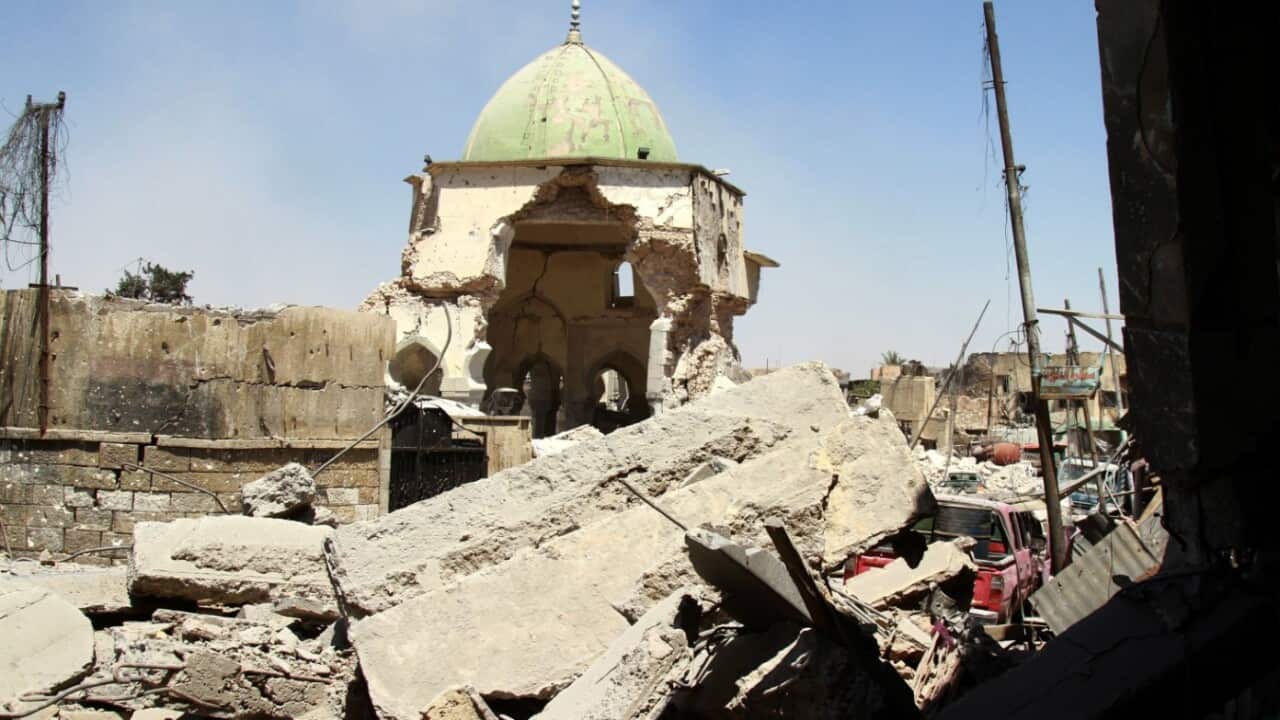
But after three years of IS rule, it is now little more than a pile of stones at the center of a shattered city.
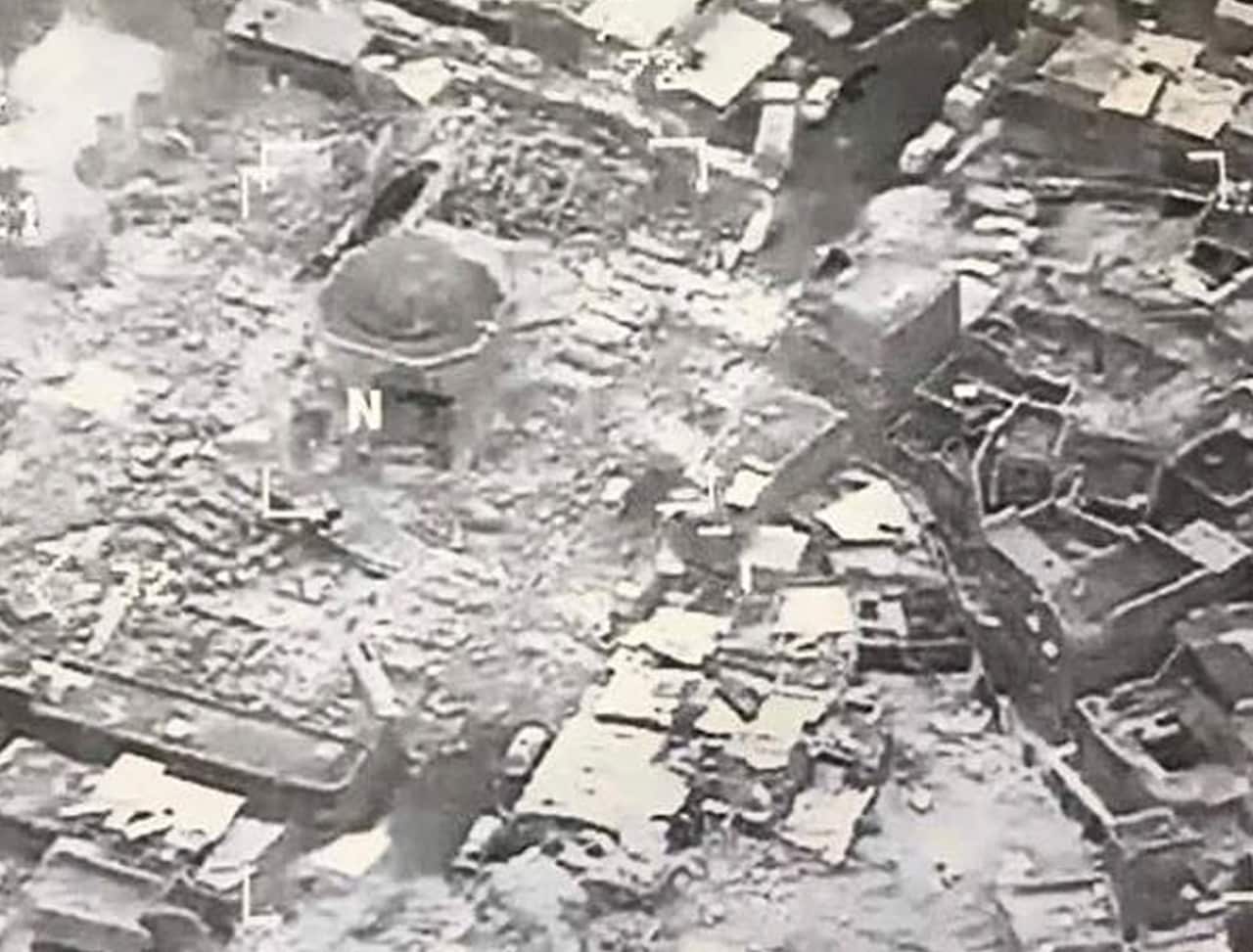
By all accounts except their own, the jihadists rigged the mosque and its 850-year-old tower with explosives and blew them up last week as advancing Iraqi forces came within steps of the complex.
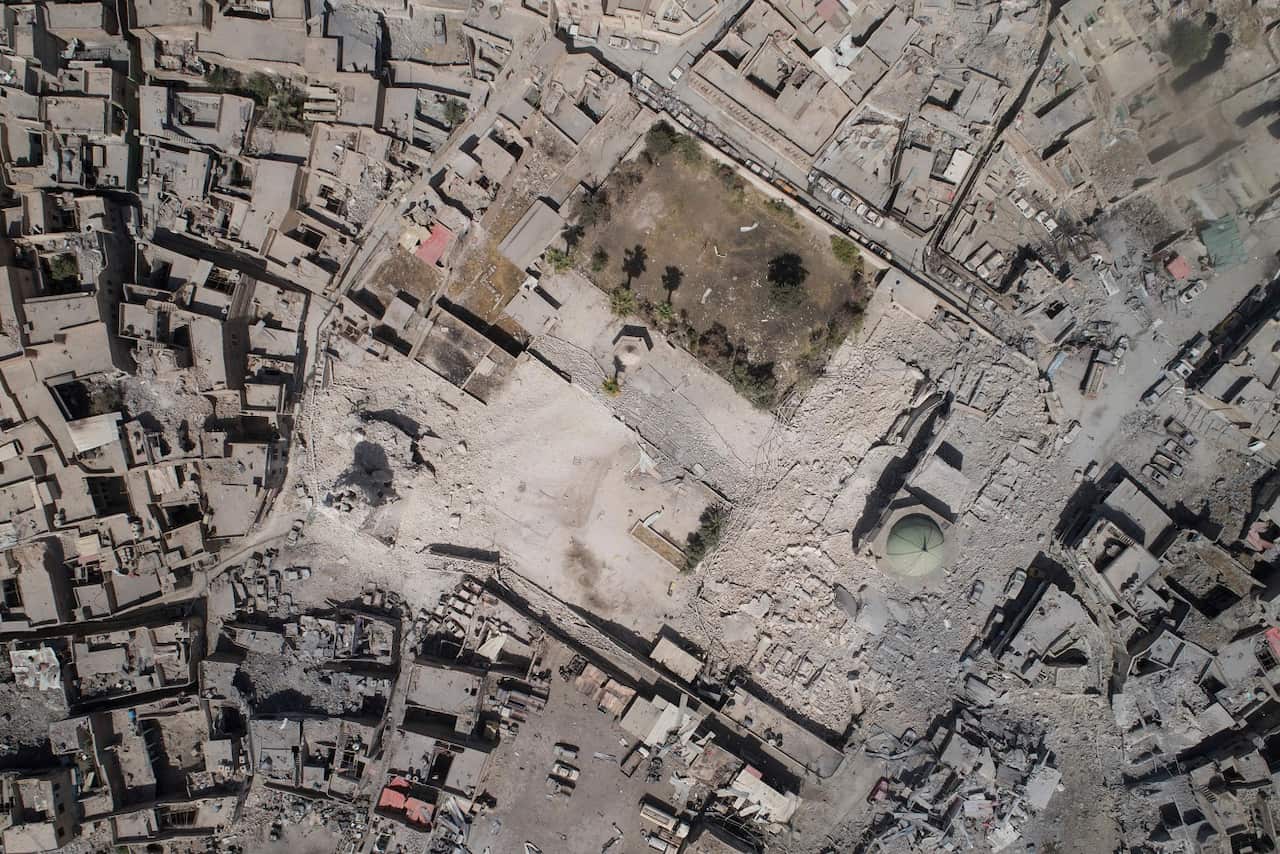
A Reuters visit to the site on Friday, a day after Iraq's military recaptured it, confirmed the extent of destruction: the 45-metre (148 ft) al-Hadba minaret had been reduced to a stump while the mint green dome was the only part of the prayer hall still standing.
Fighting raged on a few blocks away. Bullets whizzed past the main gate, which is largely intact, and a mortar fell on an adjacent building.
News that makes sense
Your trusted source for staying up-to-date with the world around you. Get free daily news updates and analysis, straight to your inbox.
Below the mosque's dome in July 2014, IS leader Abu Bakr al-Baghdadi delivered a Friday sermon presenting himself at the head of a modern-day caliphate spanning swathes of territory which the al Qaeda offshoot group had just seized in Iraq and neighboring Syria.
"I am your leader, though I am not the best of you," he said, wearing the black turban and robes denoting a claim to descend from the Prophet Mohammad.
Within months, IS was carrying out and inspiring militant attacks in places as far abreast as Paris, London and California. An international military coalition led by the United States quickly coalesced to confront the group.
Three years on, the inscribed pulpit where he spoke lies in ruins. The mosque grounds are covered in stone and concrete, and a segment of a secondary minaret is one of the only discernable objects in the rubble. The risk of unexploded ordnance or mines prevented a thorough inspection of the site's interior.
Baghdadi's appearance at the Nuri mosque was the first time he revealed himself to the world, and the footage broadcast then is to this day the only video recording of him as "caliph".
He long ago left the fighting in Mosul and Syria's Raqqa to local commanders and is believed to be hiding in the border area between the two countries, according to US and Iraqi military sources. He has frequently been reported killed, including last month by Russia and Iran.
After his speech in 2014, Baghdadi descended from the pulpit to lead his followers in worship, standing in a prayer niche which is now just barely recognisable amid the wreckage.
Crumbling caliphate
Baghdadi's project, to revive the Islamic caliphate which mostly disappeared with the fall of the Ottoman Empire in the early 20th century, is also crumbling.
The group still rules over an area which by one estimate is equivalent to the size of Belgium. But experts say its territorial losses undermine its legitimacy and attractiveness to potential recruits who once flocked from across the world in the tens of thousands.
The Nuri mosque was named after Nuruddin al-Zanki, a noble who fought the early crusaders from a fiefdom that covered territory in modern-day Turkey, Syria and Iraq. It was built in 1172-73, shortly before his death, and housed an Islamic school.
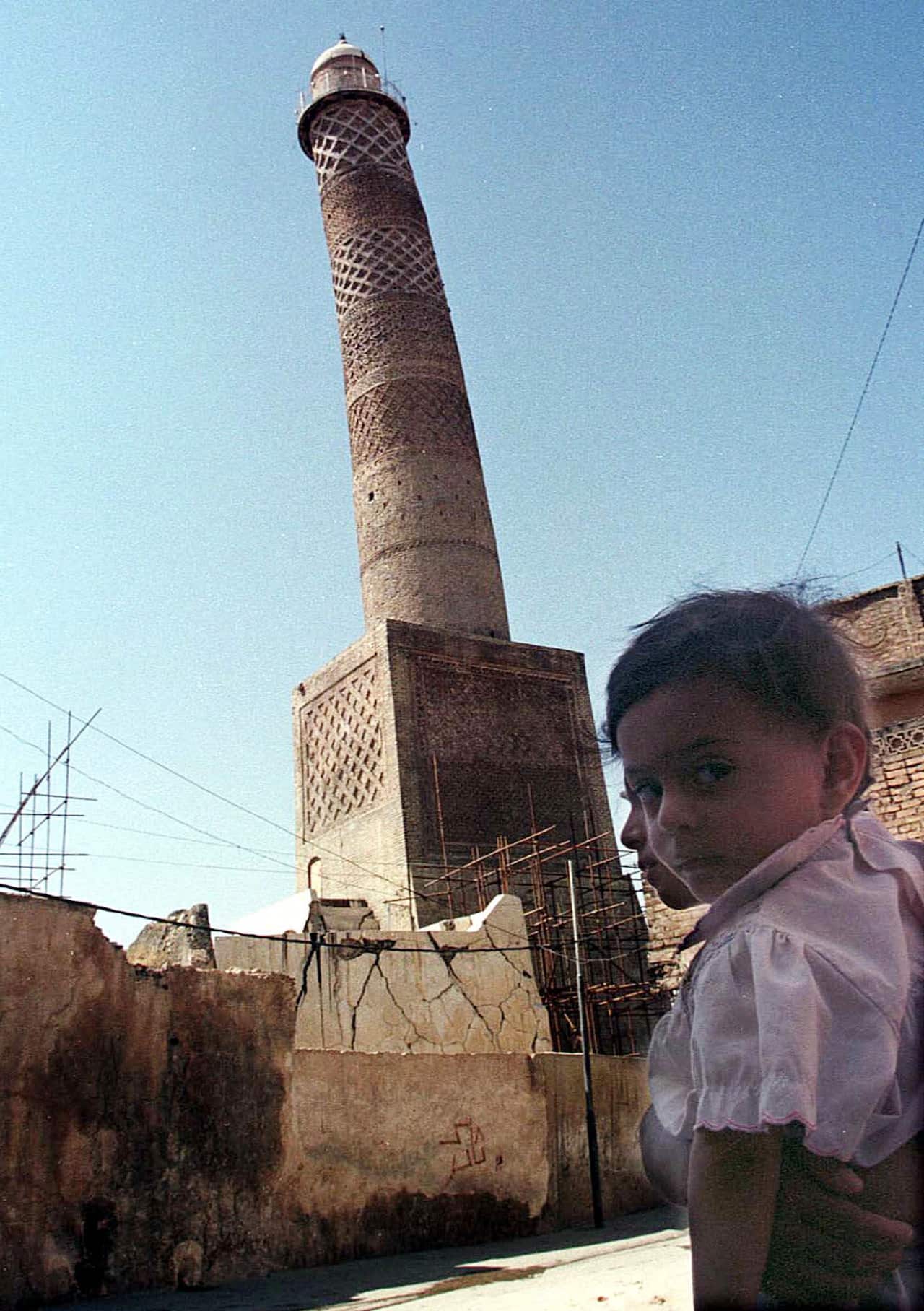
By the time renowned medieval traveler and scholar Ibn Battuta visited two centuries later, the minaret was leaning. The tilt gave the landmark its popular name: the hunchback.
The mosque's military and religious history embodied the spirit of Mosul, a diverse but predominately Sunni Muslim city which supplied Iraq's armed forces with officers for much of the 20th century.
The Hadba minaret, whose tilt begs comparisons to Italy's Tower of Pisa, was built with seven bands of decorative brickwork in complex geometric patterns also found in Persia and Central Asia.
Only slivers of that design are now visible among the rubble. The eight-month-old US-backed battle for Mosul has also destroyed homes and basic infrastructure across the city and displaced nearly a million residents.
Civilians, mostly women and children, rushed past the demolished mosque as they crossed the frontline towards Iraqi forces. They were thirsty and tired, and some were injured.
Across the street, among the detritus of war, laid the partial remains of an IS fighter dressed in red clothing.







