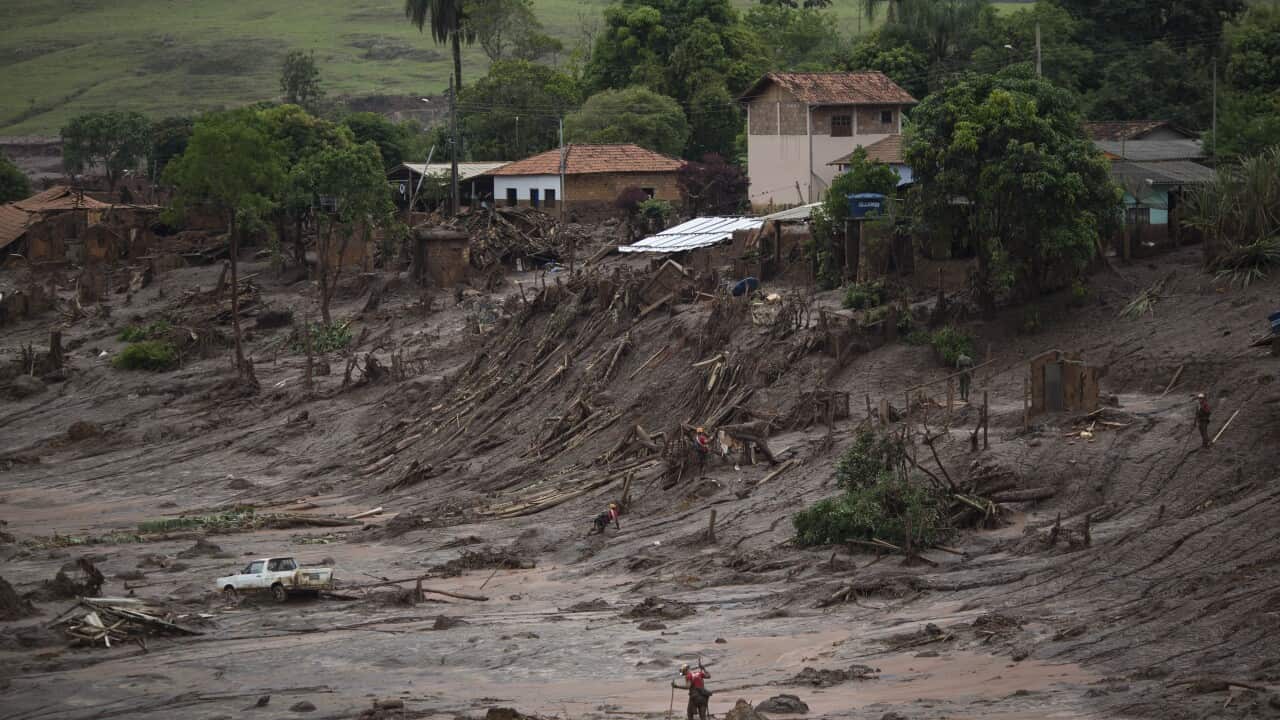
The statement contradicts claims by Samarco, the mine operator at the site of the rupture, that the water and mineral waste contained by the dam are not toxic.
Citing "new evidence," the UN's Office of the High Commissioner for Human Rights said in a statement the residue "contained high levels of toxic heavy metals and other toxic chemicals."
The agency did not identify the studies that were the basis for the evidence or say who conducted them.
News that makes sense
Your trusted source for staying up-to-date with the world around you. Get free daily news updates and analysis, straight to your inbox.
The owners of Samarco, Brazil's Vale SA and Australia's BHP Billiton, said they are taking every measure possible to provide emergency assistance to those affected by the dam break and to reduce the social and economic impacts of the disaster.
Samarco said in a statement that both pre- and post-disaster tests show the mud released in the dam burst, made up mostly of water, iron oxides and silica or quartz, presents no danger to human health and does not contain water contaminants.
While iron and manganese levels in the mud are above normal, Samarco said, they are below dangerous levels.
Biologists have been shocked by the impact of the burst dam, which Brazil's government has called the country's worst-ever environmental disaster.
The mud has killed thousands of fish as it flows through the Rio Doce, the river which connects the mineral-rich state of Minas Gerais with Espirito Santo on the Atlantic coast.
The 60 million cubic meters of mine waste, equivalent to 25,000 Olympic swimming pools, cut off drinking water for a quarter of a million people. The dense orange sediment has now reached the ocean.
The UN statement criticized the response of the companies and the Brazilian government as "insufficient," saying, "The government and companies should be doing everything within their power to prevent further harm."







