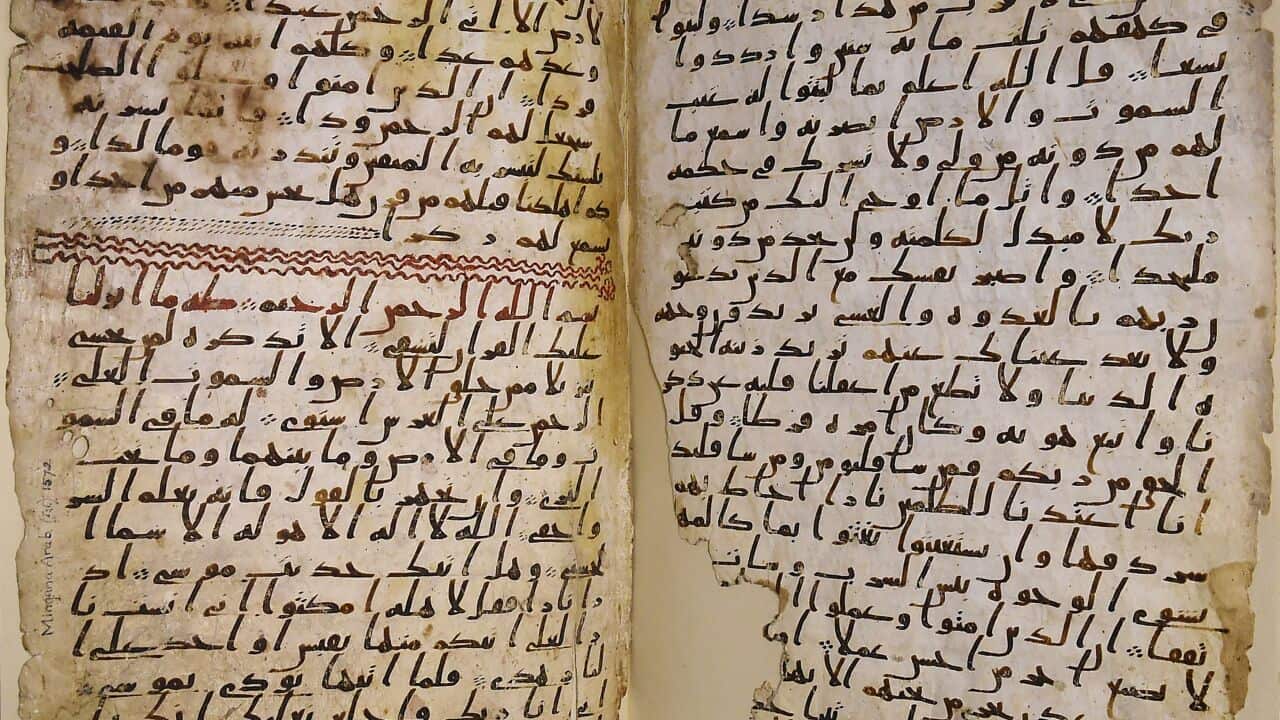
The manuscript had remained unrecognised in the Birmingham University library for almost a century, but thanks to a joint research project with Oxford University, tests showed it dated back to sometime between AD 568 and 645.
The Prophet Mohammed was believed to have lived between 570 and 632.
Listen: Michael Kenny reports on the discovery.
Muslims believe the words of the Koran were revealed to the Prophet Mohammed by the angel Gabriel over a 22 year period from 610.
The Koranic passages, which researchers say were written down on sheep or goatskin, are part of Birmingham University's collection of 3,000 Middle Eastern documents.
They were acquired by an Iraqi-born Chaldean priest who travelled back to the Middle East, thanks to funding from the philanthropist – and member of the chocolate-making dynasty - Edward Cadbury.
British Muslim theologian Shaykh Ruzman Mohammed said it is a great discovery which comes at a challenging time for the Islamic community.
"I think as a news story, it's very good because Muslims are constantly in the headlines for the wrong reasons,” he said.
"The fact they have some kind of validation for their religious tradition and the history of that tradition is important for self-identity and it also gives pride to the Muslim community as well.
"They have something they can reflect upon and perhaps talk to people about.”
The Chairman of the Birmingham Central Mosque Muhammad Afzal said the community was overwhelmed.
"When I saw these pages, I was very much moved and there were tears of joy and emotion in my eyes because we never thought that we would have such an old copy of the Holy Book", he said.
The university said the Koran fragments will go on public display in Birmingham in October.
Professor of Christianity and Islam at the University of Birmingham David Thomas told the BBC that the author of this fragment may be providing a unique link to that historic time.
"If the dating of our Koran is correct, then the person who actually wrote it may well have known the Prophet Mohammed,” he said.
"He would have seen him probably. He would maybe have heard him preach in Medina. He may have known him personally - and that really is quite a thought to conjure with."





