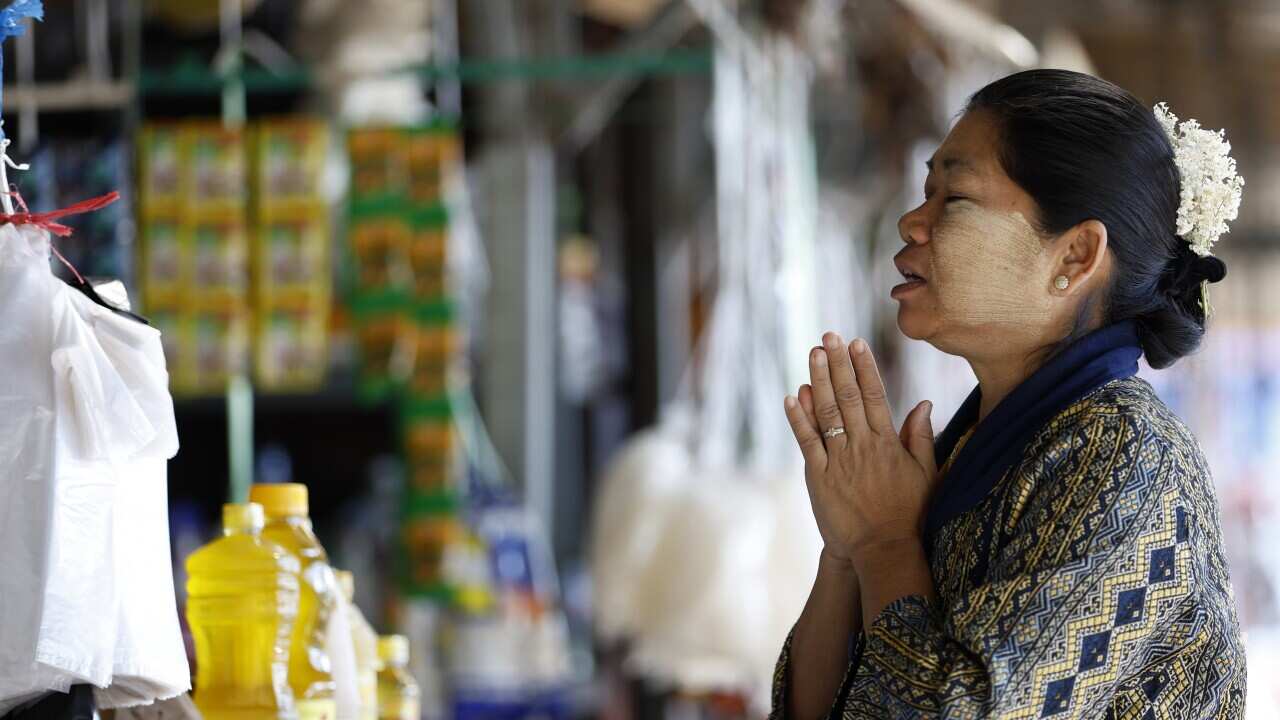
Millions of people in Myanmar will head to the polls on Sunday, the first election since the nation's junta ousted its elected government in 2021.
The military has framed the vote as a return to democracy, after it mounted a coup to override the results of the 2020 election, triggering a civil war.
Human rights and opposition groups have said the election would be neither free nor fair, and that power was likely to remain in the hands of the country's military leader, senior general Min Aung Hlaing.
Richard Horsey, an adviser for the International Crisis Group, said the military had only allowed selective candidates who wouldn't pose a threat to the military's grip on power.
"This is not about public consultation, this is about engineering an outcome where the military's favoured party wins a landslide. This will enable them to shift from direct military rule back to semi-civilian or quasi-civilian rule," he said.
News that makes sense
Your trusted source for staying up-to-date with the world around you. Get free daily news updates and analysis, straight to your inbox.
Who is running, and who can vote?
Under Myanmar's electoral system, seats in parliament will be allocated under a combined first-past-the-post and proportional representation system.
Regardless of the outcome of the vote, a military-drafted constitution dictates that a quarter of the nation's parliamentary seats be reserved for the armed forces.
The lower house, upper house, and military members each elect a vice president from among their ranks, and the combined parliament votes on which of the three will be elevated to president.
Right group Asian Network for Free Elections said the system heavily favours larger parties, and the criteria to register as a nationwide party able to contest seats in multiple areas have been tightened, leading to only six of the 57 parties being qualified.
According to the election watchdog, over one-fifth of candidates come from the Union Solidarity and Development Party, which is known for its pro-military stance.
Despite its 55 million population, not everyone in Myanmar can cast a vote.
A military-run census last year admitted it couldn't collect data from an estimated 19 million people, citing "security constraints".
Over one million stateless Rohingya refugees won't be able to have a say in this election.
Where is the previous government?
Former democratic leader and Nobel laureate Aung San Suu Kyi was detained after the military coup in 2021.
Her party, the National League for Democracy, is not taking part in this election, despite a landslide win in 2020.
In a recent interview with Reuters news agency, Suu Kyi's son Kim Aris expressed concerns about Suu Kyi's health and safety, saying he hadn't heard from his mother in years.
In response, the military junta said Suu Kyi was "in good health".
In mid-December, Myanmar authorities said they had arrested over 200 people under a new law that protected against the undermining of elections.
However, the authorities didn't offer more details about the punishment these people would face.
The results of this election are expected in late January.
Myanmar's humanitarian crisis worsens
Since the civil war began in 2021, Myanmar has been battling one of Asia's most severe humanitarian crises.
The country also recorded repeated natural disasters, including a massive earthquake in March.
The United Nations (UN) estimates that over 3.6 million people have been displaced, with over 6,800 civilians killed in conflicts triggered by the 2021 coup.
With the US cutting its international aid, the UN's World Food Programme estimates that over 12 million people in Myanmar will face acute hunger next year, including one million who will need lifesaving support.
The ongoing violence and disruption, Myanmar's economy has been volatile, as inflation is expected to remain above 20 per cent in the next term.
— With additional reporting from Agence France-Presse and Reuters.
For the latest from SBS News, download our app and subscribe to our newsletter.







