Christel Waters never forgot the well-loved photo of a little girl her father kept tucked in his wallet.
As a child, she didn’t question his explanation that the child in the photograph was her cousin, her father’s sister’s daughter.
But as she grew older, Christel began to wonder if there was more to the story.
"No matter how many wallets he had throughout those years, this little photograph would always go into his wallet," she said.
“Then they told me, 'It's your sister.' I said, 'Really? Oh, my God.' I said, 'Oh, thank you, God."
Last year, Christel, who was born in Germany but now lives on the Sunshine Coast in Queensland, received a request for correspondence through the Red Cross, from a man called Alexandr.
Alexandr turned out to be her nephew.
And his mother, whose image is depicted in the photograph, is Nadia -- her half-sister.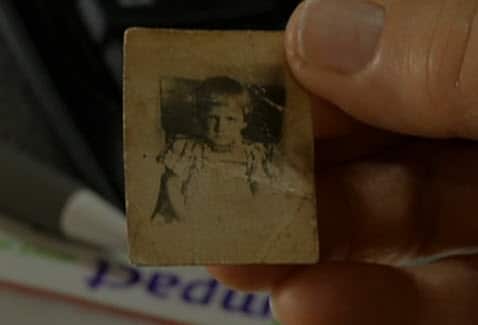 Nadia lives in Ukraine, and the women have never met, but they now chat often, usually over Skype.
Source: SBS
SBS joined them for a recent conversation.
“Isn’t she beautiful?” Christel said when Nadia’s face appeared on the screen.
Through ongoing conversations, the two sisters are slowly piecing together how their father became separated from his first wife and child in World War Two.
"He joined the Polish Army, and then in the first week of the war, of course, Russia was coming in one way, Germany was coming in another way, and his platoon was captured in the first week,” said Christel.
He survived the war working as a captive farmhand, where he was able to sneak milk and cream from the cows he tended for extra nutrition.
"After the war, Dad actually had written to his family in Poland, but because there was no answer -- he never got a return reply -- so he assumed that his whole family was dead,” said Christel. 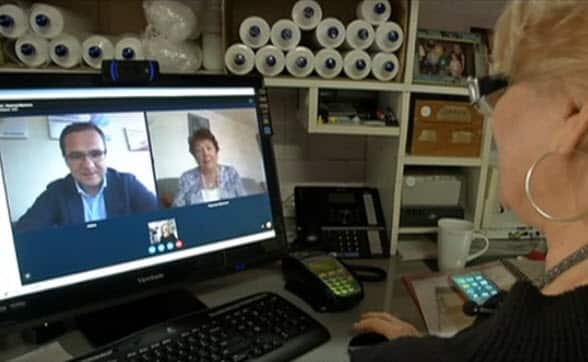 He eventually met Christel's mother, and the family moved to Australia.
Source: SBS
But he always kept Nadia close to his heart
On their Skype call, Christel was finally able to show her the proof -- the photograph their father kept in his wallet, which she had only just rediscovered in his personal belongings.
“Das bist du,” Christel told Nadia. That is you.
“Ya,” Nadia replied, wiping away tears. “Das bist mich.”
The women reconnected with the help of a 100-year-old tracing service run by the Red Cross.
The Red Cross's Katherine Wright explains how tracing officers work to find loved ones lost by conflict and displacement.
"We know, because we look at the data that talks about where people travel to if they've escaped conflict in a particular country.
“And, sometimes, it really is a guessing game," she said.
“Das bist du,” Christel told Nadia. That is you. “Ya,” Nadia replied, wiping away tears. “Das bist mich.”
Last year, the Australian team worked to link almost two thousand people.
They searched for missing family members in Sri Lanka, Somalia, Afghanistan, Ethiopia, the Democratic Republic of Congo, Hungary and many other countries.
The service also recently helped Adelaide-based Sylvia Ntangiye find her sister.
She was around six when she fled Burundi due to civil war, but she had lasting memories of her older sister, who by then had already married and left home.
"She picked up me to go to visit her in her house, I remember," said Sylvia.
Sylvia and her parents and other siblings traveled to Tanzania where they eventually received visas to move to Australia.
Sylvia, now married with children of her own, would spend the next 43 years wondering where her sister was.
She registered for the Red Cross tracing service, and after a year of searching, tracked Sylvia’s sister Yogeri down in a refugee camp in Tanzania.
The women spoke for the first time in decades.
"I asked her… 'Oh, what is your name?' 'My name is Yogeri.' [I said] 'Ah, okay!'
“Then they told me, 'It's your sister.' I said, 'Really? Oh, my God.' I said, 'Oh, thank you, God."
It had been so many years the women had to trade information to confirm they were related.
“I said, tell me your father… tell me your mum. I ask her again, tell me your sisters; tell me about [your] brothers.
“I said ok, now I understand you are my sister,” she said. “Oh, I was pretty happy.”
The Red Cross finds some resolution for families in around 60 per cent of cases.
For the sisters Christel and Nadia, the discovery was bittersweet.
It was too late for their father to find his lost little girl, too late, says Christel, for Nadia to track down her father.
"I wish dad was here, though. It's sad; sad for him.
“It's sadness for Nadia, too, because she lost her dad. She lost her dad, you know, at ... I think she was two years of age."
But as they say goodbye on Skype, with air kisses, smiles and happy tears, it’s clear it’s not too late for two sisters to begin a new journey together.
Share


