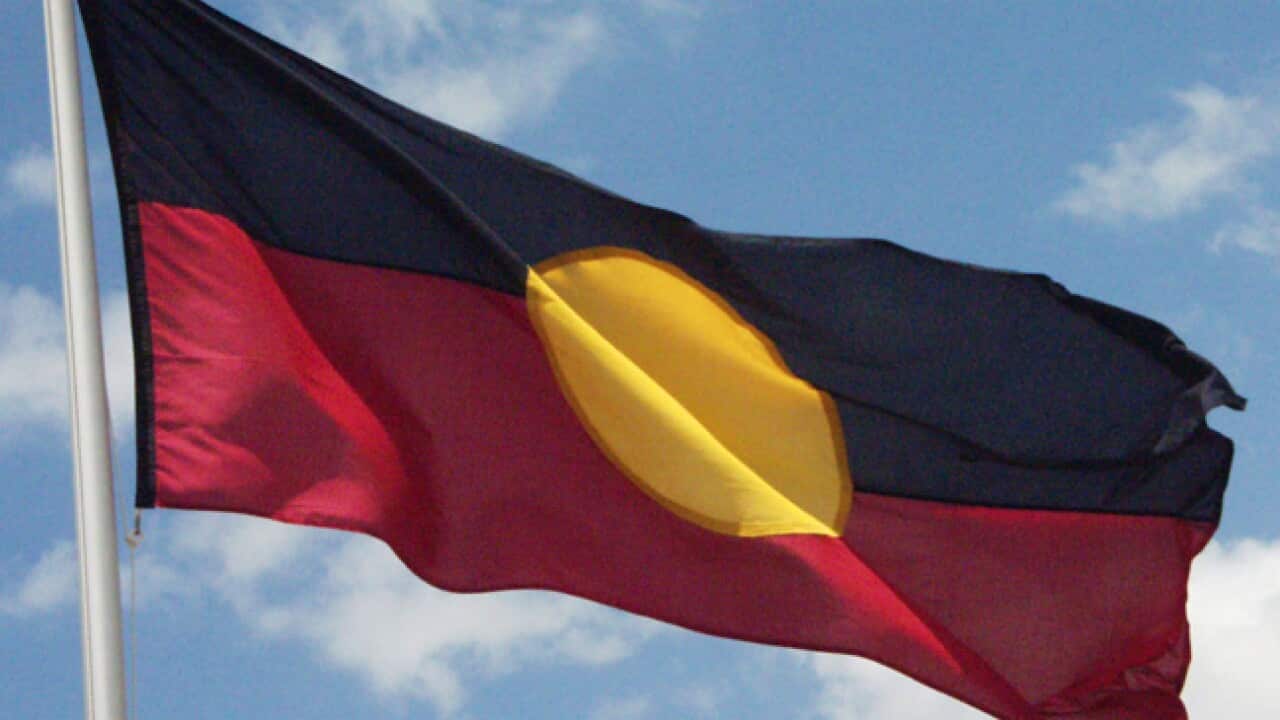
Within Aboriginal Australia there is currently much to celebrate. We have several prominent Aboriginal politicians, an Australian of the Year who is Aboriginal (Adam Goodes), people employed in prestigious occupations, great sportspeople and many talented entertainers and artists. They are all outstanding contributors to making Australia a great nation.%20hugs%20Fred%20Chaney,%20Senior%20Australian%20of%20the%20Year%20-%20AAP-1.jpg?imwidth=1280) Mostly, however, their successes have been achieved by playing by the same rules as most other Australians who have achieved success: do not isolate yourself from society; offer others respect and treat them as equals; engage in learning (whether it be formal or informal); make valuable contributions to the community in which you live; aspire to be a role model for others; and adhere to a personal moral code. Our young Aboriginal people have no shortage of excellent Aboriginal role models to inspire them.
Mostly, however, their successes have been achieved by playing by the same rules as most other Australians who have achieved success: do not isolate yourself from society; offer others respect and treat them as equals; engage in learning (whether it be formal or informal); make valuable contributions to the community in which you live; aspire to be a role model for others; and adhere to a personal moral code. Our young Aboriginal people have no shortage of excellent Aboriginal role models to inspire them.
Being NAIDOC Week, it is appropriate to reflect on Aboriginal matters such as achievements, health and well-being, reconciliation and progress towards closing the gap. While it is important to recognise and celebrate the successes, we need to be aware of those matters which, though important, many are reluctant to discuss.
Two such issues that are little-discussed are violence and sexual abuse within Aboriginal communities. Although these problems are over-represented in the Aboriginal population, they are often not discussed as openly as they could be.
An epidemic of sexual abuse
The Australian newspaper recently featured a story about the epidemic of sexual abuse in North Queensland. Shocking statistics were presented – a repeat of what we have been hearing for many years in Aboriginal communities throughout the country. But despite many reports over the years, the problem continues.
Why? Several reasons contribute to this state. Firstly, treating Aboriginal people as if they are separate from their fellow Australians and somehow more special than other citizens is certainly a major contributing factor. These people (which includes children) are Australian citizens. They are therefore entitled to the same rights and standards of care as non-Aboriginal Australians.
Secondly, claims from those believing in a romanticised Aboriginal culture that the abuse is non-existent, or at least no worse than that experienced in the general population, further ensure that this problem of abuse continues.
Finally, claims that exposing the abuse stigmatises communities are pathetic. This only creates a haven for the perpetrators. On the contrary, much like the problem of high rates of diabetes among Aboriginal people, discussing it does not stigmatise anyone but only creates awareness so that the problem can be tackled.
Communities torn by violence
Much of the above about sexual abuse applies also to the problem of physical violence. Northern Territory politician and Aboriginal leader Bess Price (a tireless campaigner against violence) recently said:
"Violence of any type is an issue that we as a community cannot remain silent about. It is a conversation we must have, for the sake of our families, friends and colleagues."
Although this statement was made after the murder of her sister, where the accused herself is Aboriginal, it is a message Bess has been delivering for a long time. It is a message that has not made her popular with many, but a message she knows must be delivered.
In case some think that the story in The Australian was cherry-picking statistics, consider that senator Nova Peris has been reported as saying that in the Northern Territory, an Aboriginal woman is 80 times more likely than other Territorians to be hospitalised for assault. A 2010 report by the Institute of Criminology notes that:
"Indigenous people are 15 to 20 times more likely than non-Indigenous people to commit violent offences."
Given victims’ real fears of payback, being ostracised, not being taken seriously and being ridiculed in court under cross-examination, I believe the full extent of the problem is larger than what is presented in these statistics.
These problems are everyone’s business
These are serious problems within Aboriginal communities – and are occurring far more frequently than in the wider community. The good news is that a critical mass of people, both Aboriginal and non-Aboriginal, has had enough. They have made their concerns known and are acting.
As a nation we have made great strides in helping Aboriginal people achieve a quality of life equal to that of the general population, as evidenced by the many thousands who are not only surviving, but thriving and leading. Let’s continue.
But to continue, we must acknowledge the good, the bad and the ugly. Aboriginal Australians are Australians first and Aboriginal second. Therefore the problems facing them are, quite simply, everyone’s business. Anthony Dillon does not work for, consult to, own shares in or receive funding from any company or organisation that would benefit from this article, and has no relevant affiliations.
Share


