in brief
- India's Prime Minister Narendra Modi addressed thousands in Melbourne on Thursday evening
- Modi is a popular but controversial figure and his appearances have attracted both supporters and protests.
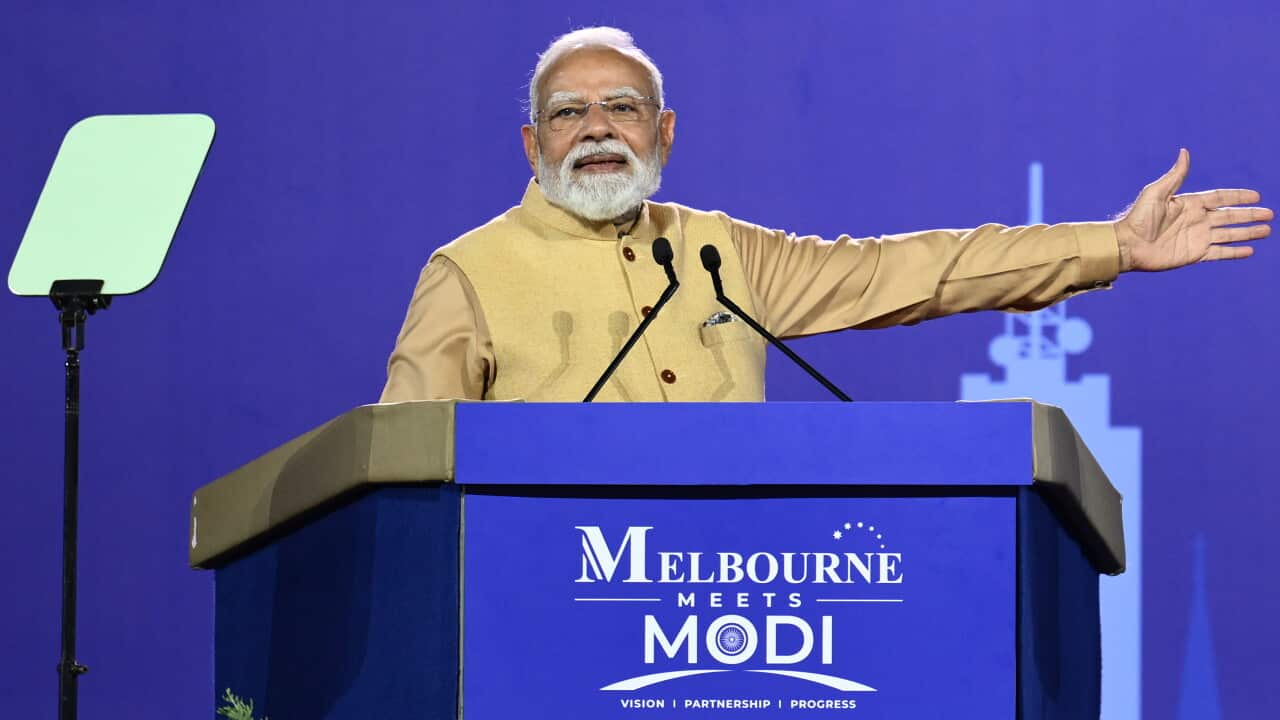
Taking a stage in front of thousands at Melbourne's Marvel Stadium, Indian Prime Minister Narendra Modi summed up the connection between the two countries with one striking image: "We Indians love to spread love... The milk at home might be Australian, but the tea brewed is Indian."
"The lentils and vegetables are Australian, yet they are tempered with authentic Indian spices," Modi said.
The stadium address on Thursday evening was part of Modi's three-day trip for the Australia-India Annual Leaders' Summit.
There were more empty seats than Modi's last stadium appearance in Australia, but the crowd was all smiles as Modi delivered a lengthy speech praising India's contribution to Australia's economy while promoting India's plan to be one of the world's top three economic powerhouses.
"In the last 12 years, I have come here for the third time. This time, a hat-trick has been scored! This reflects the heights that India-Australia relations have reached."
News that makes sense
Your trusted source for staying up-to-date with the world around you. Get free daily news updates and analysis, straight to your inbox.
Using the English-language catchphrase of "Grow more! Achieve more!", Modi reiterated his vision of India as a rising global superpower. His aim, he said, was for India to become one of the top three global economies, citing rapid digital transformation and the country's 5G rollout as some of the achievements that pave the way for India's success.
"The India of the 21st century is working towards becoming a developed nation. When we realise one dream, new dreams take its place," he said.
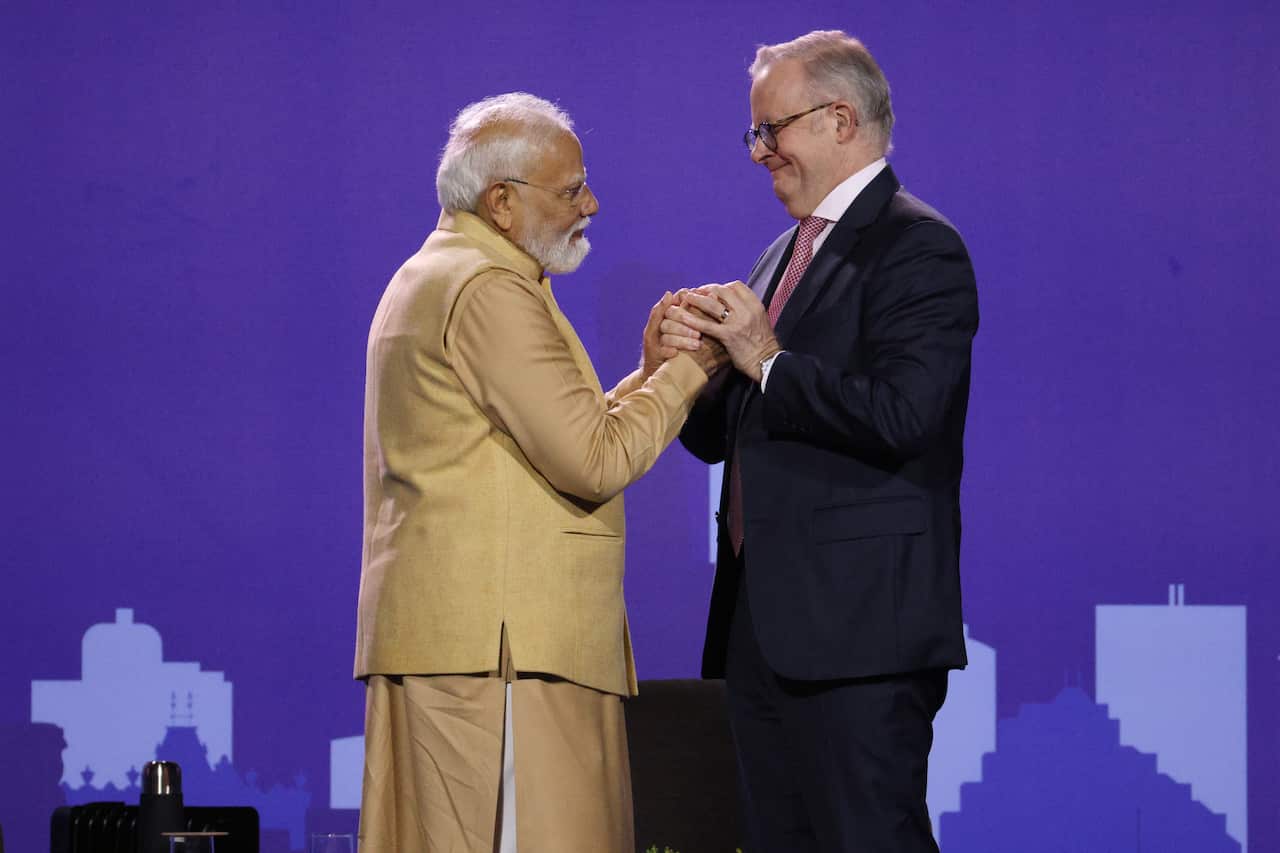
Prime Minister Anthony Albanese joined Modi on the stage, with the two walking out together in good spirits.
"We're a better nation because we have you in it," Albanese told the audience.
"You are the living bridge between Australia and India."
A 'significant visit'
A group of supporters of the Khalistan movement gathered to protest Modi's visit outside an event at Government House on Thursday.
The Khalistan movement broadly advocates for a separate homeland for Sikhs and has faced suppression by the Indian government.
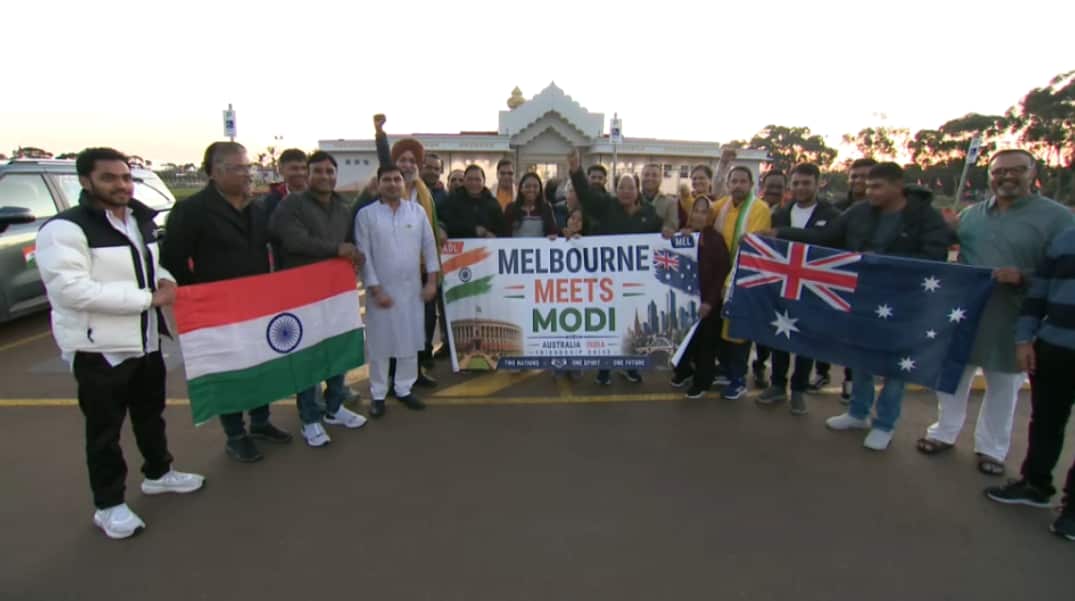
Canberra India Council chair Deepak-Raj Gupta travelled to Melbourne with his wife and friends to attend as many Modi-related events as possible.
Modi is one of three types of people who are "very popular" in his homeland, Gupta said.
"Politicians, Bollywood stars and cricket players,'' he said.
"It doesn't really matter who you are if you fall into one of those."
Pradeep Taneja, a senior lecturer in Asian politics at the University of Melbourne, said Modi's visit was "significant" and "unprecedented".
"No other Indian prime minister has been to Australia three times during his term in office," he told SBS News.
"The security relationship between Australia and India has grown much faster than I think other dimensions of the relationship. Australia now regards India as a top-tier — and I quote here, top-tier is the Australian government's language — a top-tier security partner."
India, which has been led by Modi since 2014, established a landmark comprehensive strategic partnership with Australia in 2020, which aimed to strengthen education and defence co-operation, along with protecting neighbouring maritime space.
Australia India Institute chief executive Lisa Singh said Modi's visit would be an important time for deepening the partnership, which builds on a smaller 2009 deal.
The trading relationship between Australia and India is worth more than $50 billion.
Last year, people born in India became the largest overseas-born group in Australia, narrowly overtaking those born in England, according to the latest data from the Australian Bureau of Statistics.
Of the 8.83 million Australian residents born overseas, 971,020 were born in India as of 30 June 2025.

Rajan Katkam, who attended the event, told SBS News he feels "proud" of India's development under Modi, and "we are going to witness our prime minister Modi", adding that "he is inspiring the whole world".
"We are proud to be here," he said. "We missed the event in Sydney, so that motivated us to come to Melbourne."
A popular but controversial leader
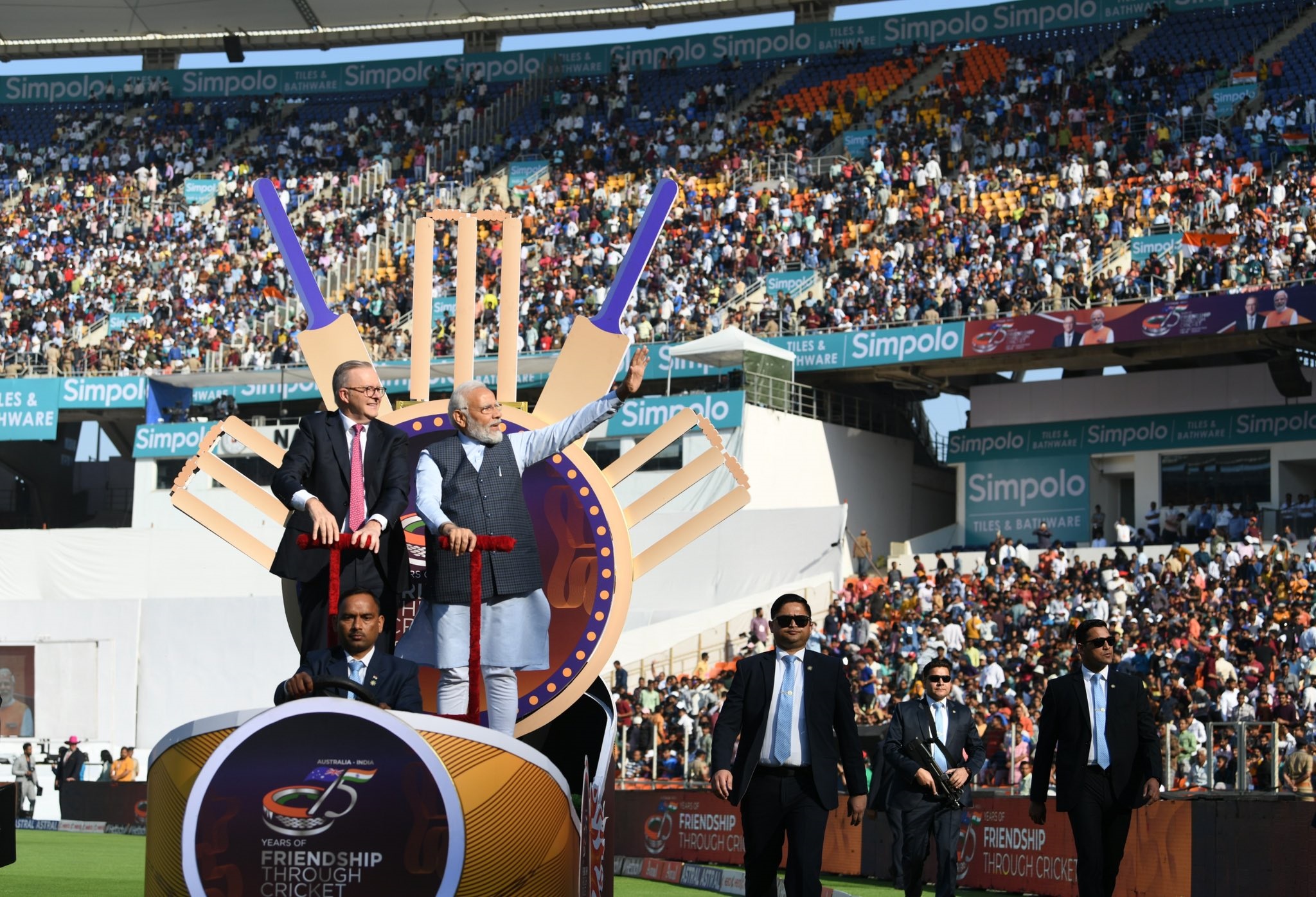
During Modi's last visit in 2023, he received a rockstar reception at Sydney's SuperDome at Olympic Park.
Albanese faced backlash from parts of the Indian diaspora and human rights advocates after introducing his Indian counterpart as "the boss" and remarking that Bruce Springsteen was the last person he'd seen on stage at the stadium, adding that the rock icon "didn't get the welcome that Prime Minister Modi got".
Human rights groups such as Amnesty International have condemned Modi what they describe as declines in India's living standards and the targeting of journalists and academics through anti-terror legislation.
Amnesty International says religious minorities in India, including Muslims and Christians, have also been targeted under the rule of Modi's Hindu nationalist Bharatiya Janata Party.
Ahead of Modi's visit, Daniela Gavshon, Australia director at Human Rights Watch, told SBS Spice it would be "really important that the Australian government acknowledge that Prime Minister Modi has been leading a government that has been sliding into authoritarianism".
"Whether they're able to do that overtly will obviously be a question for the government and the government will need to do that carefully.
"The reality is, we are seeing and have seen for many years now escalating human rights violations in India."
She said Albanese had "ignored those" during Modi's last visit, which "felt to many that he was turning a blind eye to the realities of the human rights violations in India".
— With additional reporting by AAP
For the latest from SBS News, download our app and subscribe to our newsletter.







