This audio is voiced by AI and may occasionally mispronounce words.
Share your feedback and help us improve this feature. Read more about how we use AI at SBS here.
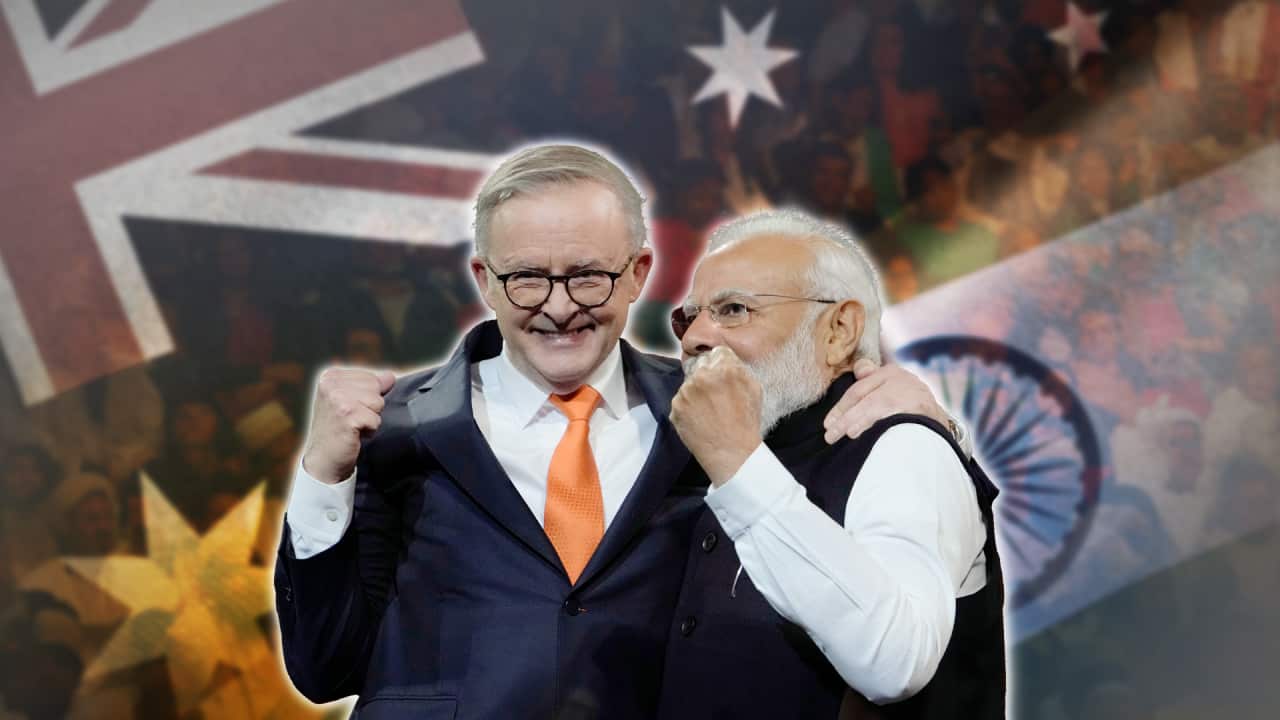
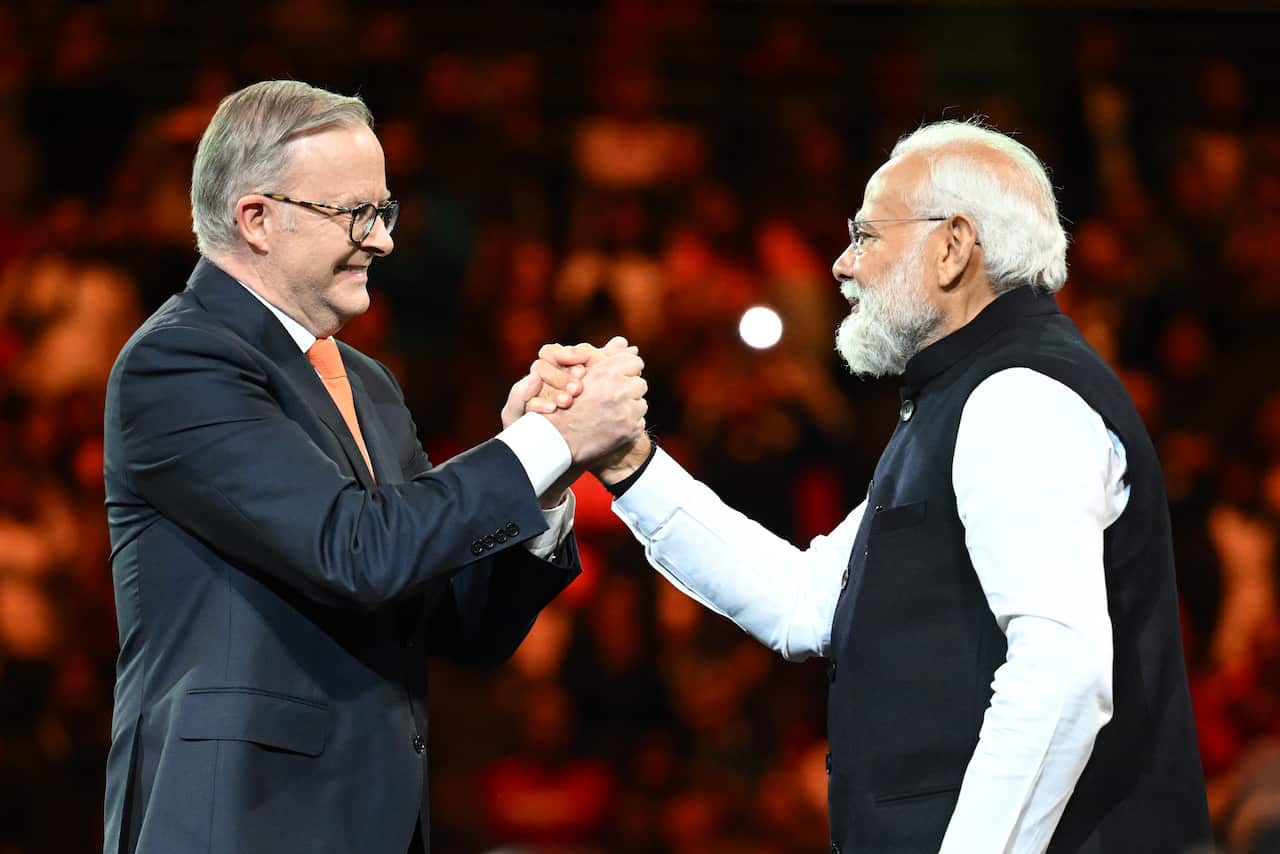
When Prime Minister Anthony Albanese likened Narendra Modi to Bruce Springsteen in 2023, it captured more than the spectacle surrounding the Indian leader's visit.
Addressing a lively crowd at Sydney's Qudos Bank Arena, Albanese remarked that the rock legend was the last person he'd seen on stage there, adding that "he didn't get the welcome that Prime Minister Modi has got".
It reflected the cordiality between the two leaders, who have helped transform a relationship once seen as rich in untapped potential into what both now describe as a "comprehensive strategic partnership".
But Albanese's comments also drew sharp criticism from some parts of the Indian diaspora and human rights advocates, who argued that the glowing reception glossed over allegations of human rights abuses under Modi's leadership — claims he has strenuously denied.
The response captured the stark divide in public opinion about Modi, who is widely celebrated by supporters for driving economic growth and India's global profile, but whose leadership is also the subject of sustained international scrutiny from human rights organisations and democracy monitors.
News that makes sense
Your trusted source for staying up-to-date with the world around you. Get free daily news updates and analysis, straight to your inbox.
Now, as the Indian prime minister returns to Australia for his third visit in nearly 12 years, the setting has shifted to Melbourne, where another large diaspora gathering is expected to showcase the public enthusiasm that has become a defining feature of his overseas outreach.
Beyond the flags, crowds and political theatre, the visit comes at a more complex moment for the relationship between the two nations.
Experts say it will test whether Albanese and Modi's close relationship can translate into concrete outcomes as both navigate a changing regional environment, domestic pressures and more difficult conversations around visa policies and migration, trade, and differing approaches to global issues, including sanctions against Russia and Iran.
The visit also offers an opportunity to examine a relationship that has become one of Australia's most important in the Indo-Pacific — shaped by geopolitics, economic ambition and the realities of a growing diaspora, including the opportunities and challenges that come with closer ties.
From distance to strategic alignment
The friendly diplomacy between Albanese and Modi contrasts with earlier periods in Australia-India relations.
Although diplomatic ties with Australia were established before India's independence in 1947, the two countries spent decades navigating differences over the Cold War, nuclear policy, migration and Australia's engagement with Asia. The legacy of the White Australia Policy and disagreements among earlier leaders also affected bilateral ties at various points.
Modi's 2014 visit, the first by an Indian prime minister to Australia in more than three decades, marked a turning point in resetting ties beyond the familiar territory of cricket and community links.
Since then, cooperation has expanded through trade, the Quad — the strategic grouping of Australia, India, Japan and the United States — alongside defence engagement, critical minerals and supply chain partnerships, with both countries seeing each other as important partners in a more contested Indo-Pacific.
Teesta Prakash, a research fellow in security and geopolitics at the Australia India Institute, says Modi's repeated visits reflect how significantly Australia's role has grown in India's strategic thinking.
"This is the most amount of times any Indian prime minister has visited Australia, which underscores just how important Australia is to India's strategic imagination," she tells SBS News.
Prakash says Modi's first visit was largely about resetting the relationship after he came to office. Twelve years on, with the broader strategic framework now established, the focus has shifted towards implementation.
"So this trip is less likely to focus on announcing new strategic frameworks, but more on delivering concrete outcomes, in defence, defence industry, critical minerals — uranium included —technology partnerships and supply chain resilience."
What to expect from Modi's visit
With Modi scheduled to be in Melbourne on Wednesday evening, his third visit is expected to focus on delivery.
Pradeep Taneja, a senior lecturer in Asian politics at the University of Melbourne, says Australia has described India as a "top-tier" security partner and expects the visit to build on existing areas of collaboration.
"In terms of concrete outcomes, it is possible that some agreements may be signed that build on the ongoing collaboration in critical minerals and energy security," he tells SBS News.
But I don't expect any big bang announcements during this visit.
Economic ties are also expected to feature prominently.
The Australia-India Economic Cooperation and Trade Agreement, which came into force in late 2022, substantially lowered tariffs and expanded market access across a wide range of goods and services, opening Australia's market to Indian exports while giving Australian businesses improved access to India.
Negotiations are continuing on a broader Comprehensive Economic Cooperation Agreement, which aims to deepen the economic partnership.
Agriculture, however, remains one of the more sensitive issues. Australia has long sought greater access to India's agricultural market, while India's government has resisted opening sectors such as dairy, wheat, rice and sugar, arguing they are critical to the livelihoods of millions of small farmers.
The differing scales and structures of the farming sector across the two countries mean agriculture is expected to remain one of the more challenging areas in negotiations towards a comprehensive trade deal.
Defence will be another key area to watch. Cooperation has expanded through military exercises, maritime engagement and deeper coordination in the Indo-Pacific, with both countries seeking to move from strategic alignment towards practical collaboration.
Lisa Singh, CEO of the Australia India Institute at the University of Melbourne, says the visit will ultimately be judged by whether commitments translate into action.
These prime ministerial visits are such a significant moment to move the relationship forward.
"New commitments in defence are one important area that both nations can show they are doing that, highlighting that our trusted partnership is not just words but actions that will help make our nations and region safer," Singh said in a statement to SBS News.
What's driving the partnership
The transformation in India-Australia ties reflects a broader shift in the Indo-Pacific.
China's growing military and economic influence has heightened strategic competition across the region, and concerns over supply chain resilience have pushed Canberra and New Delhi into closer alignment.
Through the Quad and other bilateral initiatives, the two countries have expanded cooperation on defence, maritime security, critical minerals, clean energy and technology as they seek to strengthen regional stability and reduce dependence on any single partner.
Albanese has also framed the relationship through the lens of India's growing economic weight.
In an address to the parliament in May, he described India as "a global economic powerhouse" and said it was on track to become the world's third-largest economy this decade, calling it "an extraordinary opportunity for us in our region".
Taneja says uncertainty over the future strategic role of the US has prompted Australia to diversify its strategic partnerships.
"India is now seen as an important partner because the interests of the two countries align more closely than they did in the past," he says.
Taneja says while both governments frequently speak of shared democratic values and a free and open Indo-Pacific, the relationship is ultimately shaped by strategic interests.
"Despite claims of shared values, the fact remains that the relations between Australia and India are based on shared interests."
Shared values play a secondary role in bilateral relations.
The Modi factor: diaspora and diplomacy
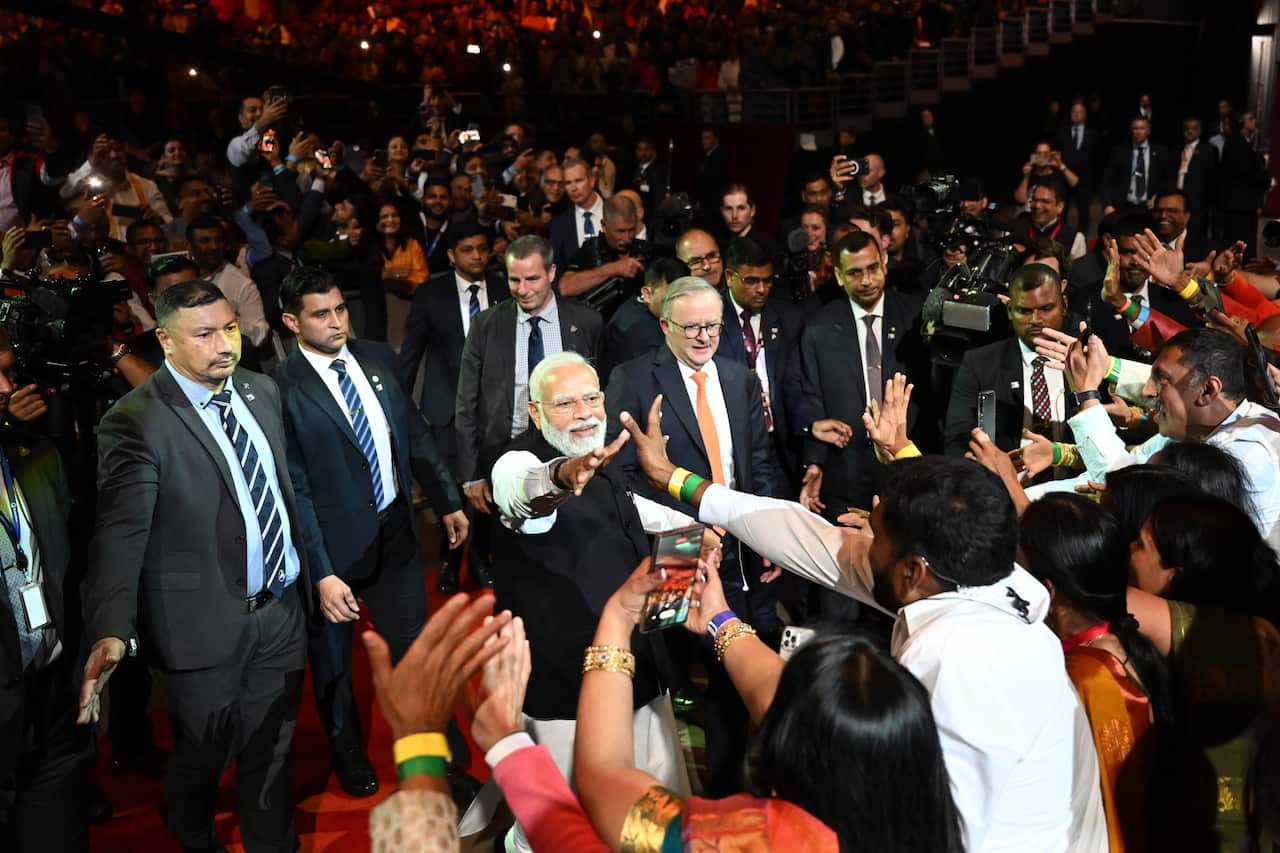
Beyond official meetings, Modi is expected to prioritise engagement with the Indian diaspora — a common feature of his international visits.
Since becoming prime minister in 2014, he has held numerous large-scale diaspora events around the world. His decision to address supporters in Melbourne — rather than Sydney, as he did in 2023 — reflects the changing geography of Australia's Indian community, with Victoria home to one of the country's largest Indian-born populations.
The visit also comes as Melbourne debates the proposed 'Little India' cultural precinct in Docklands on the western end of the CBD, which supporters say would recognise the Indian community's contribution to the city.
Nationally, the timing is significant. According to the Australian Bureau of Statistics, people born in India are now Australia's largest overseas-born population for the first time on record, narrowly overtaking those born in England.
But the relationship between diaspora and diplomacy is unfolding alongside a more contested migration debate in Australia. The Albanese government has tightened student visa settings and sought to reduce net overseas migration, while visa scrutiny has intensified and anti-immigration rhetoric has become more prominent in domestic politics.
Prakash says while migration is ultimately a sovereign policy decision, it is one of the issues Modi could raise with Albanese, much like he raised concerns over the vandalism of Hindu temples during his 2023 visit.
"Migration specifically is a sovereign domestic decision, and while obviously it impacts Indian potential students or migrants who were looking to move to Australia. I think there's a solid understanding that each country makes decisions on this specific front on its own comparative advantages and priorities," she says.
"So, I don't think it risks broader relationships, but it does ask the leaders to have uncomfortable conversations."
Like previous visits, Modi's arrival is also expected to attract both supporters and protesters. Demonstrations during his 2023 visit highlighted the political diversity of Australia's Indian diaspora, with at times polarised views on the Modi government's domestic policies and wider political debates unfolding in India.
The difficult questions
The deepening Australia-India partnership has not removed the more difficult conversations between the two countries.
While both describe each other as partners that share democratic values, human rights groups and critics of Modi's Bharatiya Janata Party (BJP) government have raised concerns about India's domestic trajectory in recent years, including issues around press freedom and civil liberties, as well as allegations of targeting Muslim and Sikh minority communities.
One of the most enduring points of contention remains the 2002 riots in Gujarat, in western India, which occurred while Modi was chief minister of the state. Official figures state more than 1,000 people — the majority of them Muslim and more than 250 Hindus — were murdered in a three-month outbreak of violence, sparked by a train fire that killed 59 Hindu pilgrims. Modi faced accusations over his handling of the violence but was later cleared of personal wrongdoing by Indian investigative bodies and the courts.
Critics continue to cite the riots as emblematic of broader concerns about accountability and minority rights in the Hindu-majority country, while supporters argue the matter has been thoroughly examined and legally resolved.
Those debates resurfaced internationally following the 2023 BBC documentary, India: The Modi Question, which examined the Gujarat violence and its political aftermath. The documentary was banned in India, while the Indian government dismissed it as biased and rejected its conclusions. The BBC said the documentary was "rigorously researched" and featured a range of opinions and experts. The broadcaster said in a statement that it had given the Indian government a right of reply, but the government had declined to respond.
India has also fallen sharply in global press freedom rankings, with Reporters Without Borders placing it at 157 out of 180 countries, citing increasing risks to journalists and concerns about political pressure on media independence.
Modi's own engagement with the media has also drawn scrutiny. Since becoming the prime minister in 2014, he has not held a traditional solo press conference and has rarely taken unscripted questions from journalists during his foreign jaunts.
Human Rights Watch's (HRW) latest report on India states the country's "slide to authoritarianism under the Hindu nationalist Bharatiya Janata Party-led government continued [in 2025], with increased vilification of Muslims and government critics".
The BJP's performance in India's 2024 general election also changed the political landscape, with Modi losing his outright majority and returning to power as the head of a coalition government after the party lost 63 seats compared with the previous election.
Daniela Gavshon, Australia director at HRW, says these concerns are not confined to India's borders, with political tensions also being felt within parts of the diaspora.
I think it is important to see that there is a growing sort of muscular nationalism and politics of hate [in India].
"That is also being exported among the diaspora. So even the communities that lived in far greater harmony before are feeling those tensions when they're living abroad because of what is happening in India," she tells SBS News.
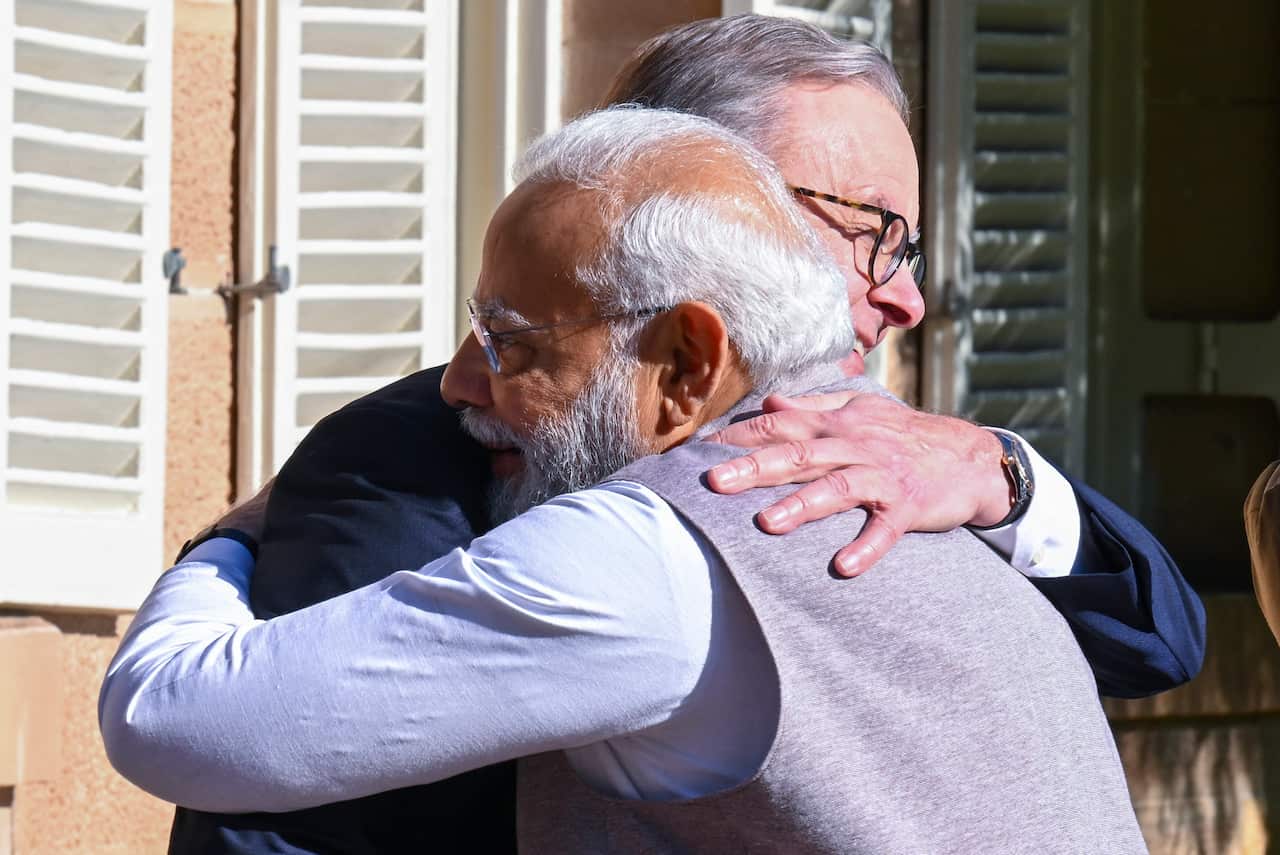
Following Modi's 2023 visit, Albanese dismissed suggestions he had shared a stage with a "tyrant", saying India was "a great democracy".
The push for strategic cooperation
These debates are happening at the same time as a broader foreign policy conversation is unfolding.
India's strategic autonomy continues to shape its international relationships, including its ties with Russia and Iran. India has maintained defence and energy links with Russia and has not joined with Australia and other Western nations in imposing sanctions following Russia's invasion of Ukraine in 2022.
The government has also maintained its relationship with Iran despite documented evidence of severe human rights violations under the Iranian regime, citing its importance for India's energy, connectivity and regional interests. India is also part of BRICS, a group that includes countries like Russia and China, reflecting its non-aligned approach to global politics.
For Australia, these uncomfortable differences exist alongside a growing push towards strategic cooperation. When asked about India's relationship with Russia ahead of Modi's 2023 visit, Albanese acknowledged the different histories shaping the two countries' foreign policies.
"We have very different histories, of course ... India has been a leader of the Non-Aligned Movement for such a long period of time," he said at the time, referencing the group of more than 120 countries that are not formally aligned with or against any major international power bloc.
A partnership entering a new phase
Returning to the moment Albanese welcomed Modi on stage in 2023 stirs mixed feelings for some.
"Prime Minister Modi is 'the boss'," he declared, referencing the colloquial nickname for US rock legend Springsteen.
However, for many in the Indian diaspora, who may not be Springsteen fans, it likely resonated differently — reflecting the power wielded by a leader who has become central to India's global image.
Beyond the symbolism, the Australia-India partnership is stronger than it was a decade ago — and far more complex.
It now involves defence cooperation, supply chains, migration, education, diaspora politics and a growing debate about how democracies engage with each other in a more uncertain world.
Singh says the next phase will depend on whether both countries can turn alignment into lasting cooperation.
The question now is how both nations navigate their future partnership amidst the current backdrop of global uncertainty.
"I hope new investment opportunities are created and that we work further on building trusted supply chains in goods and technology that will overcome the shocks of the future," she says.
As Modi arrives in Melbourne, the scale of the community event will once again highlight the strength of the people-to-people connection.
But the future of the relationship will be defined by what happens after the applause fades.
The challenge for both countries is whether they can continue expanding a partnership that has become strategically important while managing the tensions that come with being closer than ever.
For the latest from SBS News, download our app and subscribe to our newsletter.







