This audio is voiced by AI and may occasionally mispronounce words.
Share your feedback and help us improve this feature. Read more about how we use AI at SBS here.
For Tayyab Saeed, who moved from Pakistan to Melbourne in 2024, Australia has largely been welcoming.
"I haven't faced anything like an anti-immigration bias or behaviour at my workplaces," he tells SBS News.
But as anti-migration rhetoric grows louder in Australia's political debate, Saeed says he has become increasingly uneasy about what that could mean for migrants such as him.

"It's more of a safety concern. Not just the residency rights and future here economically," Saeed says.
News that makes sense
Your trusted source for staying up-to-date with the world around you. Get free daily news updates and analysis, straight to your inbox.
His concerns come as Australia grapples with a growing debate over migration, with housing affordability, infrastructure pressures and the cost of living fuelling support for parties calling for lower migration levels.
The debate has left some migrants questioning how they are viewed in a country that continues to rely on immigration to drive population growth and fill workplace shortages.
Why migration still matters
For decades, migration has helped offset a demographic challenge facing many developed nations: an ageing population and slowing organic population growth.
As more Australians retire and birth rates remain relatively low, policymakers have relied on migration to help sustain the workforce and support the economy.
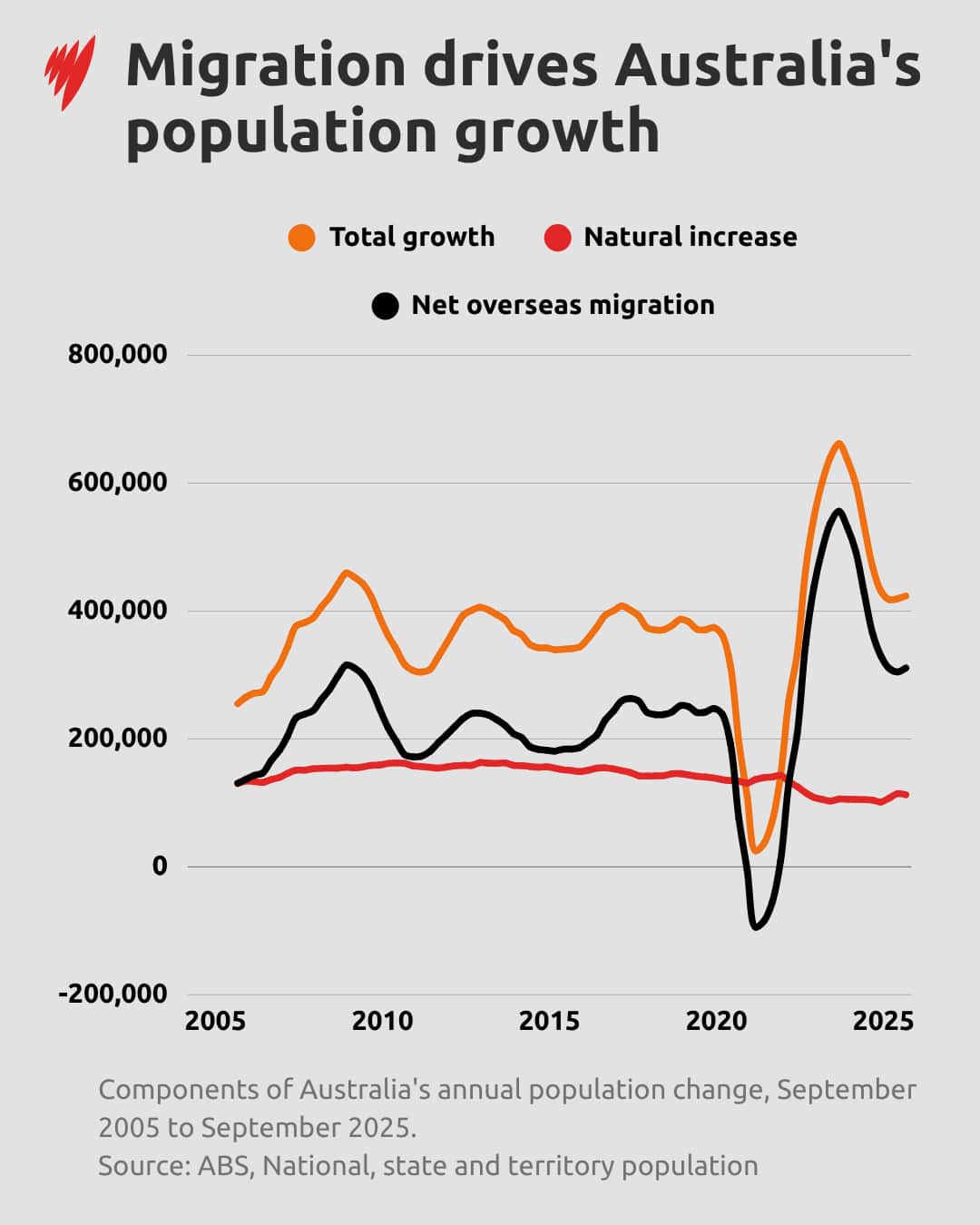
That reliance has helped drive Australia's population to 28 million, making migration one of the country's most significant sources of demographic change.
The benefits of migration are often weighed against concerns about its impact on housing, infrastructure and public services.
While migration is at the centre of those debates, Liz Allen, a demographer and senior lecturer at the Australian National University's Centre for Social Policy Research, says discussion of its impacts can miss the population pressures it helps ease.
"The local population does not have the required skills and the required mass to offset the ageing and retirement of people out of the workforce," Allen tells SBS News.
"Quite simply, immigration offsets the adverse consequences of an ageing population."
Allen says migration helps fill workforce shortages and maintain living standards.
Yet she notes migration often becomes a focal point for broader frustrations about economic insecurity and inequality.
Australians are concerned about being left behind in any economic progress.
"That fear of being left behind or not being given opportunities that others are receiving creates discontent," Allen says.
She argues these concerns are often less about migrants themselves and more about whether economic gains are being shared fairly across society.
A political flashpoint
These concerns have entered Australian politics, with migration becoming part of a broader set of issues shaping voter sentiment, including cost of living, housing and trust in government.
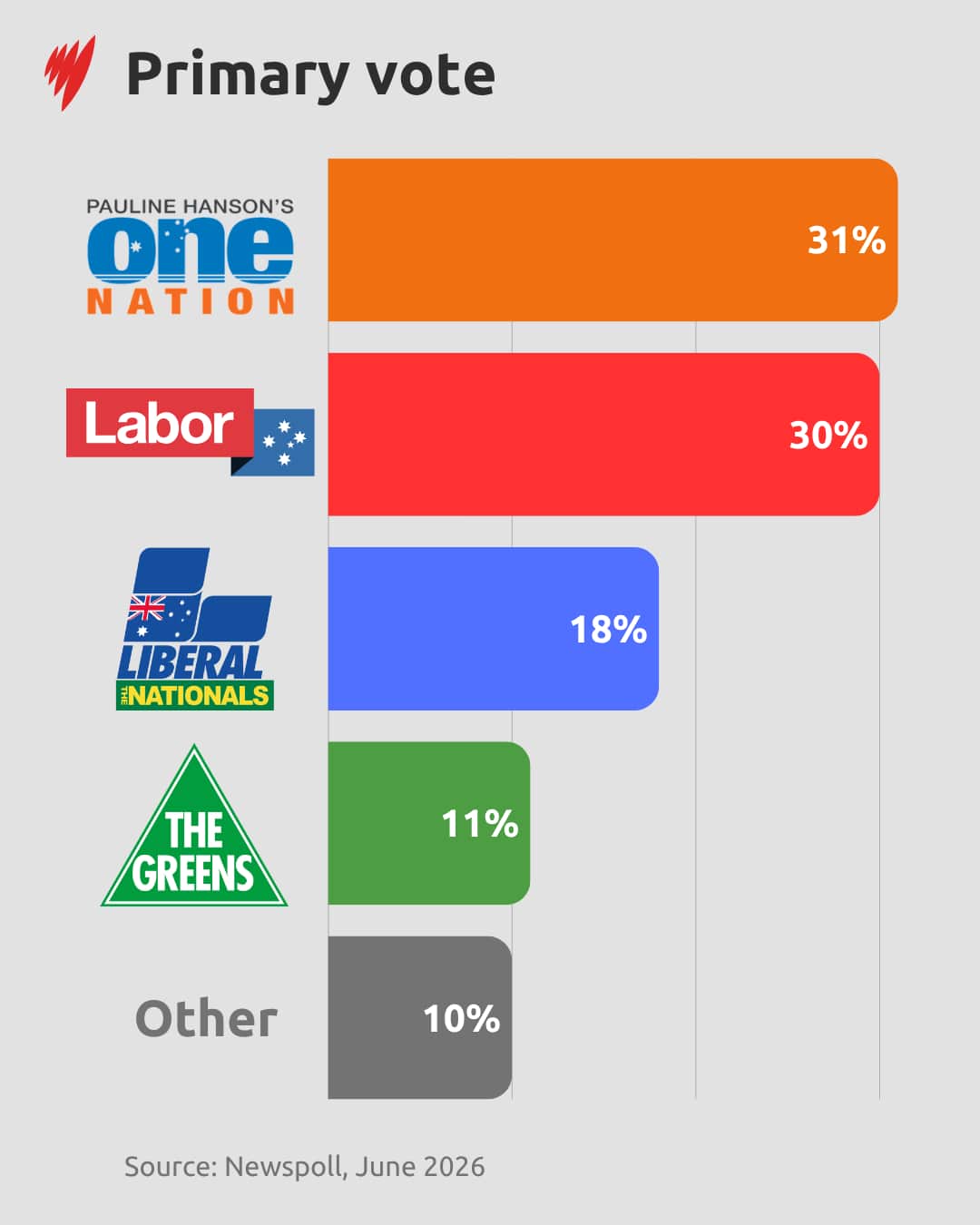
Support for One Nation has risen to its highest level on record, according to recent polling.
Two federal polls conducted partly after Pauline Hanson's 17 June National Press Club address showed continued gains for the party with primary vote support rising by two points in both the DemosAu and Morgan surveys, to 30 per cent and 31.5 per cent respectively.
A Newspoll survey conducted in the first week of June also placed One Nation on 31 per cent of the primary vote, slightly ahead of Labor at 30 per cent.
Analysts say the rise reflects a mix of economic and political frustrations rather than any single issue.
According to Ian McAllister, a professor at the School of Politics and International Relations at the Australian National University, One Nation's support should be understood primarily as a response to wider dissatisfaction with the major parties.
He describes it as a "protest vote", driven by cost of living, economic insecurity and dissatisfaction with government performance.
"What it tells us is a bit less about One Nation ... It tells us more about what people think about the two major political parties," McAllister tells SBS News.
According to the Australian Bureau of Statistics, net overseas migration peaked in 2022-23 at nearly 538,000 people. It has since eased, falling to 429,000 in 2023-24 and 306,000 in 2024-25.
That shift in migration flows has coincided with changes in public sentiment.
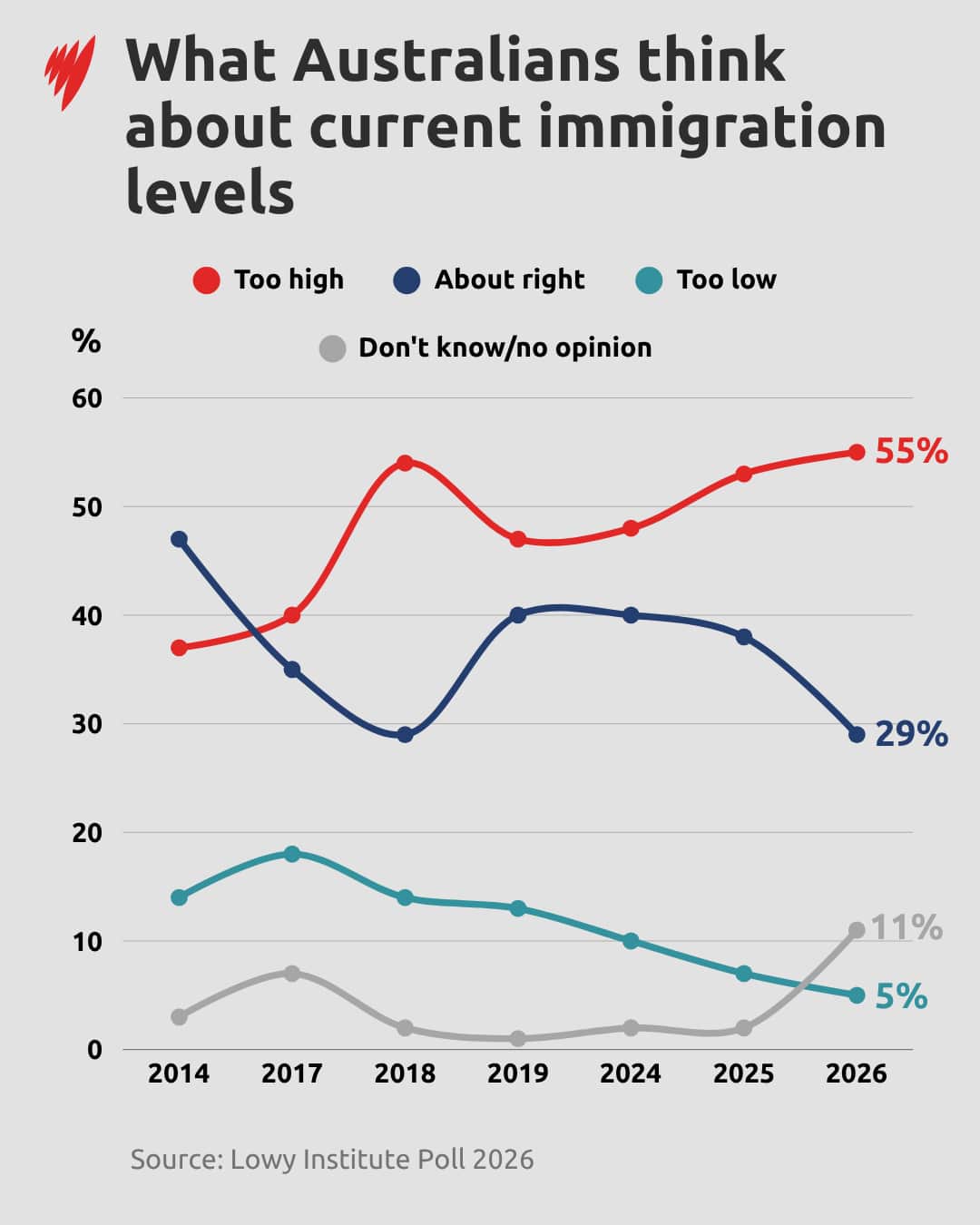
A majority of Australians — 55 per cent — now say the number of migrants coming to Australia is "too high". While this is within the margin of error of last year's result (53 per cent), it represents a seven-point increase from 2024 and sits close to the previous high of 54 per cent recorded in 2018, according to a recent analysis by the Lowy Institute.
Taken together, the data suggest migration is becoming one of several issues through which public frustration is expressed.
"When economic times are good, there's economic prosperity, people have got jobs, they feel relatively secure economically, then people are very open to migration," McAllister says.
"When you've got a lot of cost of living pressures, where people think their jobs may be insecure, then opposition to migration increases."
For Saeed, watching a debate in which people like him are often portrayed as part of the problem has been frustrating.
"Seeing that in the news and seeing their popularity grow, our subconscious develops this sort of feeling that hate exists in the people," he says.
If that hate exists in the people and their popularity is growing, what will happen if they come into power?
"It will seriously cause safety and security concerns for us."
McAllister says while concerns about migration have certainly grown, this doesn't necessarily mean Australians are becoming hostile towards migrants.
"They're becoming more concerned about the level of immigration, but it's not immigration as such because people are often open to migration," he says.
Polling has frequently shown Australians distinguish between concerns about migration levels and attitudes towards individual migrants, although the two debates can sometimes overlap.
McAllister says migrants who are still establishing themselves in Australia may be more sensitive to shifts in public sentiment than those who have spent decades in the country. But this tends to dissipate as they integrate more over time.
Watching from overseas
The discussion is also being watched beyond Australia's borders.
Khayra Fitria Asmanu, an Indonesian student, had planned to study in Australia after high school. She was attracted by the country's universities and lifestyle opportunities.
But after receiving university offers in 2025, she decided not to move.
Higher student visa fees, rising living costs and recent changes to the international education system — including visa costs, work-hour rules and post-study pathways — contributed to her decision.

Asmanu says public discussions around migration, while not the main factor, did shape her perception of the country.
"News spreading online about migration protests made me feel unsafe, especially as a potential international student who's going to be living abroad by herself," she tells SBS News.
It also made me reflect on how it's going to be harder for me to keep living there, build a career, and potentially upgrade to a permanent resident.
Despite deciding not to study in Australia, she says she still views the country as welcoming and may consider returning in the future.
For many weighing Australia as a destination, the contrast is difficult to ignore.
While multiculturalism remains a cornerstone of government policy, that long-standing approach sits alongside a system that is still being actively examined and adjusted.
The federal government recently completed a major review of Australia's multicultural framework, focused on strengthening social cohesion, inclusion and belonging as the population grows.
For many watching from overseas, that debate is shaping perceptions of Australia long before a visa application is ever made.
And for those already here — or still deciding — the question is no longer just how policy is written, but how it is received and interpreted.
For the latest from SBS News, download our app and subscribe to our newsletter.







