(Transcript from World News Australia Radio)
Questions are being raised about the fate of asylum seekers in Nauru after that government expelled its only resident magistrate and barred its chief justice from returning.
Dozens of asylum seekers charged over a riot at Australia's Nauru detention centre last year were due to face court this week.
But as Thea Cowie reports, there are suggestions the breakdown of Nauru's justice system has implications for all asylum seekers on the island.
(Click on audio tab above to listen to this item)
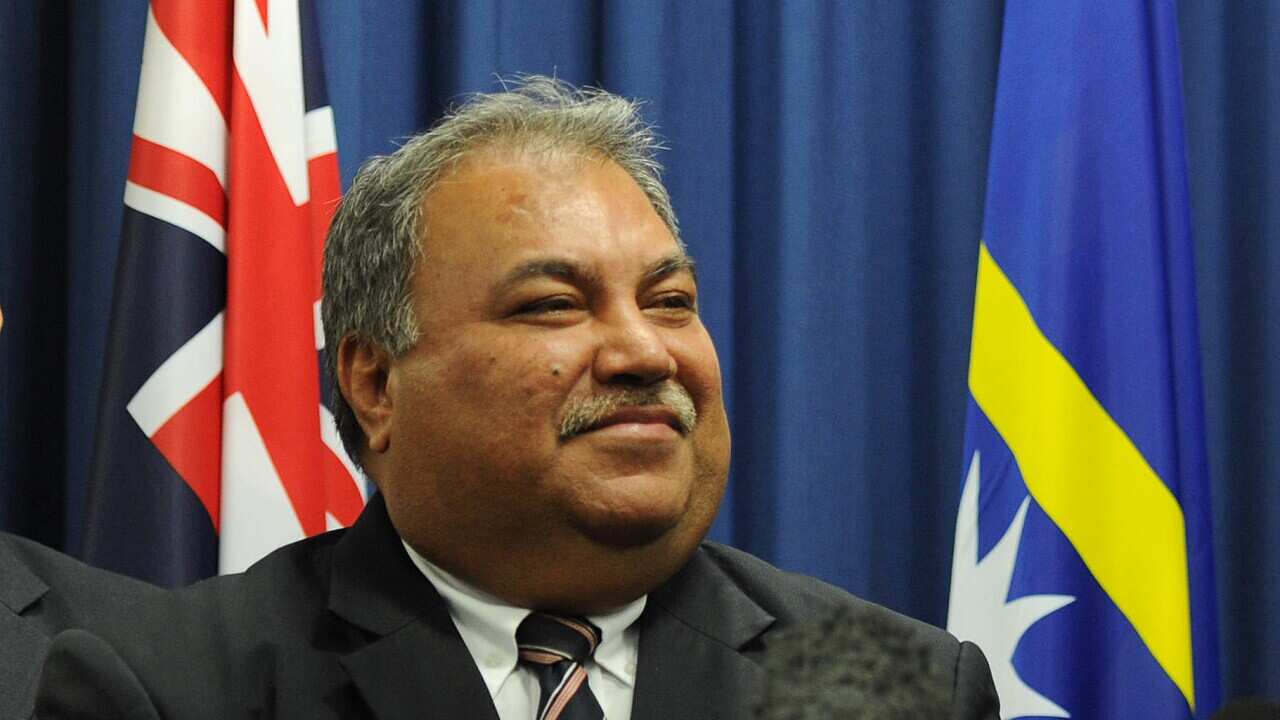
More than 100 asylum-seeker cases are in legal limbo after Nauruan President Baron Waqa fired the nation's only magistrate, Australian citizen Peter Law, on Friday.
The nation's Chief Justice and fellow Australian, Geoffrey Eames, then had his own visa cancelled when he tried to block the Magistrate's deportation.
Justice Eames has told the ABC the move constitutes an abuse of the rule of law.
"I think a decision, or a couple of decisions, made by the resident magistrate have offended someone in government and they're anxious to have those decisions reversed. It seems to me it's a fairly blatant attempt to interfere with the judicial system."
Earlier, Nauruan Justice Minister David Adeang declared two Australian businessmen prohibited immigrants and gave them a week to leave the country.
The two men appealed to the courts and magistrate Peter Law granted an interim injunction against their deportation.
Mr Law's deportation comes as he was preparing to hear the cases of asylum seekers charged over 2013 riots which caused about $60-million damage to Australia's Nauru detention centre.
Refugee Action Coalition spokesman Ian Rintoul says the Nauruan President's actions show the country's judicial system is not fit to hear cases against asylum seekers.
"What it says it that the legal system is entirely open to political manipulation. But for people who have followed the asylum seeker situation it really is just the latest example of how open to corruption and to political manipulation the system in Nauru is. There seems to be little prospect for the asylum seekers to get any kind of free trial on Nauru. So the Australian government finds itself in a situation of collaborating with a corrupt regime in Nauru."
Daniel Webb from Melbourne-based Human Rights Law Centre says the situation does not bode well for asylum seekers in Nauru.
"It's hard to imagine a more stark assault on the independence of a judiciary than politicians sacking magistrates and cancelling the visa of the most senior judge in the land. All that's stands between about a thousand asylum seekers and wrongful return to persecution is the Nauruan justice system. Recent events suggest that that justice system is not protected from political interference and is at the moment in complete disarray"
Australia is currently training Nauruan officials to assess the claims of asylum seekers sent there under Australia's overseas processing policy.
But Mr Webb says the Nauruan Supreme Court will have the final say on asylum seeker claims, and that's concerning.
"What we've seen now is the Nauruan government ignoring orders from the Nauruan Supreme Court and cancelling the visa of its chief justice. To the extent that that judiciary has the lives of people who came seeking Australia's protection in its hands we should be deeply concerned about its capacity to do its job and protect those who are in need of protection."
Sharing some of Mr Webb's concerns are the Law Council of Australia and the Australian Bar Association.
The groups say the apparent lack of due process represents a direct affront to the independence of the judiciary and the rule of law.
Meanwhile Immigration Minister Scott Morrison has told Macquarie Radio he doesn't think Nauru's actions are linked to any asylum seeker cases before the court.
"How or why this has occurred in Nauru is not 100 per cent clear yet but my best understanding at the moment is that it has nothing to do with how he was dealing with any asylum cases that are before him. But that really is a matter for Baron Waqa who is the President of Nauru and of course David Adeang is the Justice Minister. This will be a confusing and challenging time for a little while but what is important is that we need to understand how those cases are going to be dealt with, the Nauruan Government have given very clear commitments about that and we're not seeking to overreact. Things will take their course, the matter will be resolved."
Nauru's solicitor-general Steven Bliim has tended his resignation since the nation's chief justice and only magistrate were barred from returning.
The Nauru government is not commenting on the matters.
Share


