This audio is voiced by AI and may occasionally mispronounce words.
Share your feedback and help us improve this feature. Read more about how we use AI at SBS here.
When Neal Corcoran migrated to Australia from Ireland in 1991, what he missed most — apart from his family — was football.
Just a year earlier, Ireland had reached the quarter-finals of the FIFA World Cup for the first time in the nation's history, a run that remains one of the country's defining sporting moments.
"When I left Ireland, we were at our peak in our football journey," Corcoran tells SBS Japanese.
Growing up as a "football mad kid" in Dublin, he remembers arriving in Australia as a culture shock.
News that makes sense
Your trusted source for staying up-to-date with the world around you. Get free daily news updates and analysis, straight to your inbox.
At the time, football occupied a far smaller place in Australia's sporting landscape than it does today. The game was largely sustained by migrant communities through local clubs and the former National Soccer League (NSL), while mainstream attention remained fixed on Australian rules football, rugby league and cricket.
For Corcoran, holding on to football became a way of holding on to home.
- All the FIFA World Cup 2026 coverage on our World Cup page
- How to watch the FIFA World Cup 2026 on SBS
- Watch all 104 matches of the FIFA World Cup 2026 at our On Demand hub
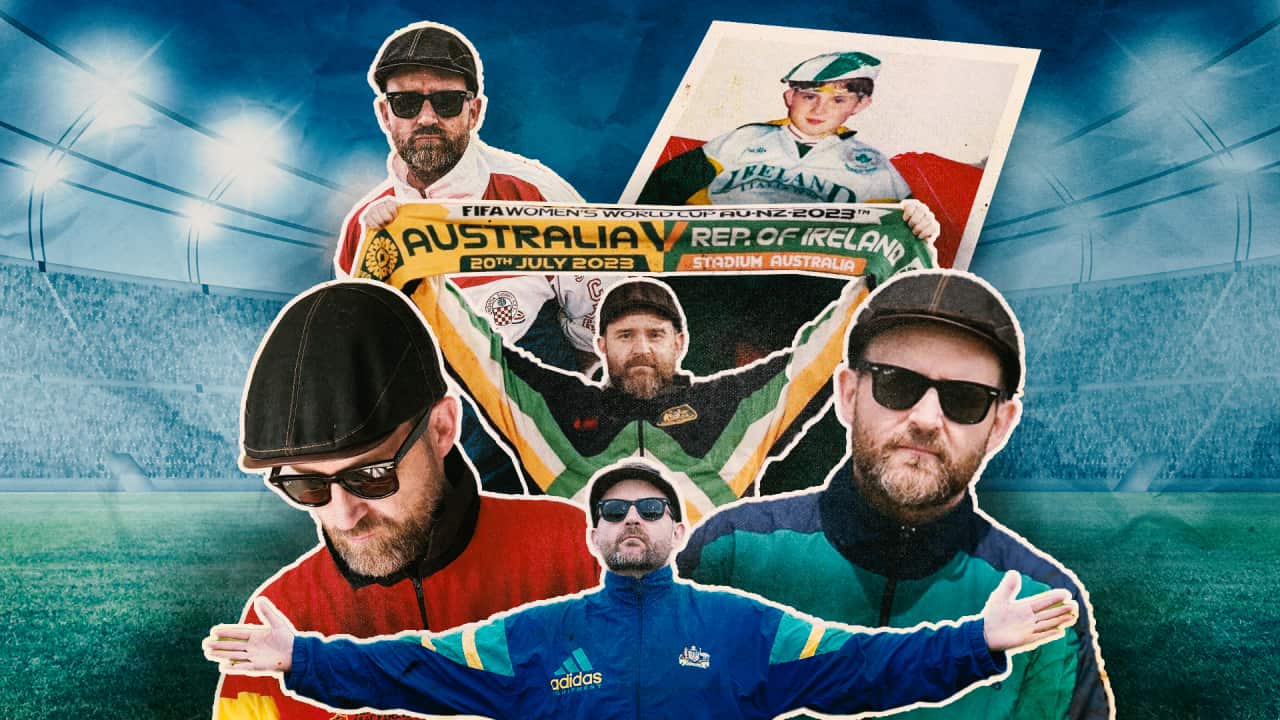
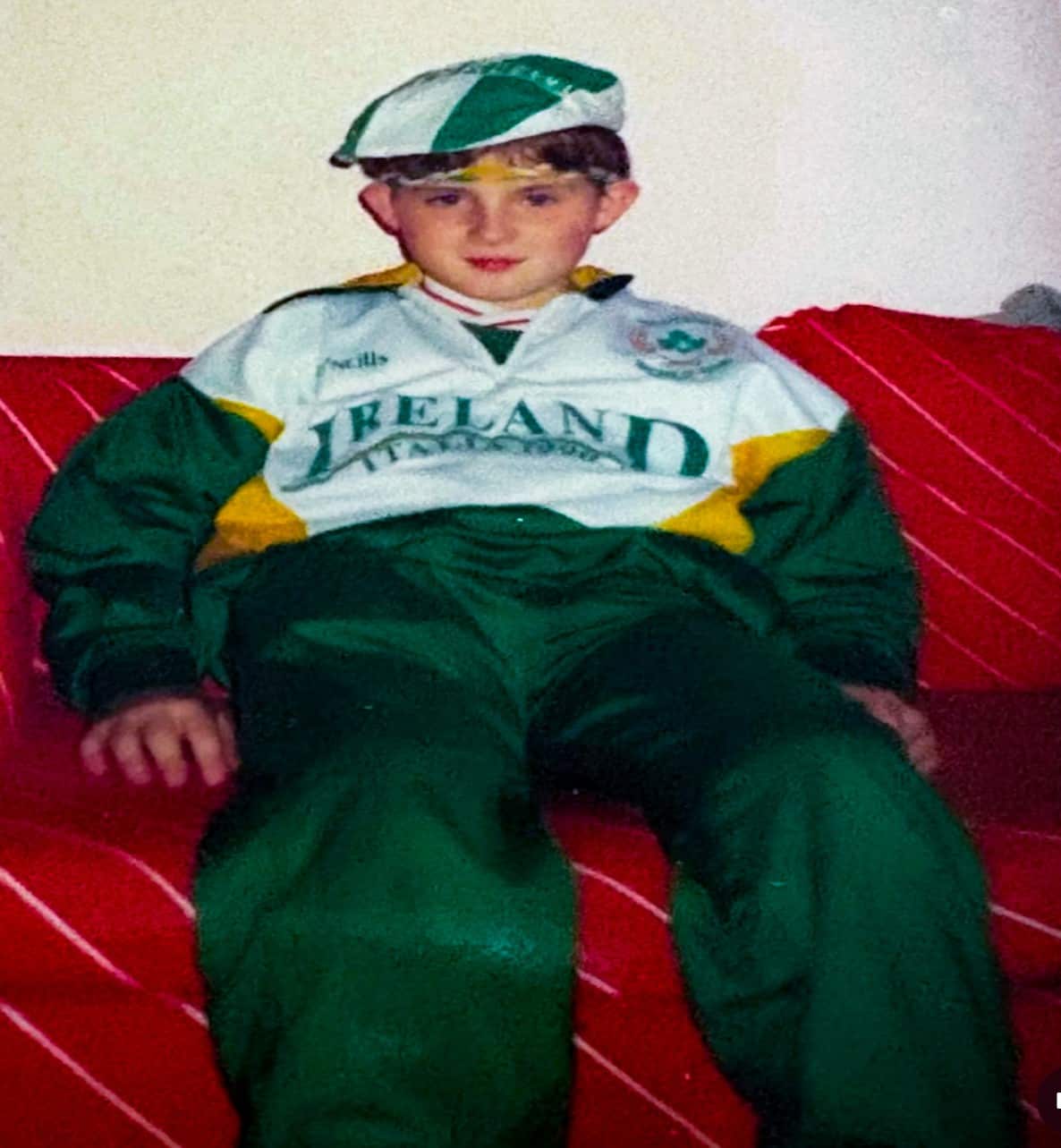
To preserve those memories, he kept the outfit he arrived in as an 11-year-old — an Ireland O'Neills 'Italia 90' tracksuit. More than clothing, it carries memories of family, identity and the euphoria surrounding Ireland's historic World Cup run.
Three decades later, that tracksuit has become the starting point for a much larger story: how sport can help migrants maintain connections to home, build community and find belonging in a new country.
How football nostalgia connects migrant communities
Now an outreach worker helping vulnerable youth — sometimes using football as a tool for reintegration — Corcoran spends weekends travelling across the country in his collection of nostalgic tracksuits, connecting with people who find meaning in them.
The tracksuit represents an era.
"That jersey I have from 1993, someone remembers being 13 with their dad at the game. It brings you back to that era," he says.
"They have deep history, and it creates conversations."
His Instagram page, with 10.7k followers, reflects his desire to share the stories attached to the tracksuits.
From the iconic kit when it won the 1994 World Cup in the US, to a replica of the Argentina shirt Diego Maradona wore when he scored his 'Hand of God' goal in 1986, not to mention Iraq's incredibly rare Olympic tracksuit, there are over 50 unique pieces in his collection.
More recently, he has also developed an interest in historic pieces from clubs in the former NSL, including Preston Lions, Marconi Stallions and Wollongong Wolves.
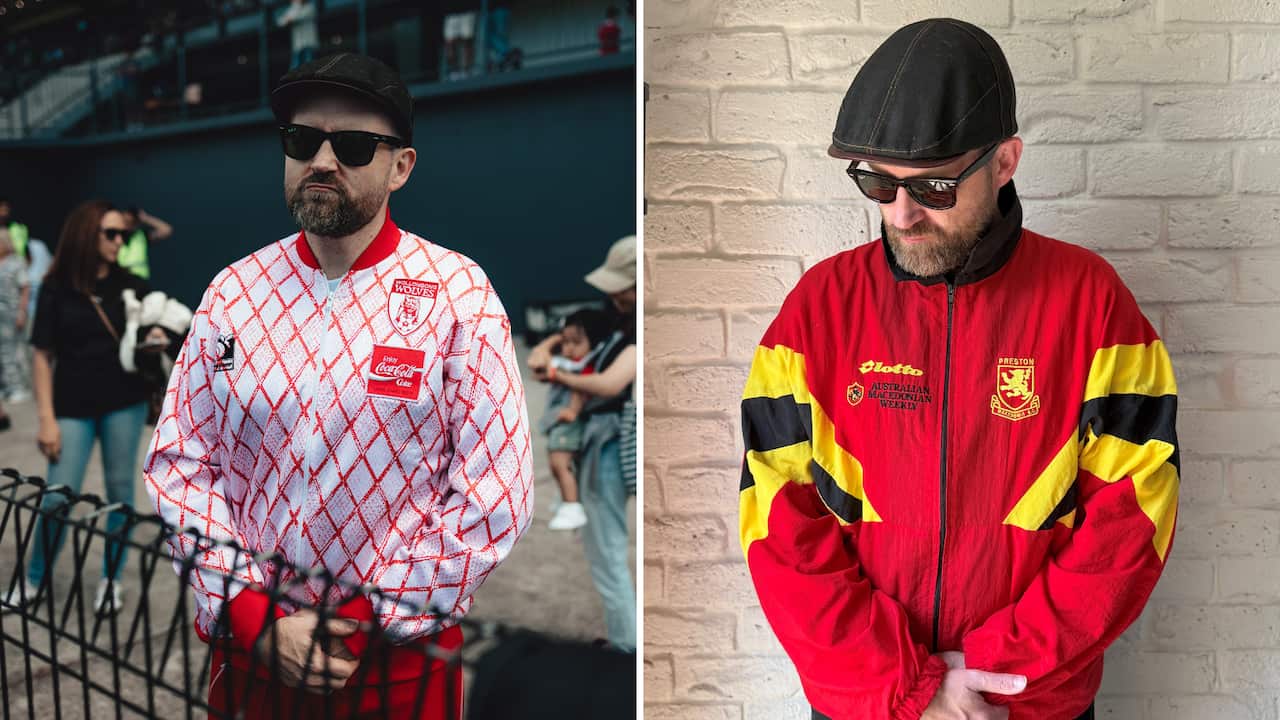
Founded largely by migrant communities, many NSL and state league clubs became more than football teams — they were cultural hubs where generations of Australians with European, South American and Middle Eastern heritage found familiarity, connection and community.
Through visits to clubs during last year's inaugural Australian Championship, Corcoran says he began to uncover the many "hidden stories" embedded within local grounds and clubrooms — moments of history, migration and memory that still linger in the fabric of Australian football.
The Australian Championship is an end-of-season mini-competition that sees top state league clubs, normally confined to their states in what are now called the National Premier Leagues, compete across borders. It means former NSL giants, including the Greek community-backed Sydney Olympic and South Melbourne and Italian community-backed Marconi and APIA, are again in the spotlight.
That connection between football and migrant experience is well documented. A white paper on Sport, Health & Society published by Western Sydney University in 2021 found that sport can play an important role in building social cohesion in migrant and culturally diverse communities, helping strengthen social networks, trust, and belonging through participation in local sport environments and community clubs.
"Whether through participation, spectatorship, or community engagement, sport has the potential to improve health outcomes, empower individuals, and unite communities," it states.
Echoing these thoughts, Adam Karg, a professor in the sport management program at Deakin University, says sport plays a key role in building networks and shared understanding within communities.
"Whether it's participating in sport, watching the sport or following teams, it's really about a shared sense of community. That's the core component within, if you think about social cohesion," he tells SBS Japanese.
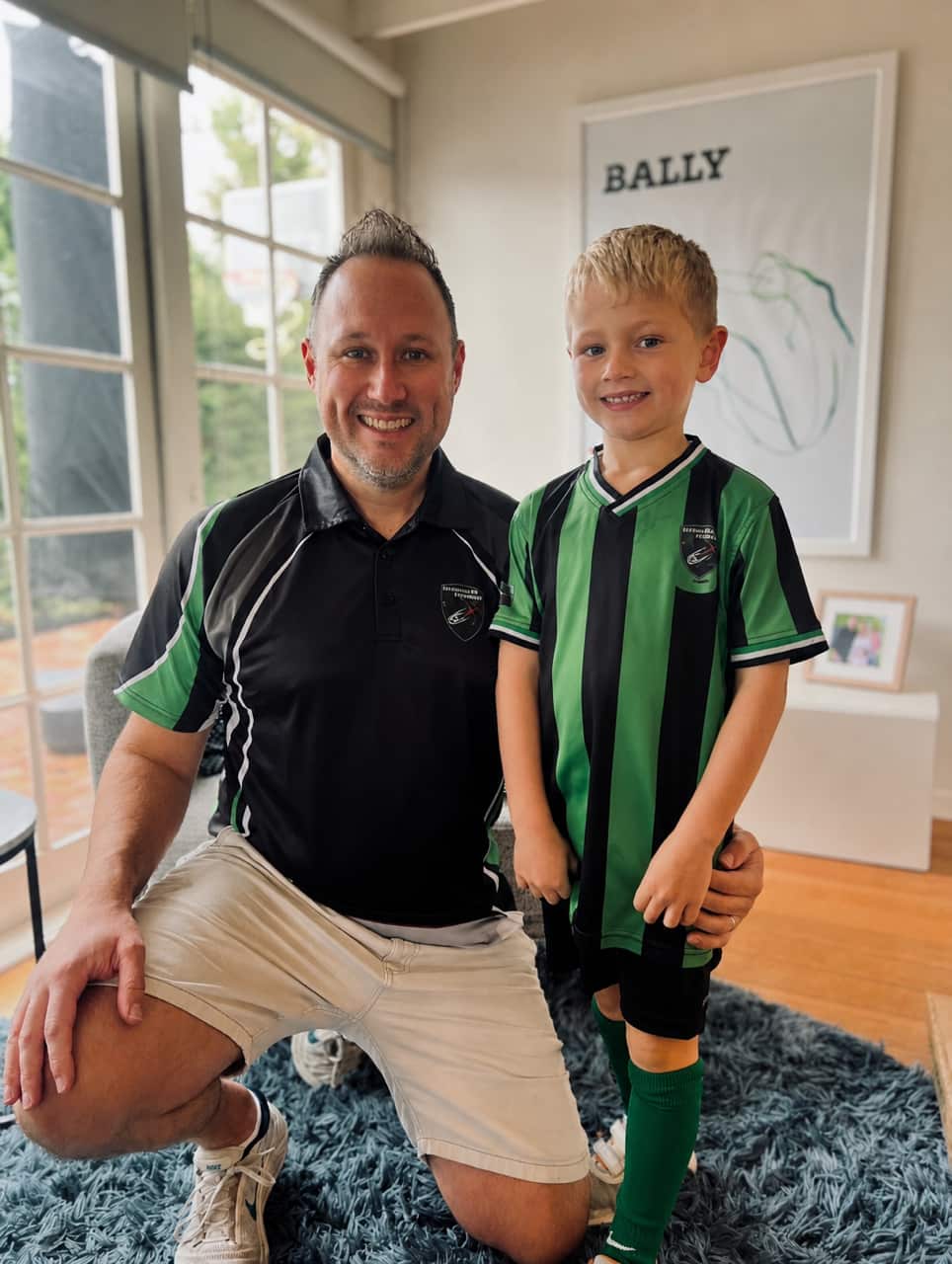
Having played football as a youth, and now coaching his son's team, Karg knows firsthand how football is more than just a game.
We build networks, we build shared understanding, and we learn together … that shared experience creates that sense of community.Professor Adam Karg, Deakin University
For Karg, whose parents were born in Germany and the Netherlands, football was one way he connected to his heritage, something he now shares with his son.
"With the World Cup approaching, my son and I will have Dutch, German and Australian jerseys and will watch all those games," he says.
Corcoran also shares his passion with his daughter, Niamh.
While tracksuits had long been a personal interest, he only started sharing them publicly last year, after his and his daughter's beloved A-League club, Western United, lost its licence.
Niamh was devastated.
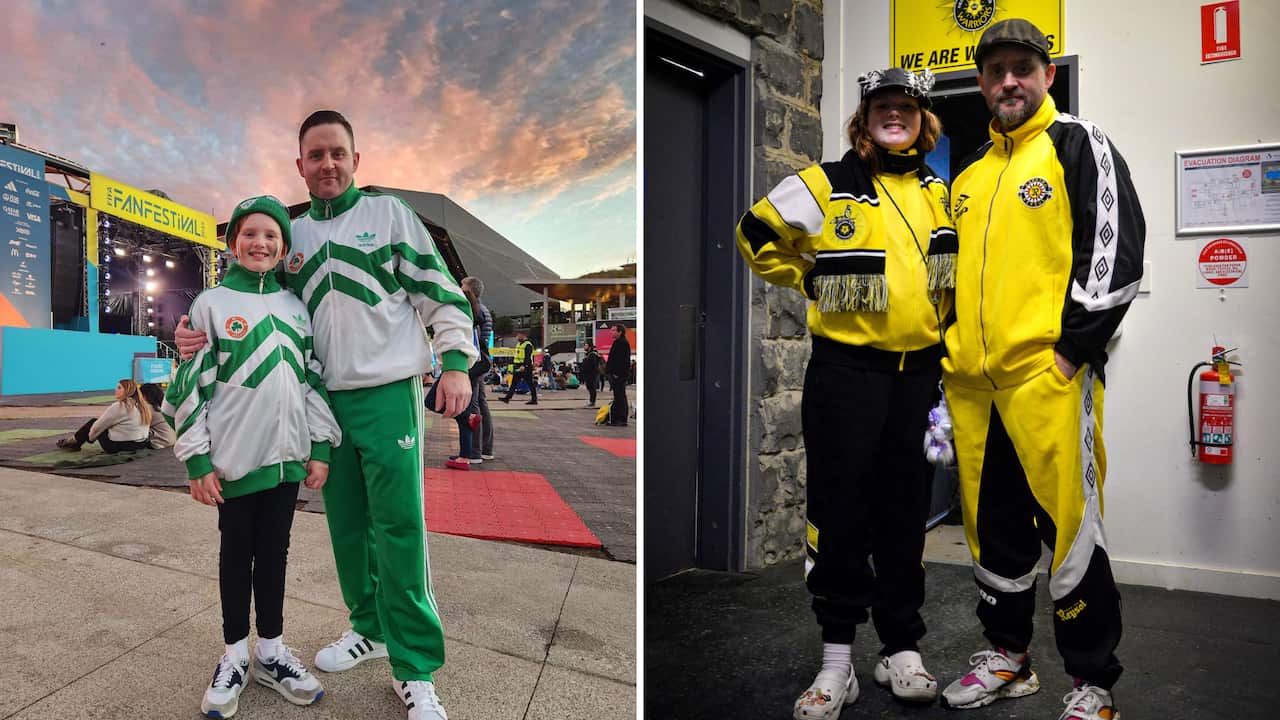
Having felt a strong connection to their Irish roots through the club's green colours, the pair had supported the team from day one.
"I remembered what it was like to lose football from the age of 11," Corcoran says.
"I wasn't going to let it happen again."
Today, Niamh is part of his journey, helping tell the stories behind each piece in his tracksuit collection.
A celebration of culture and identity
For passionate footballer John Lim, that "very rare opportunity" to foster community spirit has meant going above and beyond.
At the recent Women's Asian Cup hosted by Australia, he bought hundreds of tickets to secure a dedicated space for his Korean community.
What started with 550 tickets for the opening match grew steadily to 2,200 by the semi-finals, as interest surged and the supporter group expanded.
"That was the only way to secure the active zone [as a group]. So, I used my own money to buy them and collected the money from individuals. There was also support from the Korean Sport Council and Korean society," Lim says.
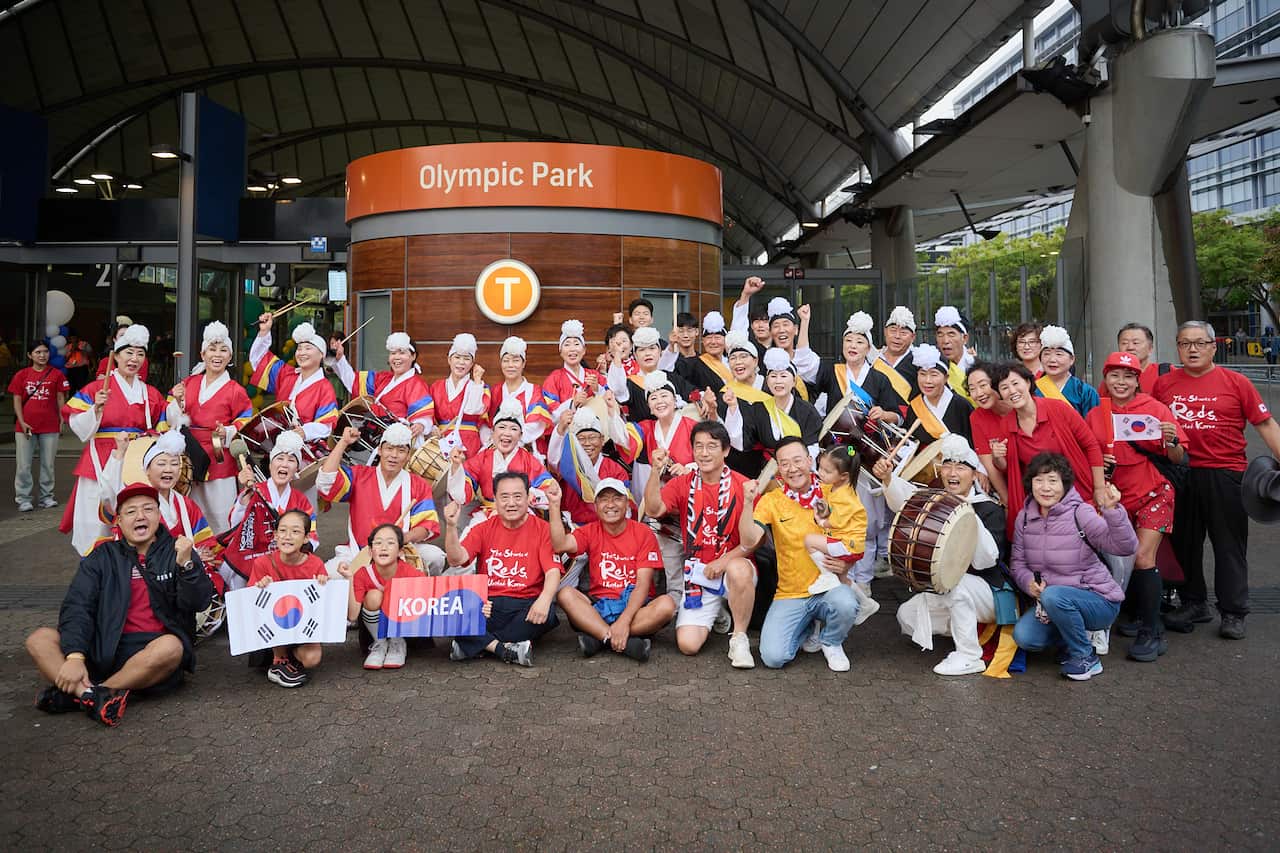
After arriving in Australia in 1996, Lim says football helped him settle in and connect beyond his immediate circle, an experience that now drives him to organise large supporter groups.
"There is no age limit. Children, boys and girls, all generations can get together," he says.
Lim says the Asian Cup was an opportunity to showcase culture, with traditional costumes, dancers, and drummers that elevate the atmosphere.
He says turnout exceeded expectations, with even non-Koreans joining the group, including Corcoran, who had travelled across the country to cheer on teams with his unique tracksuits.
"The Red Devils crowd — I was literally sitting under the drums. The South Korean fans were incredible, but I didn't know what they were saying."
According to the latest AusPlay data released in May, football is the most popular organised team sport for adults who speak a language other than English (LOTE), with an estimated 140,000 adult men and 27,000 adult women participating.
While football can be a powerful tool for inclusion and connection, barriers remain, says Nader Ibrahim, co-founder of not-for-profit charity organisation One Culture Football in South Australia.
"Unfortunately, football is one of the most expensive team-based games [in Australia]. I would love to see it more accessible," he says.
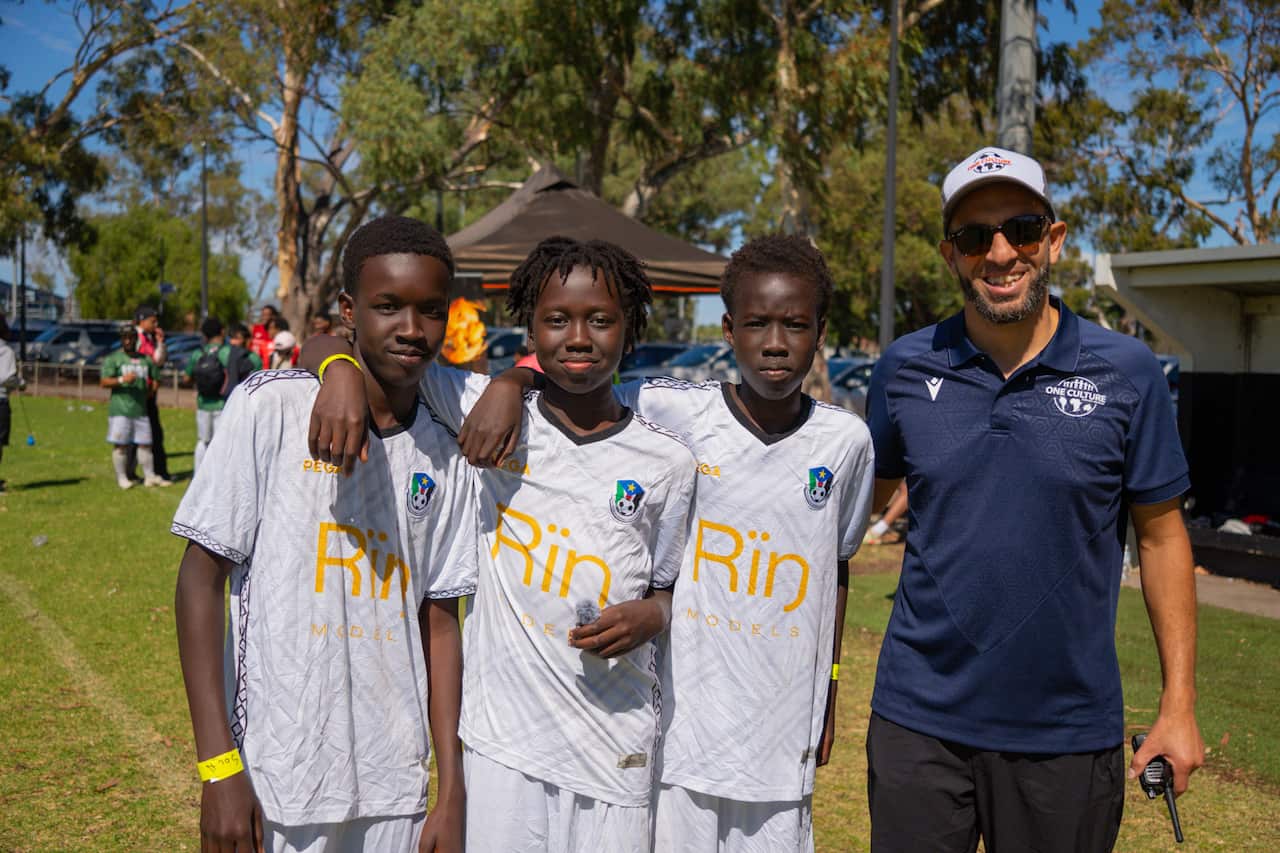
Ibrahim's understanding of the "world game" comes from lived experience and it continues to shape the work he does today.
He played his first football game in Australia, just three days after arriving from Egypt in 2009, scoring on debut.
"I was dealing with jet lag, people didn't even know how to pronounce my name, but suddenly I found a spot. I felt like I belonged."
Having organised their own community tournaments, Ibrahim says he has witnessed the magic it can bring.
"We play a snippet of the national anthem for every participating country. A man from Laos came up to me and told me how happy he was to hear it," he says.
It helps you connect back to your heritage.Nader Ibrahim
This World Cup, Ibrahim is planning to create a space where people can come together and watch the games, despite time differences, recreating the atmosphere of stadium fandom through shared community viewing.
While in Sydney, Lim is hoping to secure a venue where the Korean community can come together to cheer for their country.
For Corcoran and his daughter, Niamh, there is no better opportunity to connect.
"The big fan zones in Melbourne, I will be attending some games. Definitely the opening games of Brazil, Scotland and Australia in these fan areas. I'll throw it up in tracksuits where I can," he says.
"I consider myself like a long ball. You get yourself in the box because you’ve got a chance of a long ball hitting you. I keep putting myself in the box in these nostalgic pieces and people love nostalgia."
For him, it's less about the kits themselves and more about what they represent — the eras, the people and the personal stories they carry.
This story was produced in collaboration with SBS Japanese.
You can watch all 104 matches of the FIFA World Cup 2026™ live, free and exclusive on SBS, SBS VICELAND and SBS On Demand.
FIFA World Cup 2026™ at SBS On Demand: get match ready.
For the latest from SBS News, download our app and subscribe to our newsletter.







