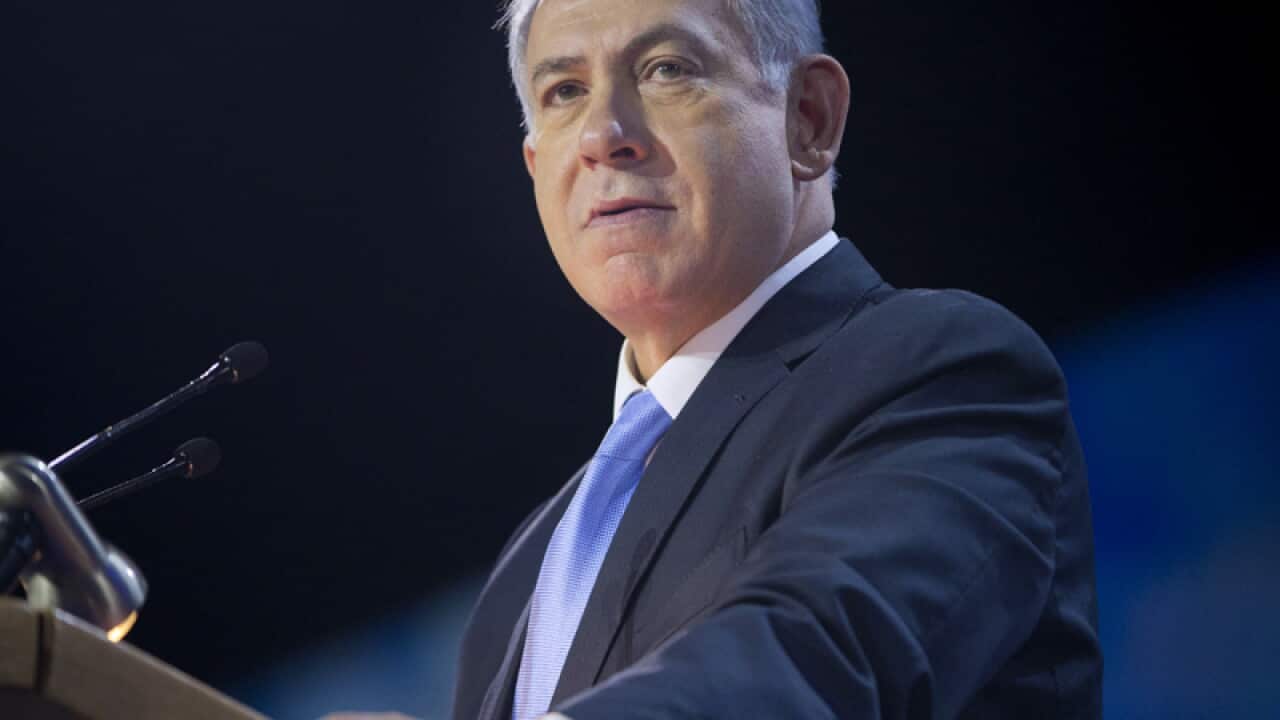
Israeli Prime Minister Benjamin Netanyahu has denounced President Barack Obama's drive for a nuclear accord with Iran, warning Washington is paving Tehran's path to a bomb.
After Netanyahu delivered an impassioned address to the US Congress on Tuesday, an exasperated Obama retorted the Israeli leader had no plan of his own to contain the Iranian threat.
And, with US Secretary of State John Kerry in talks with his Iranian counterpart in Switzerland, the "P5+1" world powers pressed on for an accord that would limit Iran's nuclear options while loosening economic sanctions.
Netanyahu's party faces a close-fought parliamentary election in two weeks time, and he has been accused of imperilling Israel's close ties with Washington for political gain.
However, in a barnstorming speech to a packed joint session of Congress, he pulled no punches in his denunciation of the accord he expects Tehran to be offered.
News that makes sense
Your trusted source for staying up-to-date with the world around you. Get free daily news updates and analysis, straight to your inbox.
"That deal will not prevent Iran from developing nuclear weapons," he said. "It would all but guarantee that Iran gets those weapons, lots of them."
Obama did not watch the speech, having arranged a video conference with European leaders on the crisis in Ukraine, but later gave the Israeli leader's argument short shrift.
"I am not focused in the politics of this. I am not focused on the theatre," Obama said. "As far as I can tell, there was nothing new.
"On the core issue, which is how to prevent Iran from obtaining a nuclear weapon which would make it far more dangerous, the prime minister did not offer any viable alternatives."
While dozens of Obama's Democrats stayed away from the Congress address, many more members from both sides of the aisle attended and gave Netanyahu several warm standing ovations.
"I deeply regret that some perceive my being here as political. That was never my intention," he said.
"We appreciate all that President Obama has done for Israel."
But Netanyahu's speech built quickly into a thorough denunciation of Obama's efforts to strike an accord with Iran.
"This deal has two major concessions. One, leaving Iran with a vast nuclear program. Two, lifting the restrictions on that program in about a decade," he said.
"That's why this deal is so bad. It doesn't block Iran's path to the bomb. It paves Iran's path to the bomb."
Thus, he said, no nuclear deal should weaken economic sanctions against Iran until its government ended its aggressive regional stance and frequent threats against Israel.
Netanyahu received good reviews from many US foreign policy hawks, but some Democrats accused him of "fear-mongering".
Leading House Democrat Nancy Pelosi said she had been "saddened by the insult to the intelligence of the United States".
Opinion appeared to be divided in Israel.
Some watching the speech in Jerusalem told AFP they had been impressed by the respect he had been accorded in the chamber, while others were concerned he had recklessly interfered in the domestic politics of a vital ally.
Iran denounced Netanyahu's intervention, even as Tehran's envoys sat with Kerry in Montreux to hammer out the nuclear agreement before a March 31 deadline.
Foreign ministry spokeswoman Marzieh Afkham accused Netanyahu of spreading lies about Iran's nuclear program, which Tehran insists is peaceful.
She dismissed the speech as repetitious, boring and a "sign of weakness".







