This audio is voiced by AI and may occasionally mispronounce words.
Share your feedback and help us improve this feature. Read more about how we use AI at SBS here.
Ali fled Iran with his longtime partner 10 years ago.
Facing severe hardship, discrimination and fearing for their lives, the pair first sought asylum in Türkiye, hoping to start fresh in a country where they could freely express their love for one another.
SBS News has changed Ali's name for his safety.
"Being LGBTQI+ in Iran is a crime and they can follow you and prosecute you because of your sexual orientation or your gender identity," he says.
"The punishment for being LGBTIQA+ is the death penalty, but also from the community and the families, we face discrimination, bullying, violence.
News that makes sense
Your trusted source for staying up-to-date with the world around you. Get free daily news updates and analysis, straight to your inbox.
In Iran, you are not allowed to even rent an apartment with your same-sex partner.
Ali says while identifying as LGBTQI+ in Türkiye is legal, he still witnessed discrimination during his time there.
In 2025, a draft government proposal to change the Turkish penal and civil codes to enable criminal charges to be brought against LGBTQI+ people was leaked to the media.
According to a Human Rights Watch report, the new laws would criminalise behaviour deemed "contrary to biological sex and general morality", and would impose a slew of restrictions around access to gender-affirming healthcare.
The annual Istanbul Pride has also been banned since 2015, with authorities detaining more than 50 people who were attempting to march last year.
"In Türkiye, the police, military, authorities, governments and also people from the community, they can discriminate and do violent acts against you with impunity. You are not protected," Ali says.
LGBTQI+ people seeking asylum, like Ali, will first flee to a third country to lodge their humanitarian visa application.
While in Türkiye, Ali experienced harassment and discrimination from neighbours and in public. He says he went to Turkish police for support on multiple occasions.
"The Turkish police, instead of supporting me, protecting me, they said: 'Why are you here? Why are you living here? Why don't you go back to your country?'"
After six years in limbo, he and his partner were granted humanitarian visas to Australia in 2022.
Despite their shared relief, Ali can't help but think of those who are still suffering.
"When I arrived in Australia, I continued my advocacy. I try to be the voice for LGBTIQ+ refugees who I left behind in Turkey as a part of my heart, as a part of my life. And I always try to do something for them."
He says a new Australian program Bridge to Safety offers "a light at the end of the tunnel" for LGBTQI+ people seeking refuge.
I informed some of my friends there – look, this is a hope for you.
'They know how the system can fail them'
Bridge to Safety is the result of several years of advocacy by the Forcibly Displaced People Network (FPDN), Australia's national peak body led by LGBTQI+ people with lived experience of displacement, and has joint backing from the Refugee Advice and Casework Service (RACS).
It's been designed to create a clearer pathway for permanent resettlement in Australia by flagging LGBTQI+ refugees, who have been identified by trusted partner organisations, with the Department of Home Affairs.
Renee Dixson is the co-founder of FDPN and uses gender neutral pronouns. They explain to SBS News that LGBTQI+ people have always been a priority for resettlement in Australia, however, until recently, there wasn't a bespoke program to facilitate it.
Through Bridge to Safety, FDPN identifies and assesses people needing protection due to discrimination on the basis of their sexual orientation or gender identity. They then refer cases to RACS, their legal partner, which helps lodge offshore humanitarian visa applications.
The department, Dixson explains, will prioritise these cases within its existing humanitarian program, which grants 20,000 visas annually.
"When the person is granted a protection visa, and they come here, we'll connect them with the community members and with the services.
"We're trying to organise a holistic approach of support for our community members who are in acute need of protection."
Dixson adds: the program was designed and led by members of the LGBTQI+ community.
"[They] know how the system can fail them. This [program is] trauma-informed and community-oriented.
"We know that many organisations are unsafe for our community members, and they don't feel safe to send even a request [from overseas]. We have much more [of their] trust."
'He fled to safety, but he could not make it'
While Ali and his partner endured six years of hardship in Türkiye awaiting a visa determination, he says he considers himself lucky. By comparison, several of his friends have remained in limbo for more than a decade.
Ali shares the story of one — another Iranian gay man — who was murdered in Türkiye last August, while waiting for his humanitarian visa interview with the Australian embassy.
"He was murdered by his neighbour and close friend," he says.
He fled Iran seeking safety in Turkey, but unfortunately he couldn't make it to safety.
Ali explains that he was the sponsor for his friend's visa and recently received communication from an immigration official within the home affairs department.
"Just a couple weeks ago, I got an email from the department [saying] that your friend just got accepted for the interview and for the next step for the Australian visa.
"But unfortunately, he couldn't make it and we lost him. He was also waiting for seven, eight years in Türkiye, waiting for a safe country to resettle. But this is only one example of what is happening to people."
Experts tell SBS News that LGBTQI+ people seeking asylum face many challenges while waiting in third countries. Some are scared to ask for help or turned away by the aid agencies designed to support them.
Some will choose not to seek protection on the basis of their gender identity or sexuality because they are scared to self-identify with the local authorities.
Gretel Emerson, pronouns they/them, is a senior solicitor and the LGBTQI+ lead at RACS. Based in Sydney, the community legal centre offers free legal advice and representation to people seeking protection in Australia.
Emerson explains that, in 2025, RACS advised more than 5,000 clients seeking onshore protection status in Australia. At least 300 of those were based on their sexuality or gender identity.
They tell SBS News that the new Bridge to Safety program will allow LGBTQI+ refugees to feel safe to self-identify when seeking protection.
"One of the main barriers we've seen both offshore and onshore for people seeking protection has been that it involves a lot of self-disclosure of someone's identity to a government or an authority, which can be a really unsafe and daunting process for someone who is queer or gender diverse," they say.
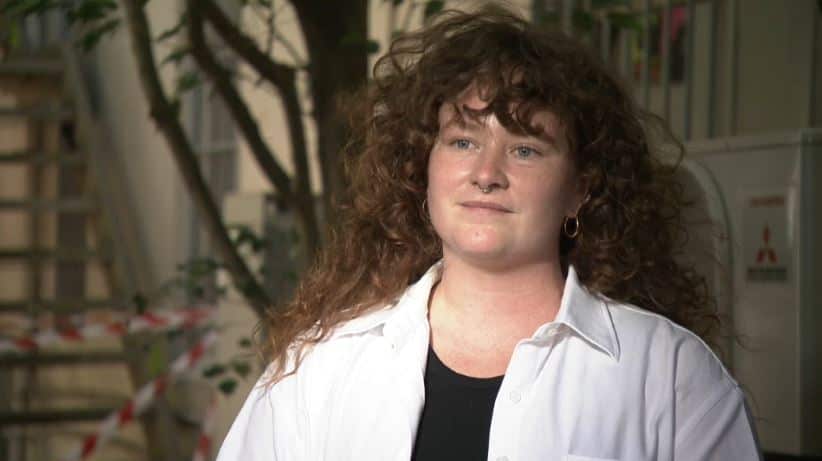
"The reason it's so important that we have FDPN on board is that it allows queer refugees to self-identify their sexuality or their gender identity to an organisation that is queer-safe and allows that barrier to be overcome. It also means that through this project, people that haven't been able to seek safety because of the need to be sponsored by family in Australia are now able to access that same visa pathway."
At this stage, the new program is targeting people in the Asia-Pacific region.
However, RACS confirmed they would still take on inquiries from those still residing in their country of origin, but would help them transition to a third country first.
'Significant decrease' in resettlement places worldwide
According to the United Nations, there are 2.5 million people in need of resettlement globally, with 800,000 in the Asia-Pacific region.
According to FDPN, between three and six per cent of all refugees identify as LGBTQI+.
However, resettlement is only available to a very small proportion. Less than one per cent of the world's refugees are resettled annually. That's despite the world hitting a record number of displaced people, with figures peaking in 2024, according to the UNHCR.
Resettlement options are now in critical decline due to a range of factors, including shrinking legal pathways, certain countries slashing admission numbers and funding cuts to humanitarian agencies.
Tristan Harley, a senior research associate at UNSW's Kaldor Centre, explains that resettlement figures have dropped significantly in the past few years, largely due to policy decisions by US President Donald Trump and funding cuts to USAID.
"In the past couple of years, there's been a significant decrease in the number of resettlement places available internationally, primarily as a result of the Trump administration's decision to cease its resettlement programs," Harley tells SBS News.
"The United States of America used to be the largest resettlement provider globally and would contribute a significant portion of the overall resettlement numbers. Now, with their cessation from the program, the numbers are far smaller."
He explains that Australia, comparatively, has one of the more generous resettlement programs in the world.
"However, it is likely that more than 95 per cent of people in need of resettlement in 2026 will not receive a resettlement opportunity," he says.
According to the Department of Home Affairs, last year's Humanitarian Program was delivered in full, with 20,000 visas granted.
A spokesperson for the department told SBS News that this new partnership via Bridge to Safety will "help identify LGBTQIA+ refugees facing discrimination so their applications under the Special Humanitarian Program (subclass 202) of the Humanitarian Visa Program can be processed in accordance with Australian government policy".
Harley says the program will strengthen Australia's humanitarian program.
The Bridge to Safety program does not expand Australia's humanitarian resettlement program but rather seeks to strengthen its implementation.
"One of the striking things about [it] is the way that it brings together community expertise and knowledge into formal government decision-making processes."
'We feel we belong'
Reflecting on his new life in Australia, Ali says the best part is living in safety and peace.
"We found the community and the society here in Australia that loved us and we feel that we belong," he says.
But while the Bridge to Safety program offers one path to protection, there are still many systemic barriers that prevent LGBTQI+ people from seeking refuge, he says, adding that more support is needed — even in Australia.
"There are still some areas that we need to work more on. We need more advocacy for some of them.
"When I arrived in Australia, the main thing was finding first housing.
"[Newly arrived] people need more help, especially in the first year. Not only financially, but also from the community."
LGBTIQ+ Australians seeking support with mental health can contact QLife on 1800 184 527 or visit qlife.org.au. ReachOut.com also has a list of support services.
For the latest from SBS News, download our app and subscribe to our newsletter.







