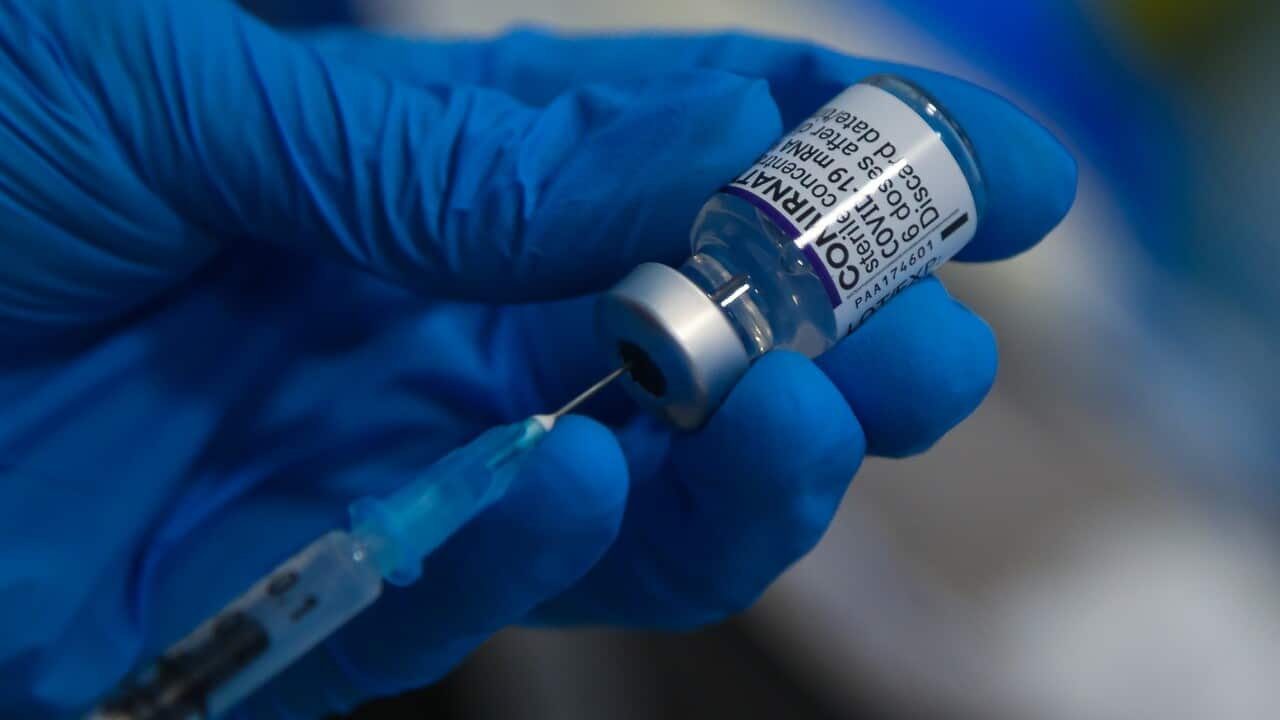
The Therapeutic Goods Administration (TGA) has included a new COVID-19 vaccine for a variant that has been spreading globally in 2025.
Pfizer Australia and BioNTech have welcomed the TGA's move to register the companies' new COVID-19 vaccine in its public database for approved therapeutic goods in Australia.
The new Comirnaty LP.8.1 COVID-19 mRNA vaccine targets the LP.8.1 variant, which the World Health Organization (WHO) in January labelled a "variant under monitoring".
In March, the WHO said the LP.8.1 is one of the two COVID-19 variants "with increasing prevalence globally", but it assessed the additional health risk posed by the variant as "low" globally.
The vaccine can be used for persons who are six months old and above.
News that makes sense
Your trusted source for staying up-to-date with the world around you. Get free daily news updates and analysis, straight to your inbox.
As of 27 November, 6,524 COVID-19 cases had been reported in Australia that month, according to the National Notifiable Disease Surveillance System, an almost 11 per cent decrease from October.
The federal health department's website states regular COVID-19 vaccinations are "the best way" to maintain protection against severe COVID-19 symptoms.
It recommends people aged 18 to 64 years who are not severely immunocompromised consider a dose every 12 months. All COVID-19 vaccinations are free for residents in Australia, regardless of whether they hold a Medicare card.
Pfizer said the new vaccine is already available in Australia.
Paul Griffin, an infectious disease physician and clinical microbiologist from the University of Queensland, said while COVID-19 remains unpredictable, it is fairly likely we'll see another wave relatively soon, on the balance of probability.
"It's not necessarily predictable just yet, but we certainly should be prepared because it would seem likely," Griffin recently told SBS News.
Since the start of the pandemic, Australia has experienced an increase in COVID-19 cases during the summer and winter months.
Data from the Critical Health Resources Information System (CHRIS) show that, since 2022, the number of COVID-19 cases in intensive care units has historically increased from December to January. CHRIS monitors intensive care unit activity.
For the latest from SBS News, download our app and subscribe to our newsletter.







