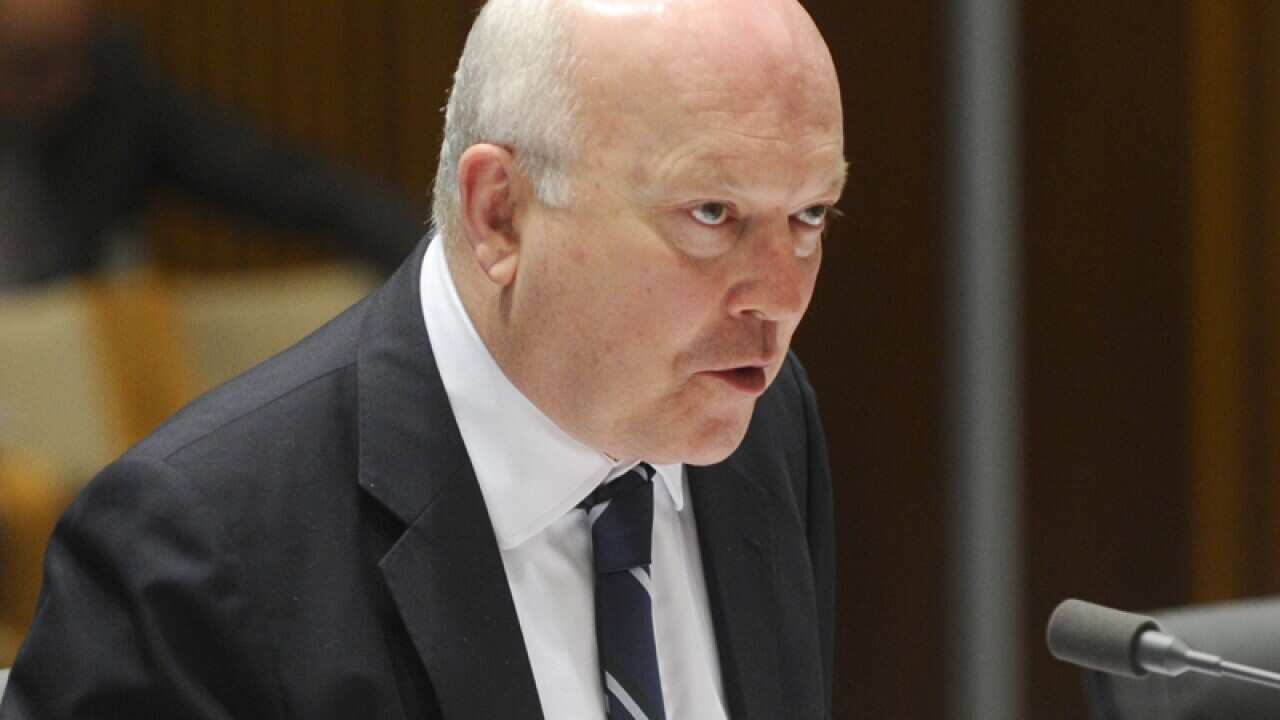
Sweeping new powers for intelligence agencies won't increase surveillance of innocent Australians, Attorney General George Brandis says.
Nor will it lead to the prosecution of journalists who report on Edward Snowden-like leaks, he says.
Senator Brandis on Wednesday revealed proposed changes to security legislation, which he says will improve agencies' ability to predict and prevent attacks from extremists returning from the Middle East.
But civil libertarians say the new ASIO and ASIS powers could lead to growth in state surveillance of ordinary Australians.
Under the legislation introduced into the Senate on Wednesday, spy agencies will be given the power to access a third party's computer.
Senator Brandis says the new provision will be used in "very limited circumstances" and only when necessary to deal with a national security threat.
However, the proposal has raised questions about whether all Australians will come under some form of surveillance.
"That's not going to happen - I think we should be very wary of making wild claims," Senator Brandis told ABC radio.
"People need to understand that ASIO and the national security agencies operate under a very, very comprehensive regime of safeguards and scrutiny and oversight - and that's not going to change."
Senator Brandis also rejected suggestions a new offence for "unauthorised dealings" with intelligence material would lead to the prosecutions of journalists reporting on leaked material.
The offence will only relate to those who work for security agencies and was not targeted at whistleblowers, he said.
"There are provisions for the protection of whistleblowers elsewhere in commonwealth legislation which are unaffected by this proposal," he said.
Greens senator Scott Ludlam indicated his party will push for a separate Senate inquiry into the changes.
He says it's not appropriate for the joint standing committee on security and intelligence, which proposed the changes in the first place, to conduct an inquiry.
"This government is in enough trouble without picking a fight with the internet," he said.
Expanding ASIO powers had become an annual event but privacy safeguards weren't keeping pace, he said.
Senator Ludlam also holds concerns about protection for journalists under the proposal.
Overnight the United Nations top human rights official Navi Pillay warned government surveillance programs were becoming a "dangerous habit rather than an exceptional measure" and said she was concerned about weak procedural safeguards and ineffective oversight.
Asked about the possible prosecution of journalists under the new security laws, Prime Minister Tony Abbott said: "News that endangers the security of our country frankly shouldn't be fit to print.
"I'd ask for a sense of responsibility, a sense of national interest, as well as simply commercial interest," he told reporters in Sydney.
Share


