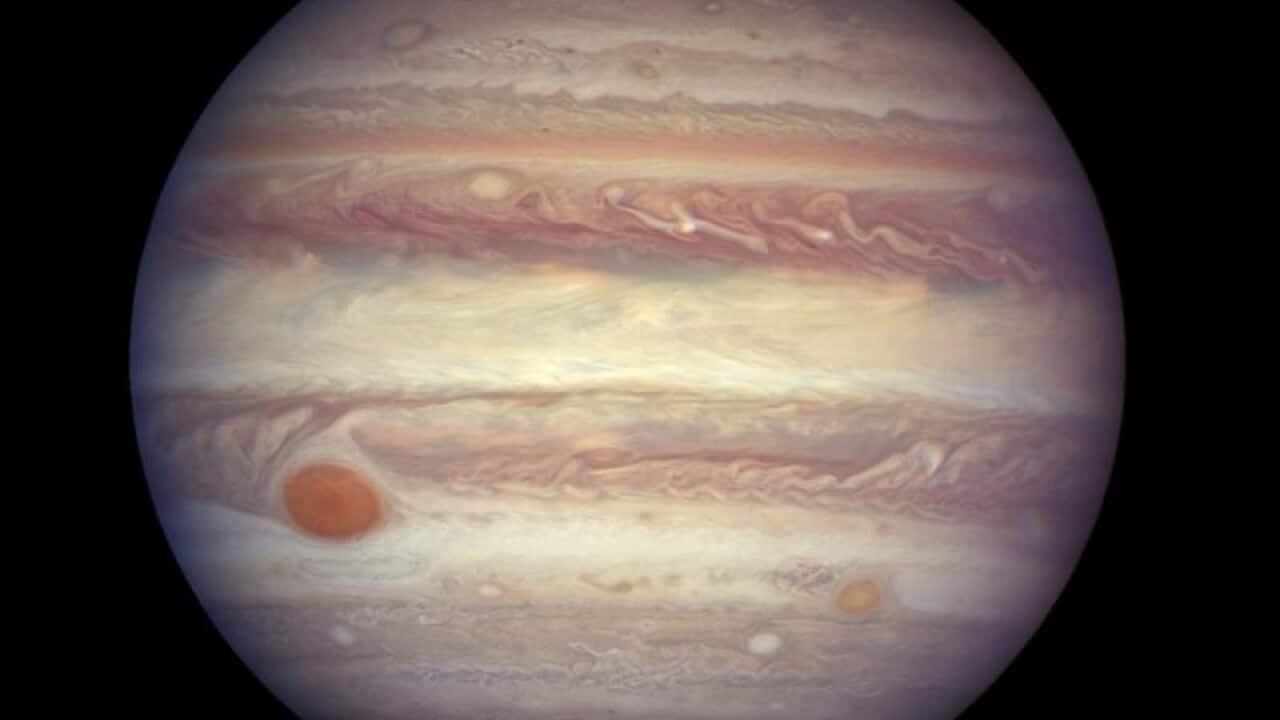
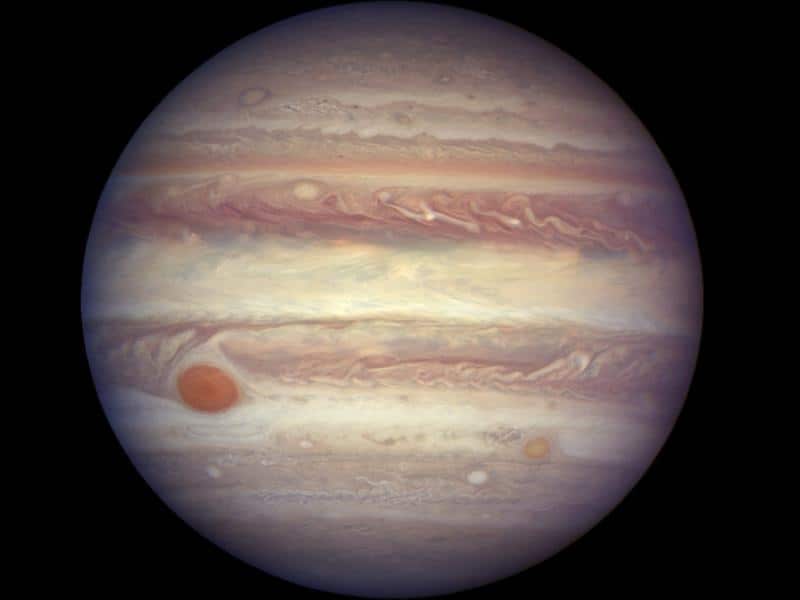
Astronomers have announced the discovery of 10 more moons of Jupiter, bringing to 79 the number known to be circling the giant gas planet.
All the newly identified moons are relatively small.
While Jupiter, the fifth planet from the Sun, has large moons such as Ganymede - the biggest in the solar system with a diameter of 5,268 km - the new ones range in size from about 1 km to 4 km. That is tiny compared to Jupiter's diameter of 142,984 km.
A research team led by astronomer Scott Sheppard of the Carnegie Institution for Science in Washington has identified 12 small Jovian moons, including the 10 described on Tuesday.
"Jupiter is like a big vacuum cleaner because it's so massive," Sheppard said.
News that makes sense
Your trusted source for staying up-to-date with the world around you. Get free daily news updates and analysis, straight to your inbox.
"These objects started orbiting Jupiter, instead of falling into it. So we think they're intermediate between rocky asteroids and icy comets. So they're probably half ice and half rock."
The most interesting of the new moons is Valetudo, named after the ancient Roman god Jupiter's great-granddaughter, the goddess of health and hygiene.
Valetudo orbits Jupiter in the same direction that the planet spins, but a bunch of other small moons share the same orbital path while travelling in the opposite direction.
"Valetudo's going down the highway the wrong way, so it's very likely it will collide with these other objects. It probably has collided with them over time," Sheppard said.
Jupiter's 79 known moons are the most of any planet in the solar system, followed by the 62 identified around the giant-ringed gas planet Saturn.
Sheppard said Jupiter and Saturn may actually have a similar number of moons, with some of Saturn's smaller ones not yet detected.
A moon is defined as any object, regardless of size, that orbits a planet, not the Sun.
Only the two innermost planets in the solar system, Mercury and Venus, have none. Of Jupiter's 79 moons, 26 remain unnamed, including nine of the 10 new ones.







