(Transcript from World News Australia Radio)
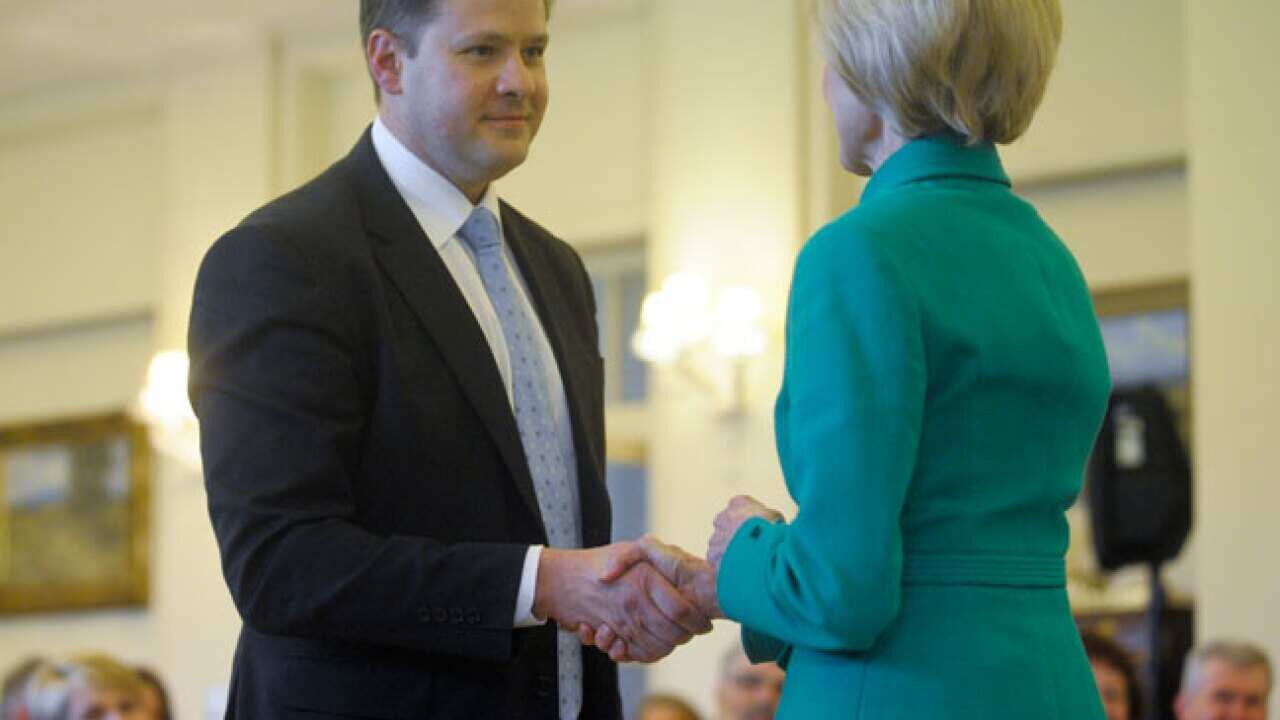
Western Sydney MP Ed Husic has made history after becoming the first Muslim to take on a frontbench position in Australia.
He was sworn in as parliamentary secretary to the Prime Minister and for Broadband when the new ministry under Kevin Rudd was named.
News that makes sense
Your trusted source for staying up-to-date with the world around you. Get free daily news updates and analysis, straight to your inbox.
Mr Husic also made history three years ago when he became the first Muslim elected to federal parliament.
Muslim groups have welcomed his promotion but say the negative response from some on social media reflects an ongoing need to combat misconceptions about Islam.
During the swearing in of the new Rudd ministry, Governor General Quentin Bryce personally congratulated Ed Husic on his promotion to the frontbench after he took an oath on the Koran.
"This is a wonderful day for multiculturalism."
The 43 year old Labor MP and former union official had grown up in western Sydney after both his parents migrated to Australia from the former Yugoslavia in the 1960s.
But since his promotion to parliamentary secretary this week, Mr Husic has been subject to abusive messages on his Facebook page.
Some have criticised his decision to take an oath on the Koran as unAustralian and unconstitutional.
Mr Husic says he accepts the right of people to express their views about his decision to take an oath on the Koran.
But he says he believes the negative posts on his Facebook page come from a small number of what he calls extremists and do not reflect mainstream Australian society.
"I think people ... may have questions and they may have concerns, and people are right to raise that. But I also think that you'll have, from time to time, people of the extremes. The important thing is that mainstream Australia wants everyone to work together. Mainstream Australia wants people to join as one to make this country better than the way (it was when) they first got here."
Federal Opposition Leader Tony Abbott says he respects Mr Husic's decision to take an oath on the Koran and he believes the Australian public should as well.
The Forum on Australia's Islamic Relations says it is disappointed over the response from some quarters.
Executive director Kuranda Seyit says it highlights the need to promote greater public awareness and combat some misconceptions about Muslims in Australia.
"(It's) just people defaulting to outrageous notions that, because he's made an oath on the Koran, that, somehow, he's un-Australian, which is just ridiculous. And I know Ed Husic personally. I don't think you can find someone more Australian than he himself, and he represents an electorate which is very strongly grassroots, working-class Australian. So it's a really sad situation, but I think that people like Ed will rise above that."
While Ed Husic is the only Muslim MP in federal parliament, a number of Muslim Australians hold seats in state parliaments.
The New South Wales upper house has two Muslim MPs, Labor's Shaoquett Moselmane and the first ever female Muslim MP in an Australian parliament, the Greens' Mehreen Faruqi.
And in Victoria, Turkish-born Labor MP Adem Somyurek was elected to the state's upper house over 10 years ago.
However, Islamic Friendship Association of Australia spokesman Keysar Trad says more effort is needed to ensure parliaments better reflect the nation's religious diversity.
"There should be more of it. There are many highly accomplished Muslims in Australia, many capable Muslims who could serve this country at the political level. I think, if we want to use our best people in the best jobs, we should remove any obstacles, any artificial obstacles and any unnecessary obstacles, and allow people to compete on an even playing field (fairly)."
Professor Andrew Jakubowicz, who specialises in multicultural studies at the University of Technology in Sydney, agrees.
He says Australian parliaments are slowly shifting away from the Anglo-Celtic bastions of the past towards more culturally and religiously diverse institutions.
He believes Ed Husic's promotion could help encourage more Australian Muslims to consider a political career, but says that could take time.
"I think it's still problematic for a lot of conservative parties to move in that direction. But I think we just need to recognise, for instance, that, at the 2011 election in New South Wales, the Lebanese Muslim Association came out politically for the first time, and it came out in support of the Liberal Party. It's still slow going, but I think there is a sort of tidal movement which flips over, and, as a new generation start to emerge who wish to become politically active, I think the older, taken-for-granted structures start to find themselves a bit shakier. And I think that's true for all the political parties."







