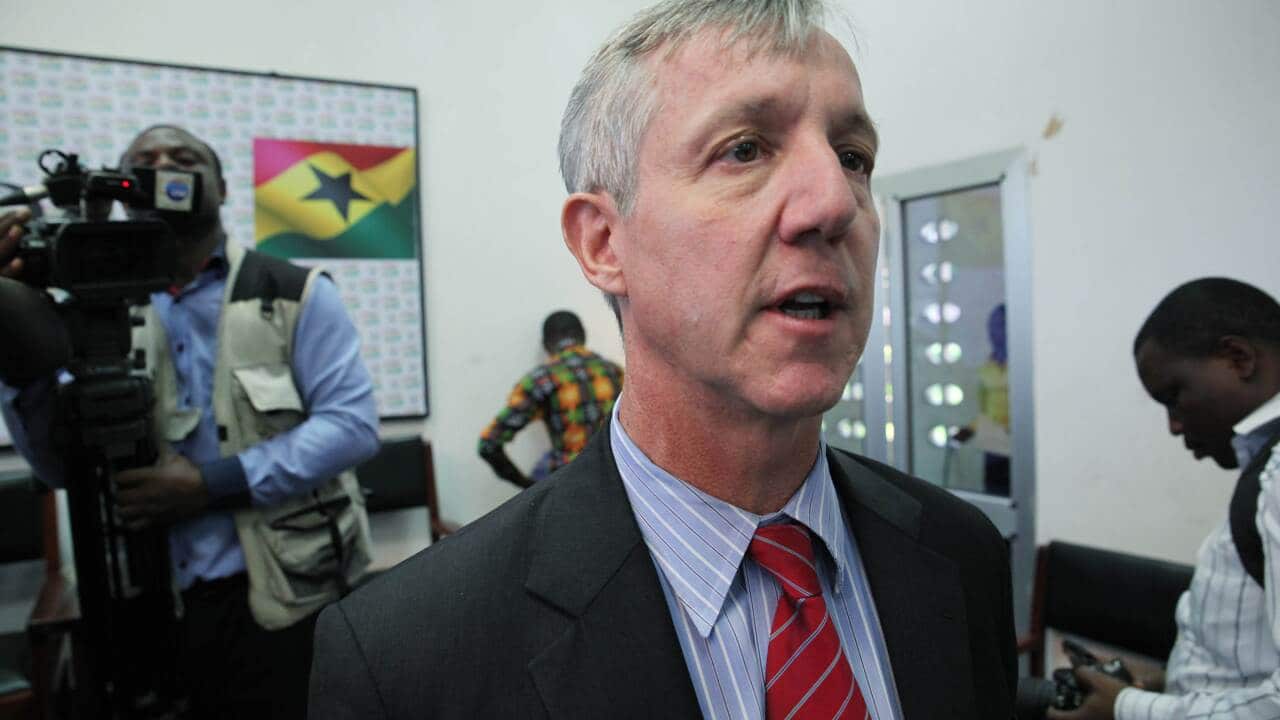
The new head of the UN Ebola response team has vowed to take swift action on the crisis, saying ambitious targets must be met to prevent the spread of the virus worldwide.
Anthony Banbury's pledge came after warnings that Liberia was on the brink of collapse and that thousands of children who have lost parents to the epidemic faced being treated as outcasts.
Sierra Leone's government was meanwhile forced to deny that Ebola had been defeated, after hundreds took to the streets in the belief that there were no more confirmed cases.
In Ghana's capital, Accra, Banbury, the special representative for the UN Mission on Ebola Emergency Response (UNMEER), said the team was hoping to stem the spread of the disease "as fast as possible".
UN Secretary General Ban Ki-moon set up UNMEER earlier this month in response to criticism of the world body's response to Ebola, which has killed more than 3000 people in west Africa this year.
News that makes sense
Your trusted source for staying up-to-date with the world around you. Get free daily news updates and analysis, straight to your inbox.
An advance team arrived in Accra on Monday amid growing concern over the spread of the virus, particularly in Liberia, Guinea and Sierra Leone.
The world's worst Ebola epidemic has claimed 3091 lives in five west African countries as of Saturday out of 6574 infected, according to the World Health Organization (WHO).
The international mobilisation includes a planned 3000-strong US military contingent to Liberia, while Britain is to set up a medical centre in Sierra Leone.
Some 150 US troops arrived in Liberia at the weekend with a 25-bed field hospital which was delivered by three C-17 cargo aircraft.
Experts have warned that with its collapsed health service, sick and poorly equipped security forces and broken economy, Ebola risked plunging Liberia back into a spiral of violent civil unrest.
"If we have thousands or tens of thousands more deaths, that's going to have a very destabilising effect," said Sean Casey, head of the International Medical Corps' anti-Ebola operations in Liberia.
Elsewhere, the UN children's agency said thousands of children mourning dead parents and in urgent need of support felt "unwanted and even abandoned" by frightened and suspicious relatives.
"Ebola is turning a basic human reaction like comforting a sick child into a potential death sentence," said UNICEF's regional director for west and central Africa, Manuel Fontaine.
"The fear surrounding Ebola is becoming stronger than family ties."







