
It's the first time since the MMP voting system was introduced in 1996 that any party has held an outright majority in parliament.
Mr Key will again sign up ACT and United Future, his allies since 2008, but their votes won't be vital to his ability to hold office.
With 48 per cent of the party vote in Saturday's general election, National will hold 61 or 62 seats in the 121-member parliament.
The centre-left parties suffered crushing defeats.
Labour, which had hoped to oust National and lead a coalition government, crashed to its worst-ever result with 24.6 per cent of the vote.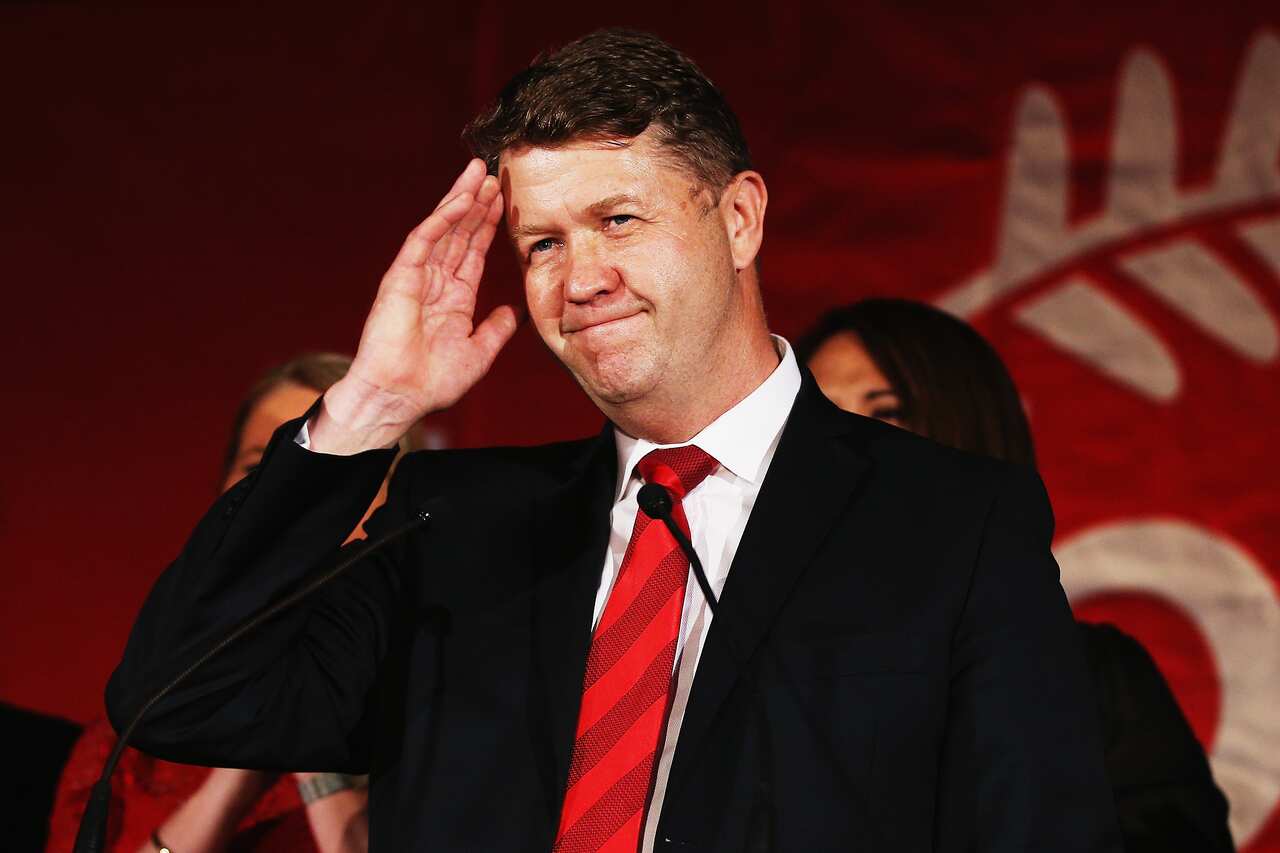 The Greens, who had been confident of achieving 15 per cent and 20 MPs, managed only 10 per cent per cent and have lost one of their 14 seats.
New Zealand Labour leader David Cunliffe thanks the audience after he concedes defeat in the 2014 New Zealand election at New Lynn Community Centre on September 20, 2014 in Auckland, New Zealand. (Getty Images)
NZ First was the only opposition party celebrating.
A surge of support - some of it coming from former Labour voters - pushed NZ First up to 8.9 per cent and it will have 11 MPs, three more than in the last parliament.
In another blow to the opposition, Mana's leader Hone Harawira was defeated in Te Tai Tokerau by Labour's Kelvin Davis.
That knocked Internet Mana out the race.
The Internet Party, founded by Kim Dotcom, forged an election alliance with Mana to avoid having to reach the five per cent threshold - but that didn't work.
The Maori Party managed to retain only one of its three seats, with co-leader Te Ururoa Flavell retaining Waiairiki.
Colin Craig's Conservative Party didn't make it across the line, winning just 4.1 per cent of the party vote.
Share


