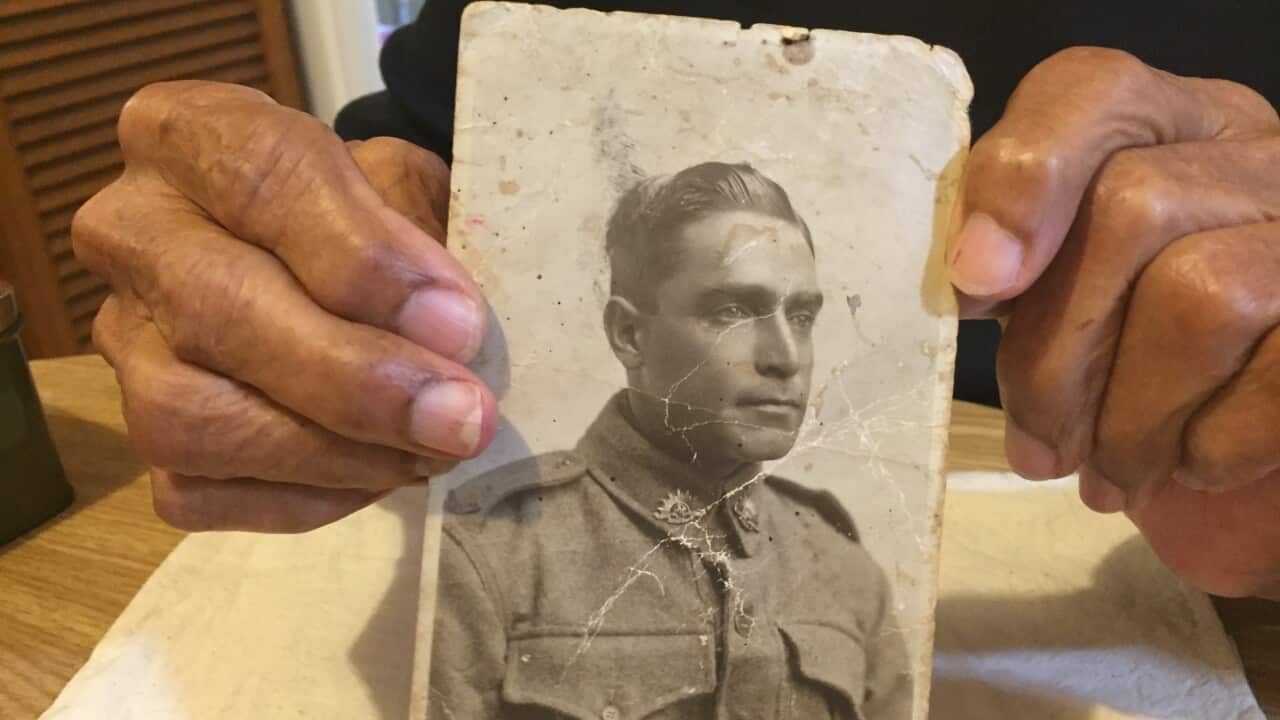
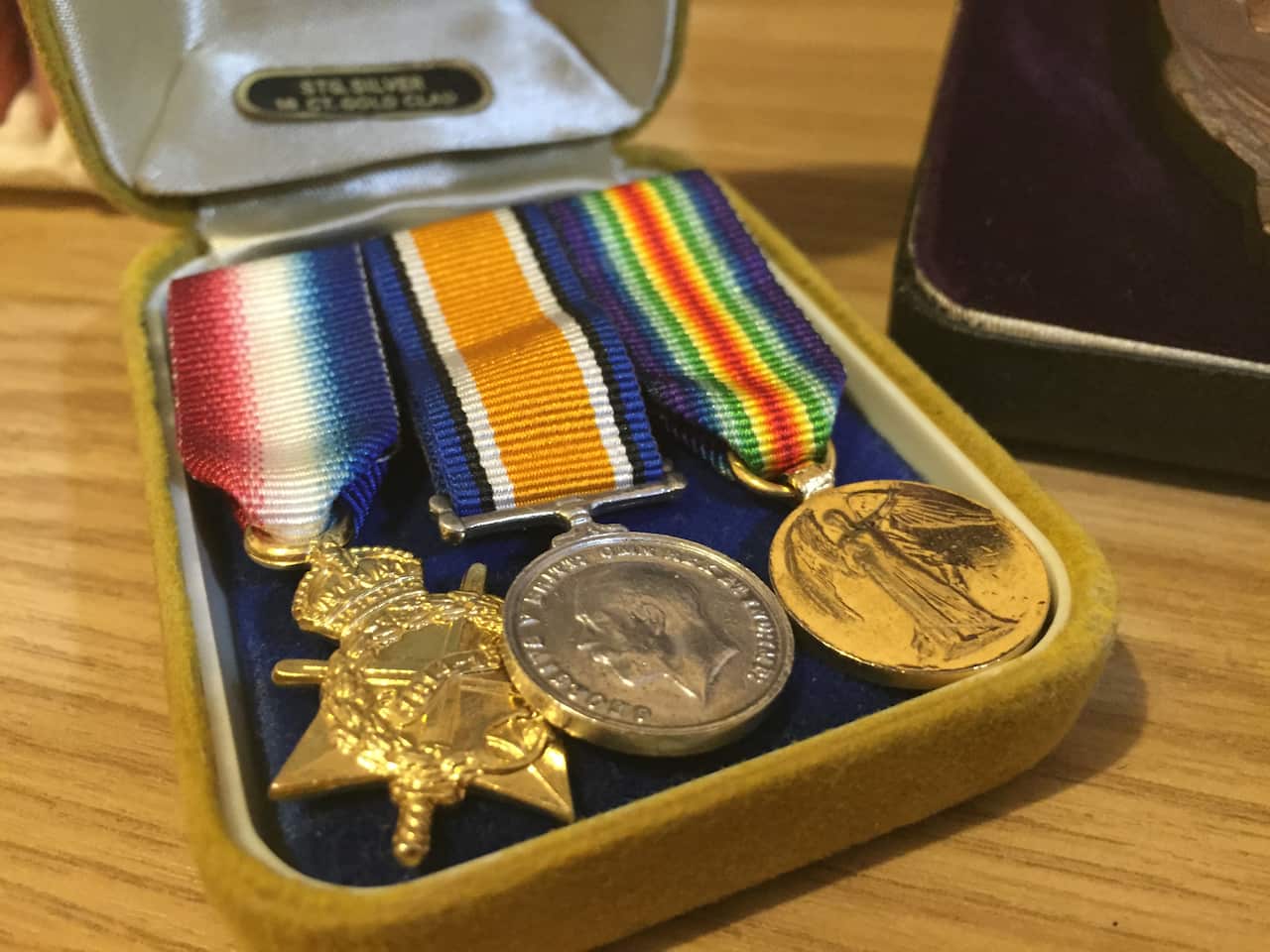
Aunty Rose Borey keeps replicas of medals, a tattered old photo and a postcard inside her Anzac biscuit tin.
They are precious mementos of a man who went to war and never returned.
As she unwraps a large metal disc bearing her uncle Richard Martin’s name she says, "This is the dead man's penny that all the families of those killed in action received after the war."
“It just symbolises that they fought for their country and because we were part of the British Empire. It always meant a lot to my father, my mother.”
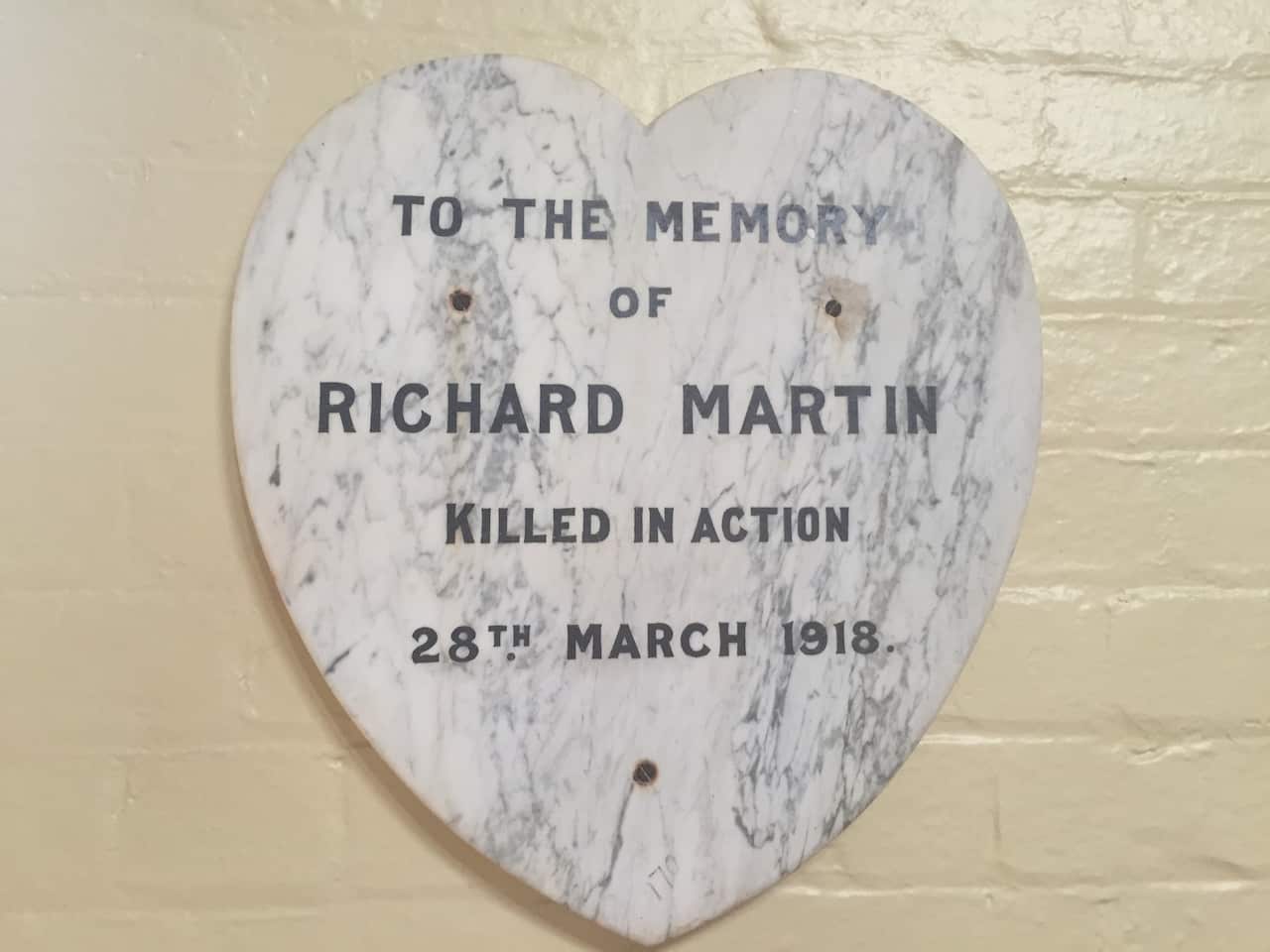
Aunty Rose and the family are only now discovering Richard Martin’s story, 100 years after he departed Stradbroke Island near Brisbane, Quandamooka country, for a faraway war.
"It always meant a lot to my father, my mother."
Private Martin was among the early landing parties at Gallipoli. He fought there until the evacuation and then his luck, if that is what you can call it, ran out.
“The records show he was in the 47th battalion and they show they were right in the thick of it on the Western Front, so it's no wonder he got killed,” Aunty Rose says.
Legally, Richard Martin should never have left the country.
Aboriginal people were banned from joining up in 1914. Richard Martin’s service record shows he enlisted giving his place of birth not as Dunwich, Stradbroke Island, but as Dunedin, New Zealand.
“They didn’t really know he had to lie to get in there, that never ever came out, and we're only finding out about that now,” Aunty Rose says.
Despite the racist laws, about 1200 Aboriginal people are thought to have served in Australia's armed forces in the Great War.
Twenty-two men from the Stradbroke Island community fought.
Fourteen were Quandamooka Aboriginal and the two of them died in action - Richard Martin and one other. They were the only casualties from the island.
The other, Albert Tripcony, explained away his complexion when enlisting by telling authorities he was Italian.
These stories are only now being uncovered as communities research the 100th anniversary of the Anzac landings in Turkey.
At North Stradbroke Island’s Historical Museum, Lisa Jackson has found many more stories for an exhibition about locals who enlisted, or tried to but could not.
“The irony of this story is that Richard Martin went to war because he claimed to be Maori, but Benjamin Manager who was Maori was discharged because they said he was Aboriginal,” Ms Jackson says.
Stradbroke Island has a proud history of Aboriginal service men and women including Kath Walker, know as Oodgeroo Noonuccal, during the Second World War.
More recently Lorraine Hatton served 20 years in the Army, including in Iraq, retiring as a Warrant Officer 2nd Class.
“It makes me feel very proud, in myself. I'm proud of what I've achieved, but knowing that I've had relatives serve in previous conflicts and wars, that makes me extremely proud,” she says.
Private Richard Martin's story is now told in an artwork, commissioned by the Australian War Memorial, that will hang in Canberra.
Aunty Rose has a copy at her Stradbroke Island home showing his silhouette of against a map of a battlefield in France, including a cemetery.
“He was buried at Durnancourt, after the war they could never find the grave,” she said pointing to a small square just behind the trenches.
Richard Martin died of his wounds in a field hospital on 28 March 1918.